Proposed by Erik Satie, “Furniture Music” (musique d’ameublement) was quite possibly the first music in history created for the express purpose of not being listened to. Although its 1920 premiere ended in complete failure, its underlying philosophy was rediscovered half a century later through John Cage’s 4’33” and Brian Eno’s ambient music, quietly rewriting the definition of what it means to listen. In our own era, when background music permeates everyday life like air, Satie’s paradox feels more urgent than ever. Beginning with the life of this eccentric composer and the structure of his Gymnopedies, this guide traces the philosophy of Furniture Music, the lineage of its failure and rediscovery, and what it means for how we live with music today.
Related reading: Introduction to Dub: The Musical Revolution That Built Space by Subtracting Sound — 10 Essential Albums and Lineage
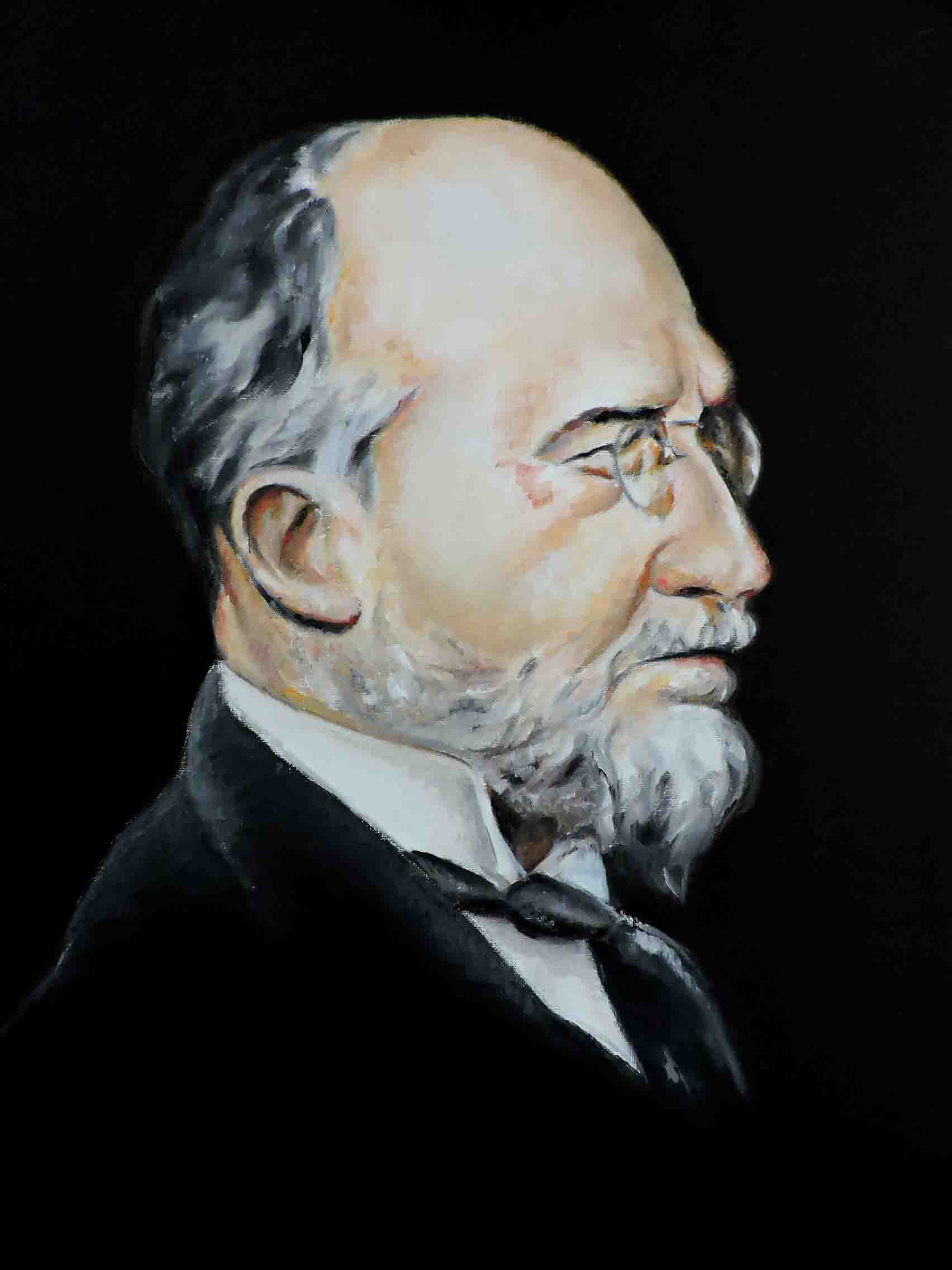
Who Was Erik Satie? From Montmartre Eccentric to the Hermit of Arcueil
Erik Satie was born in 1866 in the Norman port town of Honfleur. Losing his mother at an early age, he spent his boyhood moving back and forth between Paris and his hometown. When he later entered the Paris Conservatoire, his professors were famously unimpressed, one reportedly calling him “the laziest student in the Conservatoire.” From the very beginning, institutional music education and Erik Satie were a hopeless mismatch.
In his twenties, Satie frequented the literary cabaret Le Chat Noir (“The Black Cat”) in Montmartre, scraping by as a cabaret pianist while composing early signature works such as the three Gymnopedies (1888) and the Gnossiennes. Around this time he met the young Claude Debussy, beginning a complex friendship that would last a lifetime. Deeply drawn to esotericism as well, Satie served as official composer to the Rosicrucian order before breaking away to found his own church with a congregation of one: the “Metropolitan Church of Art of Jesus the Conductor.” In 1893, he carried on the only known romantic relationship of his life, with the painter Suzanne Valadon, which ended after roughly six months.
In 1898, Satie moved into a tiny room in the working-class suburb of Arcueil on the southern outskirts of Paris, where he lived for the remaining twenty-seven years of his life without ever letting a single visitor inside. For a period he bought multiple identical corduroy suits and wore nothing else, earning the nickname “the Velvet Gentleman.” Every day he walked roughly ten kilometers each way from Arcueil into central Paris, composed in cafes, and walked all the way back late at night. His famous remark about eating only white foods comes from his satirical essay “A Day in the Life of a Musician”—less a literal biographical fact than a self-caricature performing the madness of strict routine. Many of Satie’s famous eccentricities belonged to this kind of calculated performance: before he was an eccentric, he was a critic who used eccentricity as a method.
Outside of musical scores, Satie left behind a vast body of words and drawings: fragments contributed to magazines under titles like Memoirs of an Amnesiac, mock advertisements, and hundreds of tiny cards discovered after his death bearing exquisite calligraphic notices offering imaginary buildings for sale. Every one of them is a deadpan joke dressed up in the guise of practical utility. What he later called “Furniture Music”—art wearing the clothes of a household appliance—clearly sprang from the exact same spirit as those verbal contraptions.
At the age of thirty-nine, Satie did something no one expected. In 1905, he enrolled at the Schola Cantorum to study counterpoint from the ground up, sitting alongside students half his age and dutifully completing exercises for several years. For a man once dismissed as the laziest student in the Conservatoire, it was an act of quiet defiance. By the 1910s, championed by Maurice Ravel and others, his reputation rose sharply, and in 1917 he stood at the center of a major Parisian scandal with the ballet Parade, created with a scenario by Jean Cocteau, sets and costumes by Pablo Picasso, and choreography for the Ballets Russes. Incorporating typewriters, sirens, and pistol shots into the orchestra, the work sparked an uproar; after Satie sent insulting postcards to a critic who had panned the premiere, he was sued for defamation and handed a prison sentence (which was ultimately suspended). Even that postscript could hardly have been more characteristic of Satie.
In his final years, Satie became a spiritual mentor to the young composers later known as Les Six as well as to Dada artists, collaborating with Francis Picabia on the 1924 “instantaneist” ballet Relache (“Performance Cancelled”) and composing the score Entr’acte (Cinema) for Rene Clair’s intermission film. On July 1, 1925, after years of heavy drinking, he died of cirrhosis of the liver at the age of fifty-nine. When friends finally opened his room in Arcueil after his death, they found two upright pianos stacked one on top of the other, dozens of umbrellas, his worn-out identical velvet suits, and mountains of unpublished manuscripts and tiny scraps of paper covered in meticulous notes. His life itself had been constructed like a single, carefully designed work of art.
What Made the “Gymnopedies” So Radical?
Paris in 1888, when Satie wrote his Trois Gymnopedies, lay under the immense shadow of Richard Wagner. Music was growing ever longer, harmony ever denser, and “progress” was equated with dramatic syntax that swept the listener along through emotional climaxes and resolutions. The Gymnopedies were a quiet declaration of dissent against all of that.
Their structure is disarmingly simple. A slow, swaying three-beat accompaniment—a steady pendulum alternating bass note and chord—continues almost unchanged from beginning to end while a slender single-line melody floats above it. Built around soft seventh chords, the harmony carries almost none of the forward pull that drives tension toward resolution. There are no dramatic modulations, no developmental sections, and no climaxes. The performance marking at the head of No. 1 reads Lent et douloureux (“Slow and painful”). In place of a dramatic narrative, what unfolds here is stationary time, circling gently in the same spot.
This simplicity was no lack of craft. By deliberately weakening the gravity of functional harmony—the urge of a dominant chord to resolve to the tonic—Satie freed chords from serving merely as stepping stones to the next measure, allowing each sonority to ring as a color in its own right. His use of modal inflections points in the same direction. Once music stops acting as forced motion toward a destination, it stops demanding the listener’s captive attention. You can listen closely, or let it drift at the edge of awareness. The reason the Gymnopedies are so often cited as precursors of ambient music is not simply that their timbre is gentle, but that this freedom of listening is built directly into their musical architecture.
Among his contemporaries, it was Claude Debussy who recognized this originality first, orchestrating the first and third Gymnopedies in the 1890s to help bring his struggling friend’s work before the public. Still, reducing Satie to a mere forerunner of musical Impressionism misses half the picture. Where Debussy headed toward sumptuous harmonic richness, Satie remained committed throughout his life to austerity and repetition. Stripping away ornament rather than adding it: that is where the essence of the Gymnopedies—and of Satie as a composer—lies.
In their companion pieces, the Gnossiennes, Satie went a step further, removing bar lines altogether in the early numbers to experiment with floating notation freed from metrical boxes. He also became famous for sprinkling his scores with baffling performance directions designed to throw players off balance: “With astonishment,” “On the tip of the tongue,” “Like a nightingale with a toothache.” Rather than literal descriptions of emotion, these markings are best read as devices for undoing a performer’s theatrical self-importance. Even his small pranks on the institution of the musical score belong to the same impulse as his later challenge to the institution of concert listening.
The curious title Gymnopedie itself derives from an ancient Greek festival in Sparta, though scholars still debate the exact source through which Satie encountered the word. Leaving even the origin of his most famous title wreathed in smoke was thoroughly in character.
The Philosophy of “Furniture Music”: Music Made Not to Be Listened To
One of the most frequently cited accounts of how “Furniture Music” (musique d’ameublement) was born comes from a recollection by the painter Fernand Leger. Sitting in a restaurant with Satie, the two men were driven to distraction by an intolerably loud band. Turning to Leger, Satie remarked that there ought to be a music that would mingle with the sounds of everyday life and soften them—music that took the clatter of knives and forks into account, sitting in the room like a piece of furniture without demanding anyone’s attention. Sound that neither interrupts conversation nor enforces silence, gently filling the empty air of a room: Satie conceived it not as fine art, but as a practical utility on the same plane as a chair, a carpet, or central heating.
Before long, Satie put the concept into practice. In March 1920, during the intermission of a play by Max Jacob at the Galerie Barbazanges in Paris, Satie and his friend Darius Milhaud staged the first performance of Furniture Music. The musicians were stationed in separate corners of the hall, and the program instructed the audience to pay no attention to the music—to keep walking around, chatting, and visiting the refreshment counter just as they would during any ordinary intermission. The experiment was a total failure. The moment the music began, the audience reflexively hurried back to their seats and fell silent to listen. According to Milhaud’s recollection, Satie strode through the gallery waving his arms and shouting, “Talk! Keep walking! Don’t listen!”—all in vain. Even when ordered by the composer in person, the audience could not break the habit of sitting quietly whenever music was played.
That failure proved the depth of Satie’s insight rather than any weakness in the idea. What it exposed was the fact that “attentive concert listening” is not a natural human instinct, but a historical habit trained by the nineteenth-century institution of the concert hall. The norm that music is a sacred artwork to be received in hushed silence had been so deeply inscribed into the bodies of the audience that a verbal instruction to ignore it could no longer switch it off. More than a musical composition, Furniture Music was an experiment that made the institution of listening visible—anticipating conceptual art by half a century.
The surviving pieces of Furniture Music—bearing titles that read like an interior-decorating catalog, such as Tenture de cabinet prefectoral (“Wall Hanging for a Prefectural Office”) and Tapisserie en fer forge (“Tapestry in Wrought Iron”)—consist of brief musical cells meant to be repeated as many times as needed. Satie also left behind an enigmatic solo piano piece, Vexations, whose manuscript bears a note indicating that the short theme may be played 840 times in succession. Unpublished during his lifetime, it would later be reinterpreted as a device for testing the outer limits of attentive listening. Satie even appears to have made earnest attempts to market Furniture Music commercially for functional use, leaving the exact ratio of deadpan irony to sincere utility impossible to untangle to this day. That undecidability is both the sting and the charm of his idea.
From Failure to Rediscovery: John Cage and “4’33″”
Satie’s great rediscoverer emerged from across the Atlantic: John Cage. Championing Satie enthusiastically from the late 1940s onward, Cage delivered a famous lecture at Black Mountain College in 1948 titled “Defense of Satie,” contrasting music built on harmonic development and dramatic climax—exemplified by Beethoven—with Satie’s music built on spans of time itself. Because academic musicology at the time dismissed Satie as a minor eccentric, Cage’s claim that Satie, not Beethoven, had been right about musical structure was a deliberately provocative reassessment.
Cage’s devotion to Satie soon moved from words to action. In September 1963 in New York, he organized the first complete relay performance of Vexations played all 840 times. A team of pianists—including a young John Cale, who would soon co-found the Velvet Underground—took turns at the keyboard for more than eighteen hours. Transforming the musical experience from “contemplating a self-contained object” into “inhabiting a stretch of time,” the marathon staging pushed the philosophy of Furniture Music to its logical extreme.
And then there is Cage’s own 4’33” (1952). Premiered by pianist David Tudor at a woodland concert hall near Woodstock, New York, the piece consists of three movements during which the performer sits at the instrument without intentionally producing a single sound. What the audience hears instead is the wind, the rain, and their own restless murmurs—the sounds of the surrounding environment. Often labeled “the silent piece,” it actually demonstrates the opposite: that silence does not exist, and that the world is always making music if we open our ears to it.
Cage’s dialogue with Satie continued into his later years. In 1969, planning a piano transcription of Satie’s serene late masterpiece Socrate for a dance by his longtime collaborator Merce Cunningham, Cage was denied permission by Satie’s publisher. In response, he kept the exact rhythmic proportions of Socrate while using chance operations to replace the pitches, creating Cheap Imitation. Born as a detour around copyright restrictions, the piece leaves behind only the ghostly contour of Satie’s original—a miniature emblem of how admiration passes through imitation to become an entirely new creation.
The relationship between Satie and Cage can be understood as a mirror image. Satie tried to sink music back into everyday life—turning music into environment. Cage tried to listen to the sounds of everyday life as music—turning environment into music. Their vectors point in opposite directions, yet both stand on the exact same ground in dismantling the institution that places “the musical work” on a pedestal as the sole object of special attention. An idea laughed off in Paris in 1920 became a central proposition of the postwar New York avant-garde in the 1950s.
Brian Eno’s Ambient Manifesto: As Ignorable as It Is Interesting
The next decisive node in this lineage is Brian Eno. In 1975, bedridden after an accident, Eno listened to a record of eighteenth-century harp music played so quietly that it hovered at the threshold of audibility, mingling with the sound of rain outside his window. Unable to get up and raise the volume, he discovered that music hovering right on the edge of perception melted into the weather and the room, revealing a new way of listening—the famous origin story he recounted in the liner notes to Discreet Music (1975).
The title track of Discreet Music fed two short synthesizer phrases through a long tape-delay system between two reel-to-reel machines, allowing the apparatus to generate music semi-automatically; Eno even printed a diagram of the signal flow on the back cover. Music that continues to unfold after leaving the composer’s hands is, in effect, Furniture Music that no longer requires live musicians in the corners of the room. Intended from the start to be played at low volume, it already contains every essential ingredient of ambient music.
In 1978, Eno released Ambient 1: Music for Airports and defined the term “Ambient Music” in its liner notes: an ambiance is defined as an atmosphere, or a surrounding influence, and ambient music must be able to accommodate many levels of listening attention without enforcing one in particular; it must be as ignorable as it is interesting. No one knew better than Eno—a longtime admirer of Satie—that this formulation was a precise modern translation of Furniture Music. Years later, Music for Airports was actually installed and played inside a terminal at New York’s LaGuardia Airport. Fifty-eight years after Satie’s failed intermission experiment in Paris, the alliance of recording media and loudspeakers finally turned “sonic furniture placed in a public transit hall” into reality.
At the same time, a crucial material difference separates Satie and Eno. Furniture Music was a thought experiment in the age of live performance, when hiring a chamber ensemble to stand in the corners of a room like wallpaper was economically impossible. Eno’s ambient music, by contrast, presupposed the late-twentieth-century ubiquity of recorded media and speakers, using tape loops and phase shifts to supply “endless music” without human performers. Technology had finally caught up with Satie’s daydream—yet by the same token, there was now a danger that the subversive sting of Satie’s provocation against the institution of listening would be neutralized by technology, turning into a merely comfortable consumer product. That ambivalence leads directly into the problem of Muzak.
How It Differs from Muzak: Sound That Sells an Environment vs. Sound Placed in One
Long before Satie’s experiment became famous, “music not meant to be listened to” was also a commercial enterprise. In the 1920s, American inventor and Army general George Owen Squier pioneered transmitting music over electrical wiring, founding the company that took the name Muzak in 1934. Muzak soon built its business around “Stimulus Progression”—programs that varied tempo and instrumentation across the workday in fifteen-minute blocks to combat fatigue and raise worker productivity—carpeting offices, factories, retail stores, and elevators with background music. By the second half of the twentieth century, “Muzak” had become a byword for anonymous canned music and a primary target for critiques of acoustic environmental control.
Empirical research has repeatedly confirmed that background music influences human behavior. Countless studies have examined how the tempo of in-store music affects how fast shoppers walk, how long they stay, and what they buy; sound unquestionably acts on the body through the environment. And precisely because it carries that power, the question of who uses it—and to what end—cannot be avoided.
Here the two lineages must not be confused. Satie’s Furniture Music and commercial Muzak may look alike on the surface as “music not meant to be listened to,” yet their vectors point in opposite directions. Muzak is music designed to steer the listener’s behavior, and its master is the owner of the space—the employer or the retailer. Sound tunes workers to produce more and shoppers to spend more. Satie’s Furniture Music, by contrast, was conceived to leave the listener alone. By refusing to demand attention, it returns the freedom of conversation and thought to the people in the room. Eno was acutely aware of this distinction as well: in his manifesto for Music for Airports, he drew a sharp line between the canned-music industry—which strips environments of all ambiguity and character—and his own ambient music, which aims to induce calm and a space to think.
Environmental music, in short, has two opposite poles: sound that sells an environment and regulates people, and sound that sits in an environment and sets people free. The very same quality of “not being listened to” can serve either as an instrument of management or as a margin of freedom. In an age when mood-based playlists and functional background streams dominate music consumption, that dividing line matters more than ever. Recent critiques of the streaming economy as a “new Muzak” (such as those by American journalist Liz Pelly) belong directly to this century-old debate.
Ten Essential Performances and Recordings
Satie’s piano music has been recorded countless times, and its character changes so dramatically from one performer to the next that it can sound like a different composer altogether. Here are ten distinct recordings—eight devoted to Satie’s own works, followed by two landmark albums that trace the lineage of Furniture Music after him. Tracklistings and couplings vary across reissues, so check edition details when exploring.
Aldo Ciccolini, “Satie: Piano Works”
The defining pianist behind the late-twentieth-century Satie revival, Ciccolini recorded complete cycles of the major piano works more than once. With his crisp articulation and firm sense of architectural shape, he presented Satie not as a purveyor of charming trifles, but as a major composer with a distinct musical language of his own. For anyone seeking an overview of Satie’s keyboard output, Ciccolini’s recordings remain the benchmark.

Satie Piano WorksAldo Ciccolini
Pascal Roge, “3 Gymnopedies & Other Piano Works”
With its warm tone and natural lyricism, Pascal Roge’s recording has long been one of the most widely loved introductions to Satie around the world. It draws out the full beauty of the Gymnopedies and Gnossiennes while maintaining an aristocratic poise that never tips into sentimentality. If you want to experience Satie first and foremost as sheer musical beauty, start here.

YThe Pop Group
Reinbert de Leeuw, “Satie: Early Piano Works”
Performed by the Dutch pianist and conductor, this recording is famous for its extraordinarily slow tempos. While its near-suspended pacing sparked debate upon release, it pushes Satie’s essence of “stationary time” to a compelling extreme, turning the Gymnopedies into a vessel for deep meditation.
YThe Pop Group
Anne Queffelec, “Satie: Piano Works”
A recording by the French pianist that strikes an exquisite balance between stillness and lightness. Even in Satie’s humorous miniatures, Queffelec never overplays the joke, preserving a dry, understated lyricism throughout. Played softly late at night, her performances come as close as any to the ideal of Furniture Music.
Satie Piano WorksAnne Queffelec
Aki Takahashi, “Satie: Piano Works”
An indispensable figure in the reception of Satie in Japan, pianist Aki Takahashi helped spark Japan’s 1970s Satie boom through her landmark recital series and recordings in Tokyo. Honed on contemporary avant-garde repertoire, her crystalline touch and rhythmic precision let Satie’s scores ring without a trace of sentimentality.
Satie Piano WorksAki Takahashi
Jean-Yves Thibaudet, “Erik Satie: The Complete Solo Piano Music”
A comprehensive multi-disc survey covering Satie’s solo piano oeuvre, including the cabaret-inflected waltzes and songs. Thibaudet’s suave, sparkling playing captures Satie’s Montmartre side with flair, making this set the ideal choice once you are ready to move past the famous highlights and survey his entire keyboard world.
YThe Pop Group
Alexandre Tharaud, “Satie: Avant-derniers pensees”
A collection by the French virtuoso that balances wit and dry poetry with remarkable finesse. Tharaud rescues Satie from the museum glass of “relaxing classical hits” and makes his music sound like living, breathing wit in the present tense—proving through sheer pianistic authority that there is nothing lightweight about Satie’s craft.
Satie Piano WorksAlexandre Tharaud
Michel Plasson, “Satie: Orchestral Works”
Bringing together Parade, Relache, and Debussy’s orchestrations of the Gymnopedies, this recording reveals the other face of Erik Satie for listeners who know only his solo piano pieces. The boisterous, theatrical energy of Parade in particular introduces Satie the man of the theater standing behind the eccentric legend.
Satie Orchestral WorksMichel Plasson
Brian Eno, “Ambient 1: Music for Airports” (1978)
The foundational document of ambient music, translating the philosophy of Furniture Music into the age of magnetic tape and recording studios. Its slowly phase-shifting loops of piano and voice work equally well whether you listen with close attention or forget they are playing altogether. Heard after reading Satie’s story, it sounds unmistakably like an answer delivered across half a century.
Ambient 1 Music for AirportsBrian Eno
Hiroshi Yoshimura, “Music for Nine Post Cards” (1982)
Quiet electronic music conceived for museum spaces by a pioneer of Japanese environmental music (kankyo ongaku). Placing gentle notes against the scenery outside a window, it feels like a distinctly Japanese flowering of Satie’s Furniture Music. Rediscovered internationally through recent reissues, it teaches through direct sensation what it means to place sound inside everyday life.
YThe Pop Group
Everyday Music Today: “Furniture” in the Age of Streaming
Today, Satie’s paradox has come true in a curious way. His first Gymnopedie is a perennial fixture on functional streaming playlists labeled “Quiet Morning,” “Deep Focus,” and “Sleep,” ranking among the most-streamed classical tracks on the planet. The signature work of a man who was laughed at a hundred years ago for proposing “music not to be listened to” is now played millions of times a day around the world specifically to be tuned out. Whether to call that a victory or a defeat is no simple question.
With work-study playlists, 24/7 lo-fi hip-hop streams, sleep soundscapes, and AI-generated focus apps carpeting every corner of daily life, the present day looks on the surface like a total triumph for Furniture Music. As we have seen throughout this guide, however, the core of Satie’s idea was dethroning music from the seat of compulsory attention so that freedom could be returned to the listener. When sound is supplied as a mood commodity to optimize productivity or consumer behavior, it is the descendant not of Satie, but of Muzak. Only one criterion separates the two: does this sound leave you free to be yourself?
This lineage also includes a vital Japanese chapter. In 1980s Japan, composers such as Hiroshi Yoshimura and Satoshi Ashikawa created music for museums, architecture, and public spaces under the name of environmental music (kankyo ongaku)—sound designed not for artistic self-assertion, but to tune the air of a place. Long half-forgotten even inside Japan, their work experienced a dramatic international reassessment in the 2010s sparked by overseas listeners and archival compilations. It stands as one of the most sincere realizations anywhere in the world of the “music as everyday utility” that Satie dreamed of.
One more gift Satie leaves to the present is a sensitivity to acoustic negative space. The habit of leaving something playing in the background at all hours steadily erodes our tolerance for silence—or more accurately, for rooms where only environmental sounds are present. As John Cage taught, no room is ever truly silent. The moment you switch off background music, the hum of the air conditioner, a car in the distance, and your own breathing suddenly rise into view. That moment when the volume of the world itself seems to click up a notch is the very place toward which the experiment of Furniture Music ultimately pointed. Turning music into furniture, flipped over, is the philosophy of listening to everyday life itself as music.
In daily practice, then, the conclusion is simple. When you play music, choose it deliberately. When you stop it, stop it consciously. Leaving the Gymnopedies playing softly all day is fine—but once a week, set aside an hour with nothing playing at all, and take the measure of that “unplayed” room air. Across a century, that eccentric walker from Arcueil is still inviting us to practice using our ears that way.
Conclusion: The Lineage of Music Not Listened To
In an era that equated musical progress with ever grander scale and denser complexity, Erik Satie chose simplicity, repetition, and stillness. His Gymnopedies removed the gravitational pull of functional harmony to return freedom of attention to the listener, and his “Furniture Music”—by aiming not to be listened to and failing—exposed concert listening as a historical institution. Expanded by John Cage’s 4’33” toward listening to the world itself and by Brian Eno’s ambient music toward placing sound gently inside daily life, Satie’s thought leaves us a clear compass for telling apart sound that manages us and sound that sets us free.
Listening to Satie goes far beyond soothing a tired mind with gentle piano chords. It is practice for learning to hear the negative space around the notes and the texture of unplayed time. Put on the Gymnopedies tonight—once while listening with all your attention, and once while forgetting they are playing at all. Right between those two ways of listening lies the door Erik Satie opened.
Further reading:
I have a feeling Satie is quietly smiling at all the times I let the Gymnopedies drift by as mere “relaxing classical music.” There is a wonderful paradox in how music made not to be listened to ends up teaching us how to listen most deeply. Tonight, try carving out a quiet stretch of time with nothing but the sounds of your own room.