Founded in Munich in 1969 by producer Manfred Eicher, the independent label ECM has carved out a singular territory on the border between jazz and classical music through a recording aesthetic famously described as “the most beautiful sound next to silence.” This guide walks through Eicher’s recording philosophy, the true nature of reverberation, space, and negative space on ECM records, ten essential gateway albums, and how to prepare a home listening environment worthy of them.
Related reading: Introduction to Minimal Music: The Intoxication of Repetition and 10 Essential Works
What Is ECM? An Experiment That Outgrew the Frame of a Jazz Label
ECM stands for Edition of Contemporary Music. The name itself is telling: by calling his company a publisher of contemporary music rather than a jazz label, founder Manfred Eicher signaled the reach of his vision from the very beginning. Its inaugural release was Mal Waldron’s piano trio album Free at Last, recorded in 1969. Since then, the catalog has grown without interruption to a depth where following its release numbers is an education in itself.
The famous phrase “The Most Beautiful Sound Next to Silence” originated in a 1971 review in the Canadian jazz magazine Coda before becoming ECM’s official motto. It would be easy to dismiss as advertising copy, yet the moment you drop the needle on an ECM record, you realize it is no exaggeration. The few seconds of stillness before the music begins, the time a note takes to decay into nothing, the physical distance preserved between one instrument and the next: on an ECM record, the parts where nothing is playing are treated with just as much care as the notes themselves.
Another defining trait is a thoroughgoing producer’s auteurism. Eicher personally attends the vast majority of sessions, overseeing repertoire, recording, mixing, and cover art with a single coherent aesthetic. Although the roster of artists is astonishingly diverse, line their records up on a shelf and every one of them shares an unmistakable “ECM sound” and “ECM face.” Rather than a conventional record company, it resembles a vast anthology edited over half a century by a single hand.
Crucially, this uncompromising aesthetic has also sustained itself commercially. Keith Jarrett’s solo recordings have sold steadily around the world, while Jan Garbarek and the Hilliard Ensemble’s Officium became a long-running bestseller in both classical and jazz shops alike. A label devoted to uncompromising sound has survived not by compromising, but precisely because of that sound—proof in itself that a genuine hunger for quiet music exists worldwide.
Past its fiftieth anniversary in 2019, new releases continue unabated, and the catalog now spans well over a thousand titles. That accumulation has given rise to a distinct pleasure known among collectors as buying by catalog number: because ECM releases are numbered sequentially, simply exploring the numbers immediately before and after a record you love sets off a chain of unexpected discoveries. Combined with the visual beauty of the sleeves, it is also famous as a label where buying a record on cover art alone almost never disappoints. The shelf itself functions as an editorial work—an experience that feels all the fresher in the streaming era.
Although this guide speaks for convenience of “the jazz side” of the label, the main catalog overflowed the boundaries of the word “jazz” from the start. Cross-continental ensembles like Codona—bringing together Don Cherry, Collin Walcott, and Nana Vasconcelos—or unclassifiable guitarists like Steve Tibbetts appeared naturally in the catalog long before the marketing term “world music” existed. Well before the industry coined a label for it, ECM was already fascinated by the borderlines of music itself; “Edition of Contemporary Music” was never a boast, just an accurate description.
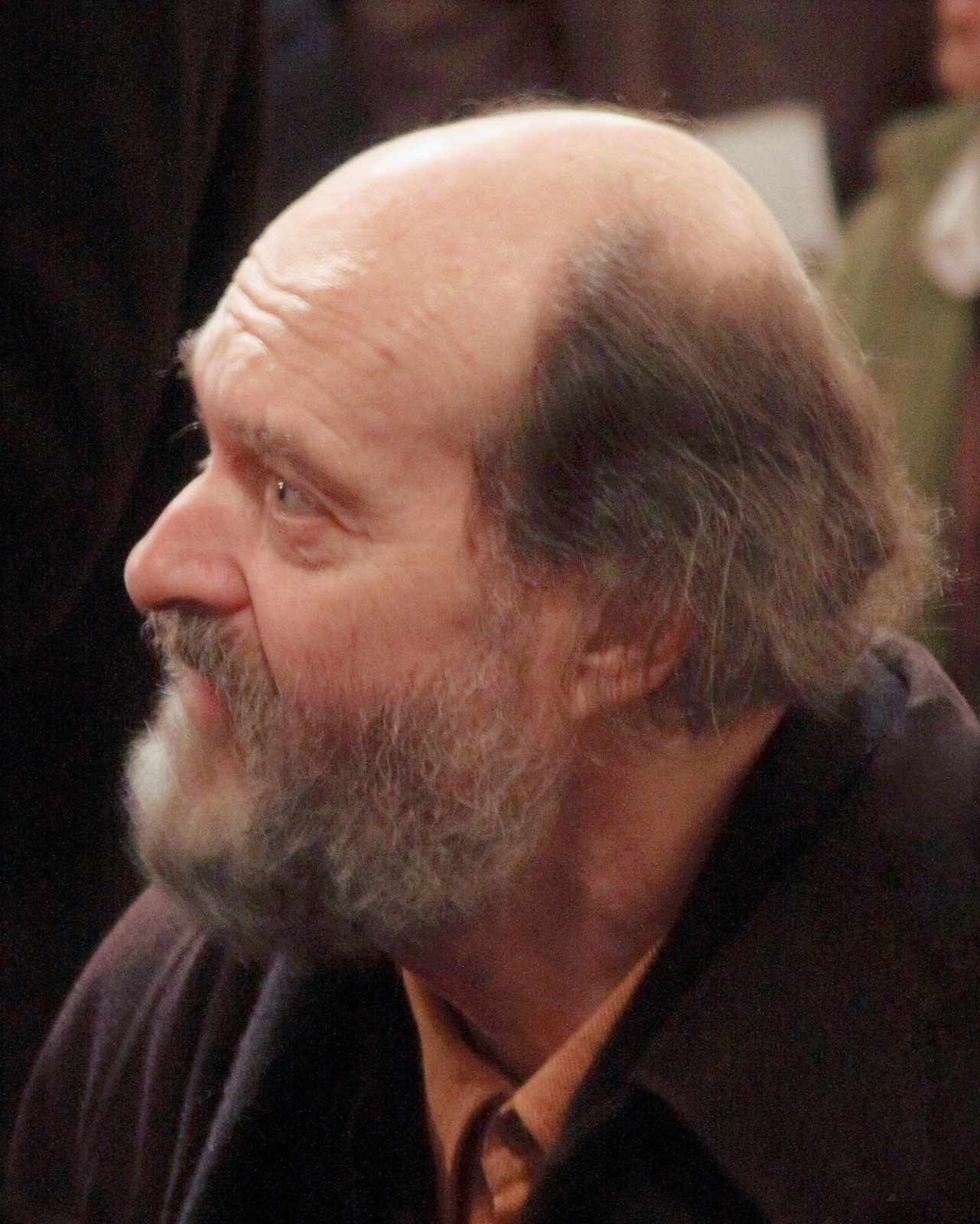
Manfred Eicher’s Recording Philosophy: Recording Negative Space
Born in 1943, Manfred Eicher trained as a double bassist and gained experience both performing classical music and assisting on recordings for Deutsche Grammophon before founding ECM. That background is essential: knowing both the heat of jazz and the precision of classical recording engineering, he chose a third path—recording jazz with classical clarity, yet with greater freedom than the classical establishment allowed. Having started with a modest loan at the opposite pole from major-label capital also shaped the independent character of the company.
Stated in a single sentence, Eicher’s philosophy is this: do not merely record the sound; record the entire space in which the sound is placed. Rather than pressing microphones up against an instrument to extract dry sonic components, he treats the way a tone rises and decays into the air of a room as part of the note itself. The generous reverberation heard across ECM records is less a cosmetic effect added after the fact than an architectural space designed into the performance. That is why, even when the reverb is deep, every detail remains startlingly clear. This “high resolution inside a deep mist” is the central paradox of the ECM sound.
His production style is equally distinct. Sessions are often completed in just two or three days, prizing immediate concentration and spontaneity. The sonic signature Eicher forged at Rainbow Studio in Oslo alongside engineer Jan Erik Kongshaug is frequently cited as ECM’s golden rule: piano overtones, the crisp articulation of cymbals, and the wood of the double bass coexist inside a wide acoustic field without crowding one another out. In the history of jazz recording, it was a genuine invention.
That same philosophy governs how sessions unfold. As many participating musicians have testified, ECM recordings avoid endless overdubs and patchwork editing, prioritizing capturing the living air of the performance intact. Eicher is no passive observer in the control room, but an active collaborator who weighs in on repertoire, track sequencing, and tempo; stories of a single quiet suggestion from Eicher transforming the character of an album are legion. Some musicians have found that closeness too restrictive and moved on, yet that very intensity is why ECM albums carry the weight of true auteur productions.
Any account of Eicher’s sensibility must also mention his devotion to cinema. He has often spoken of his admiration for directors such as Jean-Luc Godard and Andrei Tarkovsky, and ECM has even released soundtracks to Godard’s films. Eicher sequences the tracks of an album much like editing a film: the silence between tracks is a scene change, and the seconds of stillness at the beginning of a record are the darkened theater before the opening shot. Listening to an ECM album as if watching a short film is not an affectation; it is rooted in how the records are actually made.
Visual design is continuous with the sound. ECM sleeves are famous for near-monochrome landscape photography, abstract graphics, and restrained typography, rarely carrying verbose liner notes on the jacket. Visual negative space corresponds precisely to acoustic negative space—which is why people speak of “listening to ECM with your eyes,” and why holding the sleeve while listening is designed as part of the work. The ECM experience begins before the first note even sounds.
To be sure, this aesthetic has drawn its share of criticism over the decades for being “too cool,” “too refined,” or “all sounding the same,” and those who miss the sweat and grit of traditional jazz clubs have a point. Even so, ECM’s achievement in elevating recording from a mere transcript of performance to an art of space is beyond dispute. Tastes may divide, but even its critics recognize that no other label can take its place.
Three Signatures of the ECM Sound: Reverberation, Space, and Negative Space
What, specifically, should a listener tune their ears to hear on an ECM record? We can break the ECM sound down into three elements.
First is reverberation. Reverberation on ECM is not an effect meant to make instruments sound grand; it is a lens meant to show how a sound disappears. The several seconds it takes for a single piano chord to decay, or for the shimmer of a cymbal to dissolve into the air, are captured as an integral part of the performance. Listen less to the fast passages than to the exact moment a sound fades away—recordings where the vanishing point of a note is this beautiful are remarkably rare.
Second is spatial placement. On an ECM recording, you can feel the physical distance between instruments: the bass slightly further back, the saxophone just to the left, the piano spread across the room, with open, unoccupied air preserved between the sound sources. Because sparse arrangements meet uncrowded engineering, the listener can rest their attention inside those gaps. That breathing room is why ECM remains deeply engaging music that never fatigues the ear.
Third is negative space—the notes that were not played. Musicians who gather at ECM tend to play fewer notes the more accomplished they become: a Paul Bley solo, a single sustained tone from Jan Garbarek, the hush after Keith Jarrett lays down a chord. It is equally symbolic that so many ECM albums open with several seconds of silence, asking the listener to hear stillness first before stepping into the music. Silence functions as the picture frame.
A fourth trait worth adding is the sound of the recording venue itself. ECM selects recording locations carefully for each project—the intimate air of Oslo’s studio, the lucid acoustics of the Lugano radio hall, the long stone reverberation of the monastery that birthed Officium—so that the room itself plays as an additional member of the ensemble. Even with the exact same trio instrumentation, changing the hall changes the character of the record. Checking the recording venue listed in the booklet while comparing albums is one of the quiet pleasures unique to this label.
All of these elements concern not the notes being played, but the space around them. The art of listening to ECM is, at bottom, the art of listening to subtraction. If you come expecting a fiery battle of rapid-fire solos, you may feel shortchanged at first; yet once you notice the tension humming between the notes, ordinary records begin to sound a little noisy by comparison. That shift in perception is the greatest gift this label leaves with its listeners.
10 Essential Gateway Albums
From ECM’s vast catalog, here are ten essential albums arranged chronologically so a newcomer can explore without getting lost—eight from the jazz side, and two from the classical New Series and its cross-border experiments. All are easy to find and carry the unmistakable imprint of the ECM aesthetic.
For a closer look at the recording of The Koln Concert alongside Chick Corea’s Return to Forever and Pat Metheny’s Bright Size Life, see our guide to Three Essential ECM Masterpieces.
Paul Bley, “Open, to Love” (1972)
A solo piano album by the Canadian pianist that helped define the aesthetic of early ECM. Notes are pared down to the bone: a single tone is placed, silence follows, and inside that silence the decaying resonance of the previous note shifts its meaning. Drawing on compositions by Carla Bley and Annette Peacock, Bley sounds as if he is playing time itself rather than a keyboard. As a textbook of negative space in music, this belongs at the very beginning of your journey.

YThe Pop Group
Chick Corea & Gary Burton, “Crystal Silence” (1973)
A conversational duet for piano and vibraphone—an uncommon pairing at the time—recorded in Oslo in 1972. The way their mineral-clear timbres intertwine lives up completely to the title “Crystal Silence,” launching a musical partnership between the two masters that lasted for decades. No record demonstrates more clearly how luminously ECM engineering captures the natural overtones of acoustic instruments.
YThe Pop Group
Eberhard Weber, “The Colours of Chloe” (1974)
A leader debut by the German bassist that sounds like a landscape painting from a dream—neither quite jazz, nor chamber music, nor orchestral score. The singing, cello-like sustain of Weber’s custom five-string electric upright bass is unforgettable once heard. It also stands as a historic document of the moment European jazz stopped imitating American models and claimed a lyricism of its own, forming one of the origin points of ECM’s pictorial sensibility.

The Colours of Chloëエバーハルト・ウェーバー
Keith Jarrett, “The Koln Concert” (1975)
The document of a completely improvised solo piano concert performed late at night at the Cologne Opera House on January 24, 1975. Due to a mix-up at the venue arranged by the seventeen-year-old promoter Vera Brandes, only a small, out-of-adjustment rehearsal piano was available on stage. Exhausted from back pain and lack of sleep, Jarrett nearly refused to play—yet the music born that night proved how powerfully song can arise out of constraint. Widely cited as the best-selling solo piano album in history, that single evening also transformed the fortunes of ECM as an independent label.

The Koln ConcertKeith Jarrett
Ralph Towner, “Solstice” (1975)
A quartet session led by twelve-string and classical guitarist Ralph Towner alongside European masters Jan Garbarek, Eberhard Weber, and Jon Christensen. From the delicate pluck of acoustic guitar strings to the distant cry of the saxophone, ECM’s spatial imaging is on full display. Balancing the rhythmic heat of jazz with cool northern light, the instrumentation is sparse yet the sonic landscape feels vast—a defining masterpiece of the label’s classic 1970s period.

Solsticeラルフ・タウナー
Jan Garbarek, “Dis” (1977)
A recording by Norwegian saxophonist Jan Garbarek, joined by Ralph Towner on guitar, that feels as if it sealed the air of a northern seacoast directly onto tape. The resonant drone of a wind harp runs through the album, while Garbarek’s saxophone sounds less as if it is blowing a melody than drawing a single line across an open horizon. It is the primal landscape of the Nordic ECM aesthetic so often compared to fjords and winter light: nothing seems to happen on the surface, yet by the time the record ends, the scenery around you has changed.

Disヤン・ガルバレク
Pat Metheny Group, “Pat Metheny Group” (1978)
The self-titled debut of the group formed by the young guitarist Pat Metheny and his lifelong musical partner, keyboardist Lyle Mays. The wind-swept brightness of tracks like “San Lorenzo” and “Phase Dance” feels unusually open and sunlit within the ECM catalog, while the transparency and wide horizon of the recording remain unmistakably ECM. Pleasantly upending any notion that the label is purely austere, this album has served as the doorway into jazz for listeners around the world.
YThe Pop Group
Keith Jarrett, “My Song” (1978)
A studio album by Jarrett’s “European Quartet” with Jan Garbarek, Palle Danielsson, and Jon Christensen. Rather than Jarrett the marathon solo improviser, it foregrounds Jarrett the composer of concise, radiant songs. Led by the gentle warmth of its title track, it has been especially beloved by Japanese listeners for decades. Anyone who feels slightly intimidated by the pure improvisation of The Koln Concert may find this an even more natural place to start.
YThe Pop Group
Arvo Part, “Tabula Rasa” (1984)
When ECM launched its classical division, the New Series, Eicher chose the Estonian composer Arvo Part—then little known in the West—for its very first release. Featuring “Fratres,” “Cantus in Memory of Benjamin Britten,” and “Tabula Rasa” in Part’s bell-like tintinnabuli style, with performers including Gidon Kremer and Keith Jarrett, the album is contemporary classical music as quiet as a prayer. Compare it with ECM’s jazz catalog and you can immediately hear how the exact same aesthetic of silence runs through both.

Tabula RasaArvo Pärt
Jan Garbarek & The Hilliard Ensemble, “Officium” (1994)
An unprecedented collaboration pairing the Hilliard Ensemble—a male vocal quartet singing medieval and Renaissance sacred polyphony—with the improvised soprano saxophone of Jan Garbarek. Recorded inside an Austrian monastery, the long natural reverberation of the stone sanctuary rings as a fifth member of the ensemble. Impossible to pigeonhole as jazz, classical, or early music, it became a worldwide phenomenon that reportedly reached million-selling status. It represents one culmination of the ECM aesthetic, and as music for the deepest hours of the night, it has few peers.

Officiumヤン・ガルバレク&ヒリヤード・アンサンブル
Between Jazz and Classical: The New Series as a Second Pillar
In 1984, ECM established its classical imprint, the ECM New Series. Choosing the relatively unknown Arvo Part rather than an established warhorse for its inaugural release showed Eicher’s editorial eye at its sharpest. From then on, the New Series grew not as a sideline, but as a second pillar paired with the jazz catalog around a shared axis of quietude and spiritual depth.
What makes the New Series fascinating is how music from wildly different centuries and styles is bound together by the single thread of ECM’s sensibility. Following Part, the imprint introduced “composers of silence” from the former Soviet sphere such as Valentin Silvestrov and Giya Kancheli, alongside performer-driven recordings like Kim Kashkashian’s viola albums and the Keller Quartet’s readings of Bach and Ligeti. Artists who stand on the border between contemporary composition, improvisation, and vocal performance, such as Meredith Monk, have likewise found a natural home here.
Crossings between the jazz and classical sides began early. It is symbolic that Steve Reich’s Music for 18 Musicians (1978) was released on ECM rather than a traditional classical label, while Keith Jarrett recorded Bach’s Well-Tempered Clavier and Shostakovich’s preludes and fugues for the New Series. Improvisers play scored chamber works, a saxophone weaves through medieval chant, and contemporary classical compositions reach jazz listeners: ECM dissolved genre walls not through manifestos, but through a steady accumulation of great records.
As a practical suggestion for newcomers, if you enter ECM through the jazz side, cross over early to Part’s Tabula Rasa or his solo piano works; if you enter through the classical side, step across to a Keith Jarrett solo album or Paul Bley’s Open, to Love. Only when you travel back and forth between both banks does it become clear that ECM is neither a jazz label nor a classical label, but a label of quietude.
ECM and Japanese Listeners: Why It Has Been Loved So Deeply Here
While ECM has listeners around the globe, Japan was from early on one of its most devoted audiences. Several reasons come to mind. First is the culture of the jazz kissa: Japan’s unique listening spaces, where patrons sit quietly before a fine sound system and lend their ears together to a single LP, were a natural match for ECM’s aesthetic of “listening to the silence along with the notes.” Second is Japan’s audiophile culture, for whom ECM records have long served as a mirror reflecting the true capability of a stereo system. Third is a deep cultural affinity for negative space (ma): to a sensibility raised on rock gardens, ink wash painting, and haiku, ECM’s way of offering a scarcity of notes as richness felt, even as foreign music, strangely familiar.
The label’s own ties with Japan run deep as well. Keith Jarrett’s 1976 solo concert tour across five Japanese cities was released by ECM as the monumental box set Sun Bear Concerts, standing as a document of the intense concentration of Japanese audiences. Later years saw the Japanese pianist Masabumi Kikuchi, long active in New York, leave behind haunting late-career solo recordings on ECM. Including the decades-long popularity of The Koln Concert and My Song in Japan, the very fact that quiet European jazz took root here as an everyday listening genre is hard to imagine without ECM’s influence. Welcomed not as an imported luxury item, but as a natural extension of domestic aesthetics, the relationship between ECM and Japan has been a remarkably felicitous meeting.
The Next Step: 10 More Albums for Going Deeper (A Quick Map)
Here is a brief map of the landscape that opens up beyond the first ten albums. On the jazz side, start with Kenny Wheeler’s Gnu High (1975), a rare session where Keith Jarrett serves as sideman to Wheeler’s melancholic flugelhorn in a distillation of pure ECM lyricism. Magico (1979), by the trio of Charlie Haden, Egberto Gismonti, and Jan Garbarek, creates music where Brazil, Scandinavia, and North America meet on a map that exists nowhere else. Along the piano-trio lineage, the poised elegance of Bobo Stenson, the prayer-like quietude of Tord Gustavsen’s Changing Places (2003), and the warmth of the Marcin Wasilewski Trio carry the Nordic and Eastern European stream right into the present. Meanwhile, the albums of Tunisian oud master Anouar Brahem quietly dissolve the borders between Arab traditional music, jazz, and chamber music, revealing the geographic breadth of the catalog.
If you want to venture deeper into stillness, turn to Keith Jarrett’s The Melody at Night, with You (1999)—an intimate collection of ballads recorded at home while recovering from illness, where the setting aside of virtuosity opens up inexhaustible depth. Add vocal pioneer Meredith Monk’s Dolmen Music (1981), Garbarek and the Hilliard Ensemble’s reunion Mnemosyne (1999), the memory-laden late works of Valentin Silvestrov, and the Keller Quartet’s recordings of Bach and Ligeti—once you have walked this far, you no longer need a guide. From here on, the pleasure of drifting through the sea of catalog numbers with your own ears awaits.
How to Build a Listening Environment: Preparing “Silence” at Home
ECM recordings reward investment in your listening environment more honestly than almost any other records in the world—and that does not mean buying expensive audiophile hardware. What comes first is not gear, but the quietness of the room. Switch off the television and phone notifications, quiet down household appliances where possible, and choose the stillest hours of the late night or early morning. To hear “the most beautiful sound next to silence,” you first have to prepare silence itself in your room. Simple as it sounds, surprisingly few people actually do it.
Keep the volume modest. ECM records are engineered so that fine detail never collapses at low volume; in fact, turning the volume down is precisely what makes the layers of reverberation and the three-dimensional distance between instruments rise into view. If listening on speakers, find the sweet spot where the soundstage floats effortlessly between left and right; if using headphones, open-back designs generally pair better with this label’s sense of space than sealed headphones.
As a listening habit, turn off shuffle and play one album straight through from the beginning. The several seconds of silence placed at the opening of many ECM records are an intentional interval meant to reset the listener’s ears, and skipping past them misses half the point. Keep the album jacket within reach and gaze at its monochrome landscape photograph while listening. Since ECM opened its catalog to streaming platforms in 2017, every release is now within easy reach, yet owning even a few favorite titles on CD or vinyl completes the artwork experience.
Whenever possible, make your time with ECM a short span of dedicated listening rather than background multitasking. While you can let it blend into the room like ambient music, this label truly shines when you lean into the taut relationship between silence and sound. Fifteen minutes is enough: dim the lights, pour a drink, and sit with a single record. Those fifteen minutes will become the one stretch of a busy day where the speed of time itself changes.
Choosing records to match the hour and the weather is another joy: Dis on a rainy afternoon, Arvo Part on a snowy morning, Officium past midnight. Many ECM albums resonate deeply with weather and light, rotating the protagonists on your shelf as the seasons turn. When listening on headphones late at night, resist the temptation to turn the volume up; because ECM’s quietness opens its finest details at low levels, waiting patiently for two or three minutes while your ears adjust rewards you with a far deeper experience. Bringing the small ritual of the old jazz kissa—”tonight I will sit quietly with this one record”—into your home is the single best upgrade you can make, far more effective than replacing your amplifier.
As a concrete way to begin, here is a seven-day plan for your first week. On Day 1, dim the lights and listen to just the opening ten minutes of The Koln Concert. On Day 2, play Crystal Silence at low volume after dinner. On Day 3, take a deliberate rest and play nothing at all, letting your body remember the baseline of pure room silence. On Day 4, play Dis alongside the natural sound of rain or evening wind. On Day 5, cross over to the New Series for the first time with Tabula Rasa, and over the weekend, replay whichever album stayed with you most from start to finish. Across those seven days, your ears will change. Quietude is a kind of sound that becomes audible through gentle practice, and there is no finer textbook for that practice than the ECM catalog.
Conclusion: The Aesthetics of Subtraction Live in Recording Too
Let us review the main points:
- Founded in Munich in 1969 by Manfred Eicher, ECM has pursued a recording aesthetic described as “the most beautiful sound next to silence” for more than half a century.
- At the heart of its philosophy is recording not merely the notes, but the space in which they are placed and the way they fade away—combining deep reverberation with high resolution.
- The three keys to listening are reverberation, spatial placement, and negative space, all residing in the parts where nothing is playing.
- Start with the ten gateway albums above—including The Koln Concert, Crystal Silence, Dis, and Officium—and travel back and forth between the jazz catalog and the classical New Series.
- When preparing your listening environment, room quietness comes before expensive gear: keep the volume modest, play albums from start to finish, and never skip the opening silence.
- ECM’s deep reception in Japan rests on its natural affinity with jazz kissa culture, audiophile listening, and the traditional aesthetics of negative space (ma).
If you measure the appeal of music solely by “how many notes were played,” ECM may look like a roundabout label. Yet what this catalog teaches is that the notes left unplayed, the time after a sound finishes ringing, and the air between one instrument and another are music as well. The aesthetics of subtraction live not only in composition and performance, but in the art of recording itself—and fifty years of proof stand waiting along those rows of quiet spines on the shelf.
Further reading:
- Introduction to Ambient Music: 10 Essential Albums from Eno to the Present
- Introduction to Minimal Music: The Intoxication of Repetition and 10 Essential Works
For a weekly digest placing ECM and Hiroshi Yoshimura on the same shelf, see our Guide to Music of Silence and Negative Space.
Every time I put on an ECM record, I am struck by how the stillness between the notes has been captured right alongside the instruments. Rather than just the sounds being played, these records let you hear the space surrounding them. I cannot think of another label that answers our site’s motto—”hear the sound that isn’t there”—more directly.