Turn the volume down late at night, and the bass that sounded so satisfying during the day disappears, leaving only a thinned-out midrange. Because the cause of this phenomenon lies not in the playback gear but in the listener’s own ears, what matters when choosing headphones is not whether a model “produces heavy bass,” but whether the music holds together while the volume stays low. Three factors decide that outcome: acoustic isolation, sensitivity and impedance, and low-frequency contour.
Why Quiet Music Sounds Thin Is Part of the Ear’s Specification
The curves that connect sound pressure levels perceived as equally loud across frequencies are called equal-loudness contours, standardized internationally as ISO 226. The current third edition, published in March 2023, revised the 2003 edition primarily by refining the exponents linking loudness perception to physical intensity and tidying up significant digits in the formulas; the difference in the curves themselves is at most around 0.6 dB. When the first revision in twenty years moves the numbers by only that narrow margin, we can safely treat this property of hearing as a fixed premise.
What the curves show comes down to a single point: the lower you turn the volume, the harder it becomes to hear low and high frequencies relative to the midrange. Sensitivity that is comparatively flat at high volume rises steeply toward the low end at quiet levels, meaning it takes far more sound pressure to bring bass up to the threshold of audibility than it does for midrange frequencies. Viewed from the standpoint of choosing headphones, the principles covered in our guide to The Art of Rich Low-Volume Audio boil down to the three conditions below.
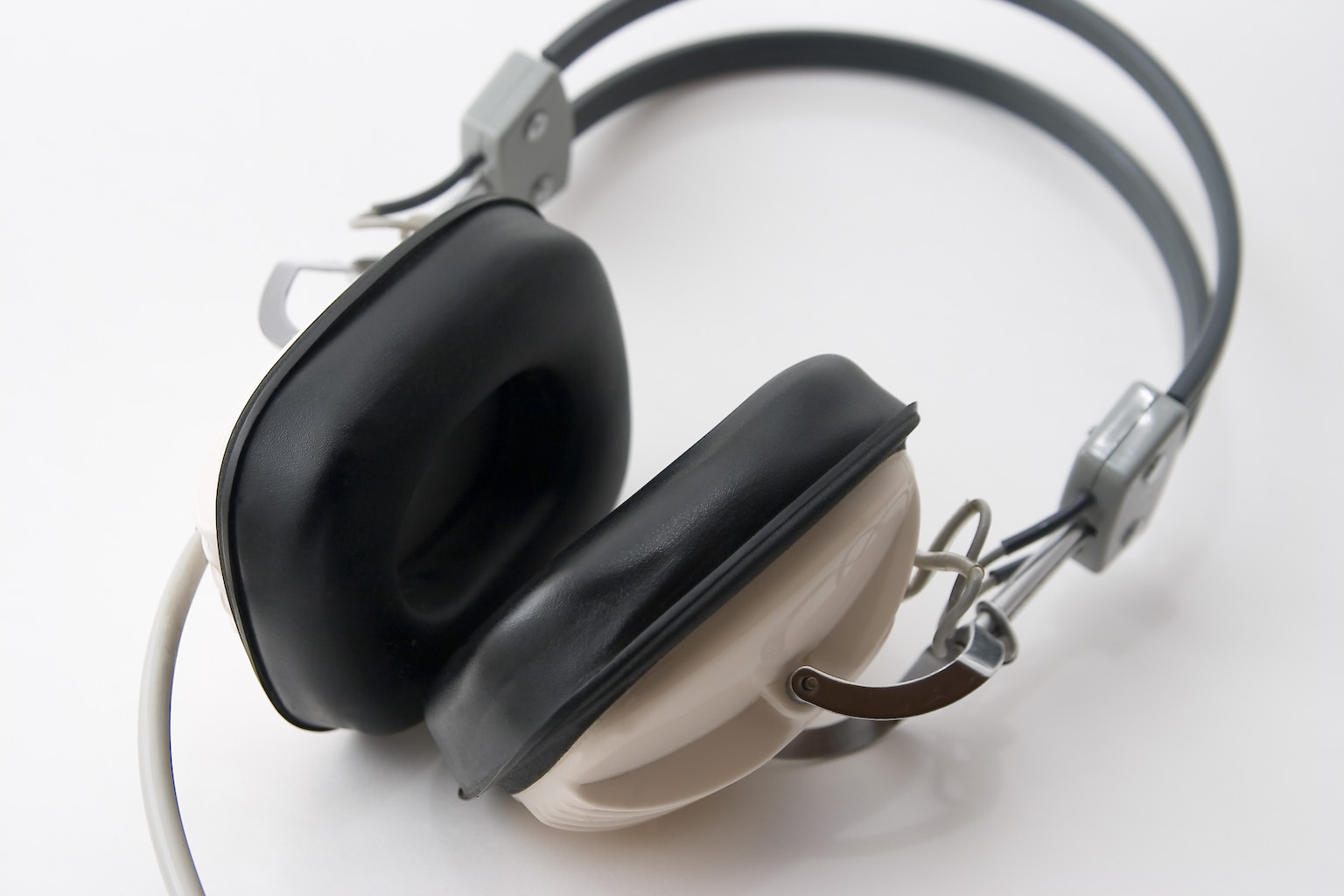
Condition One: Think About Isolation Before Adding Sound
In low-volume listening, the first factor that comes into play is not what you add, but what you subtract. Air conditioner airflow, a refrigerator compressor, cars passing outside. In a room where 20 to 30 dB of background noise is constantly present, you unconsciously nudge the volume up until the music clears that noise floor, and what you think is “low-volume listening” ends up surprisingly loud.
Open-back headphones provide almost no acoustic isolation by design, trading away external noise blocking in exchange for a natural soundstage. In a quiet room, open-back headphones sound wonderfully relaxed at low volume, but in a room with background noise, choosing an open-back pair immediately pushes you toward turning the volume up, reversing the verdict depending on your environment. Closed-back headphones block outside noise, but sealing the ear also traps low frequencies, increasing bass weight and often creating a sense of pressure during long sessions. Active noise cancelling works well against low, steady hums like fans or road noise, yet struggles against irregular, higher-pitched sounds like voices or clinking dishes, so it will not erase every household sound late at night.
What you need to evaluate first, therefore, is not the product but your room. A night where simply switching off the air conditioner brings silence calls for a completely different type of headphone than a night near a railway line where ambient noise is unavoidable. Concrete steps for preparing the room side of the equation are summarized in our Practical Checklist for Late-Night Low-Volume Listening.
Condition Two: Everything Is Decided Near the Bottom of the Volume Dial
Spec sheets list sensitivity (in dB/mW or dB/V) alongside impedance (in ohms); the higher the sensitivity and the lower the impedance, the louder the sound produced for a given output. That relationship is straightforward on paper, yet in low-volume listening, “easier to drive” is not automatically an advantage.
Plug an ultra-high-sensitivity pair directly into a smartphone, and your usable listening volume ends up pinned to the very bottom of the scale, where a single step changes loudness so drastically that you cannot land on a comfortable level. On analog potentiometers, left-right channel imbalance—known as gang error—also tends to surface right in this lowest region. Conversely, lower-sensitivity, higher-impedance headphones may struggle to reach ear-splitting levels on modest outputs, but give you generous headroom for fine adjustment at quiet levels. If you only listen at night, lack of maximum volume is rarely an issue, making fine control at low volume a far more practical priority.
You can check this right now before looking up a single model name. On your current setup, where does your comfortable nighttime volume sit on the dial or slider? If it is pinned near the very bottom, adding finer volume steps through app-level attenuation or a device output setting will often solve the problem at zero cost before you replace your headphones.
Condition Three: Judge Bass by Contour Rather Than Quantity
Because bass sounds thinner at low volume, it is tempting to reach for bass-heavy headphones, yet that instinct often backfires. Bass tuned to impress through sheer quantity tends to lose its outline when turned down, leaving behind only a murky, indistinct mass.
What holds together at low volume is bass that keeps its contour rather than its bulk: being able to follow the pitch of a bassline, and hearing the decay of a kick drum without mud. That distinction is hard to notice at loud levels and only reveals itself when you turn the volume down. If you audition headphones in a store, therefore, the only reliable test is to turn the volume down from the shop’s default level to the quiet level you actually use at night. Ask the staff for a quiet audition and drop the volume; a model that sounded impressive a moment ago can leave a completely different impression.
Recordings with sparse instrumentation and generous negative space bring this difference into the sharpest focus. Works of Japanese environmental music and releases on the ECM label make ideal test material.
Loudness Compensation Depends on How You Listen
Some playback devices and apps offer compensation that lifts low and high frequencies at quiet volumes—features labeled Loudness or Adaptive EQ. Because they work in the exact direction needed to offset the ear’s equal-loudness contours, the underlying logic is entirely sound.
Because the compensation tracks volume continuously, however, changing the volume also alters the tonal balance as a side effect. If you tend to reach for the volume control mid-song, turning compensation off and listening with a fixed tonal balance is often less fatiguing over time; if you set a steady volume and let an album play through, compensation works very well. Which approach is better depends on your listening habits rather than the headphone model, and there is no single universal right answer.
Why This Guide Names No Specific Models
The reason we have not named specific headphone models up to this point is that all three conditions rest on personal variables: your room’s ambient noise, your playback hardware, and your usual listening level. Because the exact same pair of headphones can earn opposite verdicts in a quiet room versus a noisy one, listing model names without pinning down those conditions serves little practical purpose.
Measurement conditions for sensitivity and impedance also vary among manufacturers, making it unreliable to rank models strictly by catalog numbers. Above all, equal-loudness contours describe how perception changes, not which tonal balance you ought to prefer. That final judgment always belongs to your own ears.
Techniques for increasing musical satisfaction without raising the volume are covered in The Art of Rich Low-Volume Audio, and ways of listening that lead gently into sleep are explored in Silence, Sleep, and Music.