What music historians call the Canterbury Scene is not a regional folk tradition. It is the network of keyboard-driven, odd-meter ensembles and dry British pastoral humor created by the former members of a single Canterbury band, The Wilde Flowers (disbanded in 1969), as they repeatedly regrouped throughout the 1970s. Fuzz-distorted Hammond organs, Lowrey organs, and Fender Rhodes electric pianos carry both the harmonic architecture and the extended solos in place of electric guitar, while complex meter shifts flow with effortless, conversational lightness.
If you are choosing your very first album from this movement, start with Caravan’s In the Land of Grey and Pink (released April 8, 1971; running time 43:31). Its structure leads the ear naturally from melodic, pastoral vocal songs on Side A into the 22-minute five-part organ suite “Nine Feet Underground” occupying Side B. Below, we trace the personnel lineage and recording history across Harvest, CBS, Deram, Virgin, and Charly from 1969 to 1978 through eight essential albums (plus one 1978 culmination).
Personnel Lineage from The Wilde Flowers (Disbanded 1969) and 1969–1978 Recording Chronology
Many listeners hesitate to explore the Canterbury Scene because there seem to be too many band names to memorize. In reality, the opposite is true. Every major group stems from the alumni of The Wilde Flowers—active in Canterbury, Kent during the mid-1960s and disbanded in 1969—including Robert Wyatt, Kevin Ayers, Hugh Hopper, Richard Sinclair, Dave Sinclair, Pye Hastings, and Richard Coughlan. Once you view the scene as a single evolving ensemble joined by London-based keyboardist Dave Stewart, guitarist Phil Miller, and drummer Pip Pyle, all eight albums connect along a single continuous thread.
Arranging the recordings chronologically from 1969 to 1978 reveals a step-by-step structural experiment in balancing songwriting with extended improvisation. Compared with contemporary German groups that rebuilt rock from hypnotic motorik repetition (see our Michael Rother and Post-NEU! Discography Timeline), the Canterbury musicians were obsessed with weaving shifting chord voicings and asymmetric meters into chamber-like arrangements.
| Era & Stream. | Musical Characteristics (Instrumentation, Meter, Studio). | Key Labels & Figures. | Representative Albums. |
|---|---|---|---|
| Phase 1: Divergence (1969–1970). | Split between whimsical psychedelic songwriting and side-long (18–20 min) instrumental jazz-rock suites. | Harvest / CBS. Kevin Ayers, Robert Wyatt, Mike Ratledge, Hugh Hopper. | Joy of a Toy (41:38), Third (75:15). |
| Phase 2: The Organ Suite (1971–1972). | Fuzz-toned Hammond and Lowrey organs driving 9/8 and 7/8 meters alongside electric piano free improvisation. | Deram / CBS. Dave Sinclair, Richard Sinclair, Dave Stewart, Phil Miller. | The Polite Force (42:20), In the Land of Grey and Pink (43:31), Matching Mole (40:02). |
| Phase 3: Virgin Maturity & Synthesis (1974–1978). | Drone-based chamber song craft, polyrhythmic space-rock, and intricate multi-part instrumental writing. | Virgin / Charly. Robert Wyatt, Steve Hillage, Pip Pyle, National Health. | Rock Bottom (39:31), You (44:38), The Rotters’ Club (50:15), Of Queues and Cures (52:02). |
Phase 1: The Soft Machine Split — Kevin Ayers and the 1969–1970 Jazz-Rock Turn
The story of Canterbury recordings begins with the creative split inside Soft Machine. After touring the United States with The Jimi Hendrix Experience in 1968, founding bassist/vocalist Kevin Ayers stepped away from the band’s increasingly dense instrumental direction to craft intimate, eccentric songs, while keyboardist Mike Ratledge, bassist Hugh Hopper, and drummer Robert Wyatt pushed toward monumental jazz-rock structures.
Kevin Ayers — Joy of a Toy (November 1969): Abbey Road Chamber Whimsy and Soft Machine Backing

Joy of a Toy.Kevin Ayers.
Soft Machine — Third (June 1970): Four Side-Long Suites Across 75 Minutes
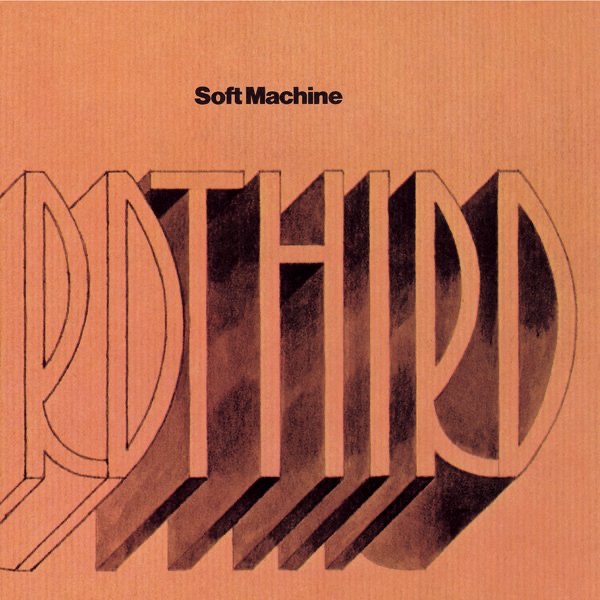
Third.Soft Machine.
Phase 2: Odd-Meter Organ Suites — Egg, Caravan, and Matching Mole (1971–1972)
Between 1971 and 1972, the focus shifted to how organists Dave Stewart and Dave Sinclair shaped long-form suites and how Dave Sinclair’s move from Caravan to Robert Wyatt’s Matching Mole cross-pollinated the entire scene.
Egg — The Polite Force (February 1971): 9/8 Counterpoint and the 20-Minute “Long Piece No. 3”

The Polite Force.Egg.
Caravan — In the Land of Grey and Pink (April 1971): Pastoral Songcraft Meets a 22-Minute Organ Suite

In the Land of Grey and Pink.Caravan.
Matching Mole — Matching Mole (April 1972): Robert Wyatt’s New Quartet After Leaving Soft Machine

Matching Mole.Matching Mole.
Phase 3: Virgin Records Maturity — Wyatt’s Rebirth, Gong, and Hatfield and the North (1974–1978)
By 1974, Virgin Records had become the creative home for the scene’s most personal and technically refined albums, culminating in National Health’s 1978 instrumental synthesis.
Robert Wyatt — Rock Bottom (July 1974): Drone Keyboards and Deeply Personal Songwriting

Rock Bottom.Robert Wyatt.
Gong — You (October 1974): Daevid Allen’s Radio Gnome Finale and Polyrhythmic Space-Jazz

You.Gong.
Hatfield and the North — The Rotters’ Club (March 1975): A 50-Minute Convergence and the Bridge to National Health

The Rotters’ Club.Hatfield and the North.
To hear where this instrumental lineage arrived at the end of the decade, continue to National Health’s Of Queues and Cures (recorded July 1978 at Ridge Farm Studio, released December 1978 on Charly; 52:02), formed by Hatfield veterans Dave Stewart, Phil Miller, and Pip Pyle with bassist John Greaves. Led by the nine-minute opener “The Bryden Two-Step (For Amphibians), Pt. 1,” it demonstrates the final chamber-rock peak of 1970s Canterbury composition.

Of Queues and Cures.National Health.
Albums That Can Overwhelm First-Time Listeners and Key Differences from Symphonic Prog
Equally important is knowing which records not to pick first and why expectations shaped by symphonic progressive rock often misfire here. I do not recommend starting your Canterbury journey with Track 1 (“Facelift”) of Soft Machine’s Third (1970).
Third is unquestionably a landmark of 20th-century music. Yet because its 75:15 runtime opens with over 18 minutes of abrasive tape collage and dense horn improvisation, newcomers expecting “witty, pastoral British rock” often bounce off before reaching “Slightly All the Time” or “Moon in June.” Likewise, the tone-generator experiments on Side B of Egg’s The Polite Force (1971) or Robert Wyatt’s free-improvisation solo debut The End of an Ear (1970) are steep entry points before you know the musicians’ harmonic vocabulary.
Moreover, listeners accustomed to the sweeping Mellotron crescendos and theatrical dynamics of symphonic progressive rock sometimes find the Canterbury bands understated on first listen. Rather than building stadium-sized climaxes, Canterbury musicians prize conversational interplay in a small room—subtle Fender Rhodes voicings, fuzzed organ counterpoint, and odd meters played with relaxed wit. Once you approach these albums like chamber music or a closely miked jazz combo, every harmonic turn comes alive.
For that reason, start with Caravan’s In the Land of Grey and Pink (1971) or Hatfield and the North’s The Rotters’ Club (1975). After your ear settles into Dave Sinclair and Dave Stewart’s organ textures and Richard Sinclair’s vocals, work backward through Matching Mole’s Matching Mole (1972), Robert Wyatt’s Rock Bottom (1974), and finally Soft Machine’s Third (1970).
Related Guides on Studio Recording History and Ensemble Structure
After exploring these eight Canterbury recordings, the following guides trace the broader evolution of late-1960s and 1970s studio architecture and rhythm-section interplay.
For the late-1960s British studio revolution in stereo staging and bass presence that preceded Kevin Ayers’s 1969 Abbey Road sessions on Joy of a Toy, read The Beatles’ Studio Sound Evolution Seen Through the Rubber Soul Editions.
To compare Canterbury’s intricate chord changes with Germany’s motorik pulse (Michael Rother / NEU!), the horn architectures of 1960s Free Jazz, and 1970s Jazz-Funk electric piano grooves, follow the linked guides in the sections above.
Recording dates, release dates, running times, labels, and personnel credits are verified against original album sleeves and discographical documentation as of November 3, 2026.