Maybe you stumbled across “Plastic Love” on YouTube late at night, or heard that “Mayonaka no Door (Stay With Me)” hit No. 1 in the world on Spotify’s viral chart. Around 2020, city pop became a global genre without Japan ever consciously exporting it. Even more remarkably, at the center of it all were not new releases, but recordings made in Tokyo forty years ago. This guide traces the real-world path of that unexpected reassessment, unpacks the history of the term “city pop” and what the music actually sounds like, and walks you through the first five albums to hear—plus ten more for going deeper. It is, in truth, another chapter of the same story told in our Introduction to Ambient Music on the global rediscovery of Japanese environmental music.
What Is City Pop? Not a Genre, Support for an “Urban Mood”
City pop has no strict definition. Broadly speaking, it refers to urban pop music made in Japan from the late 1970s through the 1980s that absorbed Western styles such as AOR, soul, funk, and bossa nova. Unlike punk or techno, however, it was never a movement whose practitioners rallied under a single banner; in practice, it is closer to a record-store shelf label discovered in hindsight. That is precisely why its borders remain blurry, why every listener draws the map a little differently, and why the joy of digging never runs dry.
The Three Lives of the Term “City Pop”
The name itself was coined three separate times. In the mid-1970s, the music around Sugar Babe was called “city music.” By the late 1970s and early 1980s, “city pops” had settled in as a magazine and record-label promotional term. Then, during the 2010s revival, overseas listeners began calling it “city pop” in English, and that label was re-imported into Japan as the present-day term. The history of the name tells the story of how the music was received.
What Does It Actually Sound Like?
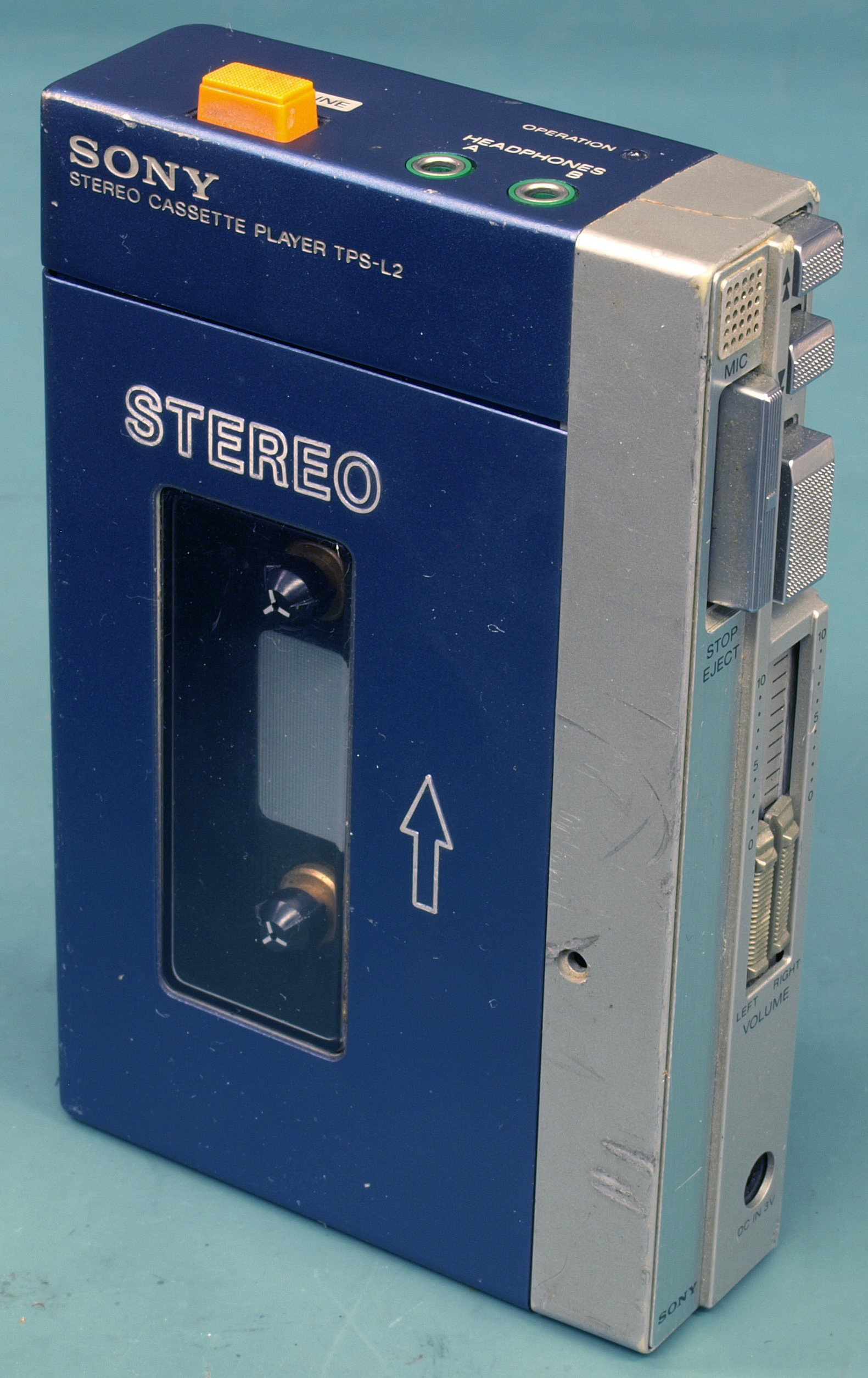
Still, several musical threads tie it together. First is a groove built on sixteen-beat rhythms and syncopation, which moves the body quite differently from the eight-beat pulse of contemporary kayokyoku pop. Second is the sound of extended chords—major sevenths and ninths—whose harmony accounts for almost all of that “urbane yet slightly wistful” feel. Third is the playing precision and studio recording quality inherited from fusion and AOR. And fourth is the scenery in the lyrics: metropolitan expressways at night, coastlines, hotel lobbies, and the emotional distance of urban romance. Behind it all lay a mature production infrastructure. Advertising and record-industry budgets sustained an ecosystem of first-call studio musicians, domestic recording gear and studios reached world-class standards, and FM radio, car stereos, and the Sony Walkman (released in 1979) created an environment built for listening on the move. In short, this music was designed with the scenery of its listening already built in.
It also helps to clarify how city pop relates to the contemporaneous “New Music” movement. If New Music was a broad umbrella referring to a folk-derived mode of production—singer-songwriters writing and performing their own material—city pop sat under that umbrella as the wing oriented toward cosmopolitan studio sound. Nor is it quite accurate to call city pop “the music of Japan’s bubble economy.” Most of its defining records were made between 1977 and 1984, on the eve of the bubble years (1986–1991). Precisely because it belonged not to the peak of affluence but to the upward slope toward it, the music carries that distinct blend of anticipation and quiet unease—which helps explain why it resonates so strongly today.
Finally, a brief note on three neighboring terms that appear throughout this guide. AOR (Adult Oriented Rock) refers to sophisticated, studio-polished rock exemplified by Boz Scaggs and Steely Dan, the direct model for much of city pop. Boogie is post-disco, bouncing sixteen-beat funk. Light Mellow is a critical vocabulary cultivated by Japanese record collectors and disc guides to describe mellow, urban-leaning recordings across genres. Keeping these three terms in mind makes both Japanese record-store bins and English-language articles much easier to navigate.
Where Did the Revival Come From? A Duet of Algorithms and Crate-Digging
The reassessment of city pop was no overnight miracle; it was a ten-year, multi-stage rocket. Breaking it into stages makes the trajectory clear.
Stage 0: The Domestic Groundwork — Wamono DJs and Light Mellow
Long before the overseas boom, crucial groundwork had been laid inside Japan. Throughout the 2000s, DJs digging for Japanese vinyl (“Wamono”) kept spinning records from this era on club floors, while the critical vocabulary of “Light Mellow”—re-evaluating mellow urban pop across genres—took root through influential disc guides. On the musicians’ side, acts such as Ryusenkei and cero updated city-pop-inspired aesthetics as living, contemporary music from the late 2000s into the early 2010s, stirring a domestic revival well ahead of the global wave. Overseas algorithms did not spark a fire from nothing; they blew wind onto embers that were already glowing in Japan.
Stage 1: Sampling — Vaporwave and Future Funk
In the early 2010s, the internet-born genre vaporwave turned 1980s Japanese consumer imagery into raw material, and its offshoot future funk re-edited Japanese city pop and idol pop into dance tracks. Saint Pepsi’s “Skylar Spence” (2013), built around Tatsuro Yamashita’s “LOVE TALKIN’,” is a classic example. Korean DJ and producer Night Tempo accelerated the wave with his “Showa Groove” series, creating a steady pipeline of overseas listeners tracking down the original songs behind the samples. The initial fuel for the revival was less reverence than an appetite for sampling.
Stage 2: The Viral Spread of “Plastic Love” (2017–)
In July 2017, a user named “Plastic Lover” uploaded an unofficial eight-minute extended version of Mariya Takeuchi’s “Plastic Love” to YouTube. The platform’s recommendation algorithm began dealing it onto home screens around the world, racking up more than 24 million views before a copyright dispute over the thumbnail photograph briefly took it down. The comments section filled up in dozens of languages with variations on “I don’t know how I got here, but I can’t leave,” turning the track into a global meme. In response, Warner Music Japan released an official short music video in May 2019 and a full-length version in November 2021. Around the same time, a 12-inch vinyl reissue sent a song more than thirty-five years old into the top ten of Japan’s sales charts. Originally an album track on VARIETY (1984), “Plastic Love” had peaked at No. 86 on Oricon when issued as a 12-inch single in March 1985. A song that was never a major hit in its own time became a global standard via algorithm.
What should not be overlooked in this phenomenon is the role of the comment section itself. Tens of thousands of listeners confessed to a strange nostalgia for a Tokyo they had never visited in an era they had never lived through, turning the page into a late-night gathering place for strangers sharing their solitude. The song’s own theme—the hollow ache of romance in the city—aligned completely with the way people were actually listening to it. Brand-new in the form of its success, yet unchanged for forty years in what it sang about: that twist sits at the heart of the “Plastic Love” phenomenon.
Stage 3: “Mayonaka no Door (Stay With Me)” Reaches World No. 1 (2020)
At the end of October 2020, when Indonesian singer Rainych released a cover of Miki Matsubara’s “Mayonaka no Door / Stay With Me” (1979), plays of the original track surged across TikTok and streaming platforms. In December 2020, it held the No. 1 spot on Spotify’s Global Viral 50 chart for more than two consecutive weeks (reported as 15 to 18 straight days). It entered the Apple Music J-Pop Top 10 in 92 countries, eventually surpassed 100 million streams on Spotify, and prompted a 12-inch vinyl reissue. The original was Matsubara’s debut single recorded at age nineteen, with lyrics by Yoshiko Miura and composition and arrangement by Tetsuji Hayashi, peaking at No. 28 on Oricon in 1979. Matsubara herself had passed away in 2004 at the age of forty-four, meaning the entire global rediscovery unfolded in her absence—a fact that gives the phenomenon its poignancy and critical weight.
Rights holder Pony Canyon responded to the surge by commissioning physical reissues, official lyric videos, and placements on playlists worldwide. Rainych’s cover video continues to draw messages of tribute and gratitude from listeners around the globe. Something larger than chart statistics was at work in this rediscovery.
Stage 4: Reissues and the Vinyl Market — Critical Backing
It was reissue labels that translated an internet boom into the language of criticism and physical records. Starting in 2019, Seattle’s Light in the Attic curated the three-volume compilation series Pacific Breeze: Japanese City Pop, AOR & Boogie, exporting the music complete with its historical context and detailed liner notes. Used LPs soared in price both in Japan and abroad, and domestic labels rolled out wave after wave of vinyl reissues. The fact that Tatsuro Yamashita’s catalog has long remained off subscription streaming services also wound up reinforcing the culture of city pop as music meant to be heard on vinyl. Algorithms built the entrance, and record shops built the exit—a true duet.
Retail floors inside Japan changed as well. Major shops set up permanent “City Pop” sections, original pressings with obi strips became collector’s items, and official reissues restored the option of buying brand-new vinyl at normal prices. For newcomers, starting with reissues and streaming to experience the music itself is a far healthier order than chasing expensive original pressings from day one.
Stage 5: Present Tense — From Samples to the Mainstream
The reassessment continues in the present tense. Nothing symbolized this more clearly than The Weeknd—one of the biggest pop stars on the planet—boldly sampling Tomoko Aran’s “Midnight Pretenders” (1983) on his 2022 track “Out of Time.” What had once been an underground game of musical citation became a standard option in mainstream pop production. In Japan, a younger generation of artists now writes songs with this vocabulary as a given, while overseas festivals regularly invite veteran Japanese musicians to perform. The story traced here is not a retrospective of a finished fad, but a map in the present tense that keeps being redrawn. Pressing play on FOR YOU tonight makes you part of its next page.
Grasping the Lineage: From Happy End to Pre-Bubble Tokyo
Keep three main trunks of musical lineage in mind, and dozens of classic albums snap into a single network.
Trunk 1: Happy End to Tin Pan Alley
Active from 1969 to 1972, Happy End (Haruomi Hosono, Eiichi Ohtaki, Shigeru Suzuki, and Takashi Matsumoto) settled one of Japanese popular music’s defining questions: how to sing rock in the Japanese language. After the band broke up, Hosono and Suzuki joined Tatsuo Hayashi and Masataka Matsutoya to form Caramel Mama (later Tin Pan Alley), backing Yumi Arai on Hikoki-gumo (1973) and designing the sonic blueprint of 1970s New Music from behind the scenes. City pop’s DNA ofastonishingly high musicianship comes directly from this lineage. Meanwhile, lyricist Takashi Matsumoto went on to define the peak of 1980s kayokyoku—extending the same trunk deep into mainstream pop.
Trunk 2: Niagara and Sugar Babe
Through his own Niagara label, Eiichi Ohtaki released SONGS (1975) by Sugar Babe, the band led by Tatsuro Yamashita and Taeko Ohnuki. That album became the meeting point for young musicians crafting a new urban pop sound, and after Sugar Babe dissolved, Yamashita and Ohnuki each blossomed as solo artists. Ohtaki himself achieved a massive national hit with A LONG VACATION (1981), presenting one definitive perfection of city pop’s aesthetic: resort-bright imagery paired with obsessively detailed studio craft.
Trunk 3: The Economy of Studio Craftsmen
The third trunk is not a band, but an economic system. In an era when advertising and record-label budgets were flush, first-call session players such as Hiroshi Sato, Masaki Matsubara, Jun Aoyama, and Koki Ito worked studio dates day and night, pouring the same musical touch into television commercials and idol records. That is why unmistakable “city pop moments” lie buried inside idol LPs and commercial jingles—the structural reason why crate-digging in this field never hits bottom.
This trunk crosses directly into kayokyoku. Tetsuji Hayashi, who wrote and arranged “Mayonaka no Door,” also composed Akina Nakamori’s “Kita Wing”; idol pop and city pop shared the exact same studios and the exact same session players. Drawing a rigid border between “city pop here” and “kayokyoku there” misses the point. The shelf label is only a doorway into one continuous, sprawling culture of studio recording.
The First Five Albums
These five records were chosen on three criteria: deep ties to the global revival, easy availability today, and unmistakable musical highlights. The listening order is deliberate too: sunlit drive → urban shadow → ground zero → world No. 1 → the bedroom-studio future.
1. Tatsuro Yamashita, “FOR YOU” (1982)
The sonic peak of city pop. A single burst of rhythm guitar at the opening of “SPARKLE” conjures a summer bayshore highway. Over the airtight rhythm section of Jun Aoyama (drums) and Koki Ito (bass), Yamashita stacks layer upon layer of his own multi-tracked backing vocals. Right through “LOVELAND, ISLAND” and “YOUR EYES,” the playing, recording, and arrangement operate at an extraordinary level of precision that has not aged a day in forty years. Eizin Suzuki’s cover illustration remains the visual shorthand for city pop itself.
Released in January 1982 on the heels of his breakthrough hit “RIDE ON TIME” (1980), the album captures momentum, studio budget, and craft in ideal proportion. With the expansive lift of “MUSIC BOOK” and the stillness of “FUTARI,” its depth goes far beyond a simple summer record. Because Yamashita’s catalog has long remained off subscription streaming services, tracking down the CD or vinylLP of this album becomes an initiation rite of its own. Play Side A straight through first; on your second spin, put on headphones and follow nothing but how the backing vocals are stacked.

YThe Pop Group
2. Taeko Ohnuki, “SUNSHOWER” (1977)
Ohnuki’s second solo album, recorded the year after Sugar Babe disbanded. With Ryuichi Sakamoto serving as the linchpin of the arrangements, the record leans into jazz-crossover-inflected urban soul. What sets it apart is that shade comes before sunshine: the cool, detached solitude of “Tokai” (“Metropolis”) sounds like a premonition of the emotions later shared across borders in late-night YouTube comment threads. It is the ideal record for breaking the misconception that city pop is only about bright summer optimism. Heavily favored by overseas DJs and frequently sampled, it rewards close attention to the interplay of space and density on “Summer Connection” and the sinuous bassline of “Tokai.”
The session roster brings together key figures from the Tin Pan Alley circle, and the young Ryuichi Sakamoto’s arrangements—from string voicings to electric piano—show remarkable range. Because Ohnuki’s later work moved toward a more European chamber-pop sensibility, SUNSHOWER remains the essential entry point for her urban soul years.

SUNSHOWER大貫妙子
3. Mariya Takeuchi, “VARIETY” (1984)
Home to “Plastic Love” and ground zero of the global revival. Recorded as Takeuchi’s comeback album after a hiatus for marriage and childbirth, it was the first album written entirely by Takeuchi herself, with her husband Tatsuro Yamashita handling production and sonic architecture. For sheer song-by-song hook strength, it stands first among these five picks. Knowing that “Plastic Love” was originally just an album cut (issued on 12-inch the following year, peaking at No. 86 on Oricon) makes its current worldwide fame almost dizzying. Listen to the full album to hear why listeners around the world wondered how a record like this existed in 1980s Japan.
The album itself went straight to No. 1 on the Oricon chart upon release, packed with single-caliber tracks such as “Mou Ichido.” Anchored by the same Jun Aoyama and Koki Ito rhythm section as FOR YOU, the two records play like day and night in the same city when heard back to back. Repeated vinyl and cassette reissues have also kept physical copies easy to find.
YThe Pop Group
4. Miki Matsubara, “POCKET PARK” (1980)
The debut album featuring “Mayonaka no Door / Stay With Me.” Composer and arranger Tetsuji Hayashi translates American AOR into Japanese pop with dazzling assurance, and the pairing of a nineteen-year-old singer’s vocal gloss with seasoned studio players’ harmonic sophistication still sounds fresh today. Hearing the whole record makes it clear that the viral hit was no fluke, but rested on the strength of a complete album. Once you know the story of its trip to No. 1 in the world—and that Matsubara herself is no longer here to see it—the opening intro alone carries a quiet ache.
Hayashi would go on to pen major hits such as “Kita Wing,” and his melodic craftsmanship is already fully formed here. Even on brisk tracks like “That’s My Baby,” the crispness of the rhythm section stands out, striking a poise halfway between a tight studio band and classic kayokyoku. Following the revival, official vinyl reissues and streaming releases have made the album easy to enjoy through legitimate channels.

松原みき 真夜中のドア松原みき 真夜中のドア
5. Hiroshi Sato, “awakening” (1982)
One of the ultimate answers among deep collectors. After keyboardist Hiroshi Sato—a veteran of the Tin Pan Alley circle—returned from a stint in the United States, he recorded this landmark of home-studio city pop almost entirely on his own using a LinnDrum (then a cutting-edge drum machine) and multi-track overdubbing. Floating halfway between AOR, boogie, and ambient music, its sonic image anticipates modern bedroom pop by decades. Sato passed away in 2012, but 2010s reissues sent his international reputation soaring.
Having supported key Tin Pan Alley sessions and Haruomi Hosono’s tropical-period recordings before experiencing American studio production firsthand, Sato crafted a cool-temperature groove on tracks like “Awakening” and “Blue And Moody Music” that melts the line between programmed drums and live performance—unbeatable for late-night headphone listening. Multiple reissue editions exist on vinyl and CD, so checking the label and mastering details before buying a physical copy is worthwhile. Hear it as a record that anticipated today’s solo, technology-driven music making forty years ahead of time.

awakening佐藤博
How to Listen: Nostalgia Is an Entrance, Not the Exit
- Listen for studio precision. The core of city pop is not nostalgia, but meticulous studio craft. Put your ear on the basslines and backing-vocal arrangements and the whole landscape shifts. Hearing a track not just as a vocal song, but as a document of ensemble playing, is the first step.
- Vinyl suits the mix. Recordings from this era were mixed with analog LP playback in mind. With reissues widely available today, it is easy to experience the culture’s full design package, from cover illustrations down to the obi strip and lyric insert.
- Follow the family tree. Once you grasp the trunk running from Happy End through Tin Pan Alley to each artist’s solo work, countless branches—Akira Terao, Minako Yoshida, Mai Yamane—connect at once. Listen in lines rather than isolated dots.
- Move from playlists to full albums. Compilations and official playlists are convenient doorways, but listening by the album reveals the era’s design thinking: track sequencing, pacing, and the turn from Side A to Side B. Whenever a song catches your ear, trace it back to its parent album.
- Shift from background listening to dialogue. We wrote more about switching how you listen in our Introduction to Jazz. The genre may differ, but the way you meet a great recording is the same.
Where to Go Next: Ten More Albums
To move beyond the first five, here are ten albums frequently cited in the revival, each with a quick signpost.
- Minako Yoshida, FLAPPER (1976) — A funky masterpiece backed by the full Tin Pan Alley crew; unmatched for sheer vocal power.
- Eiichi Ohtaki, A LONG VACATION (1981) — The perfected form of resort-pop aesthetics, whose lavish recording remains a benchmark.
- Tatsuro Yamashita, RIDE ON TIME (1980) — The crucial predecessor to FOR YOU; the title track’s intro is a landmark moment in Japanese pop history.
- Taeko Ohnuki, MIGNONNE (1978) — The turning point where the shade of SUNSHOWER pivots toward a European chamber sensibility.
- Akira Terao, Reflections (1981) — A massive national bestseller of AOR sophistication, featuring the classic “Ruby no Yubiwa.”
- Toshiki Kadomatsu, SEA BREEZE (1981) — A nineteen-year-old’s debut that doubles as a textbook of resort boogie.
- Kiyotaka Sugiyama & Omega Tribe, AQUA CITY (1983) — The quintessential producer-driven city pop project, built for the end of summer.
- Kingo Hamada, midnight cruisin’ (1982) — Smooth urban AOR whose used-vinyl prices jumped on the strength of overseas demand.
- Takako Mamiya, LOVE TRIP (1982) — Once a mythical rarity, now a reissued classic that plays like a late-night radio broadcast.
- Tomoko Aran, Fuyuu Kuukan (More Relax) (1983) — Synth-driven, floating city pop that connects immediately with contemporary listeners.
If you want a compilation, the Pacific Breeze series is the standard doorway. If you want to trace Japanese rock back to its roots, head to Happy End’s “Kazemachi Roman”, which threads in our forum digest called “mandatory listening.” And for the parallel reassessment of Japanese environmental music (Hiroshi Yoshimura, Satoshi Ashikawa), see our Introduction to Ambient Music. Both 1980s Japanese pop and 1980s Japanese ambient grew out of the same blend of affluence and negative space—reading the two guides side by side brings that landscape into focus.
A brief practical note on digging in record stores: at large used shops, check the “Wamono,” “Light Mellow,” and “City Pop” bins first. Pressings with original obi strips often command collector prices, so if your goal is listening, looking for copies without an obi or with minor sleeve wear stretches your budget much further. Simply holding a record up to the light to check for deep scratches lowers the risk of a bad pressing, and recent official reissues offer brand-new vinyl with zero worries about surface noise.
Frequently Asked Questions
Q. Can I get into city pop using streaming services alone?
Almost entirely, yes. The major works of Taeko Ohnuki, Mariya Takeuchi, Miki Matsubara, and Hiroshi Sato are all on streaming platforms. The biggest exception is Tatsuro Yamashita, whose catalog has long remained off subscription services, meaning FOR YOU requires picking up the CD or vinyl LP. Looked at another way, going out to meet music that is not on streaming is part of the pleasure of this genre.
Q. If I had to start with just one track, which should it be?
For the purposes of this guide, start with “SPARKLE.” Most readers will already have crossed paths with “Plastic Love” or “Mayonaka no Door.” The opening rhythm-guitar intro of “SPARKLE” alone will make you want to rewind it three times—and the moment you do, you are already standing inside city pop.
Q. Should I buy original pressings or reissues?
If your goal is listening, a reissue is more than enough—and often has the advantage of quieter, more consistent vinyl. Original pressings, complete with period obi strips and inserts, belong to the realm of collecting the original artifact as a whole. Fall in love with the music on a reissue first; it is never too late to hunt down an original later.
Q. Where can I keep up with new reissues and archival discoveries?
Official announcements from reissue labels and new-arrival listings from specialist record stores are the primary sources. In print, Light Mellow disc guides serve as outstanding maps; having one copy on hand noticeably raises your hit rate in used record bins. We also cover noteworthy reissues regularly on this site.
Conclusion: How to Read a Story of Rediscovery
The global reassessment of city pop is not a parochial story of national pride. It is a story about how great recordings eventually get found across both borders and decades. Sampling cut the trail, algorithms carried the crowd, and reissue labels and record stores supplied the critical language. Late nights in Tokyo forty years ago are playing again tonight in Jakarta and Los Angeles.
And the next chapter of that story is still sleeping at the back of a shelf no one has checked yet. The biggest lesson of the city pop revival is never to believe anyone who says everything worth hearing has already been dug up. The next Japanese recording the world discovers might be one you find first.
To close, here is a three-hour listening plan for this weekend. On Friday night, play Side A of FOR YOU straight through (about 20 minutes). On Saturday afternoon, listen to SUNSHOWER and VARIETY back to back to feel the swing between shadow and light (about 80 minutes). On Sunday night, put on headphones for POCKET PARK and awakening (about 80 minutes). In three hours, you will have your own internal compass for city pop—and from there, the ten albums above and the nearest record store will take you as far as you want to go.
Further reading: Introduction to Ambient Music / DIGEST 002: Classic Japanese Rock Albums
I love the reversal that the generation most devoted to “Plastic Love” is one that never lived through its original release. The value of a recording is never locked in on its release date. The reason we keep writing about older records on this site is simple: the moment you press play is the moment an album becomes a new release for you.