Even stillness needs a map. Where to step in, where to pause, and where to emerge–the fewer notes are sounding, the easier it is for a listener to lose the way. Recorded for Columbia Records in 1959, Miles Davis’s Kind of Blue is the album that has quietly disoriented–and then guided–more listeners than any other record in jazz history. Abandoning dense chord progressions to place melody alone atop a single musical scale (mode), its broader lineage and spatial philosophy are covered in Modal Jazz and the Aesthetics of Ma; this article walks solely across the terrain of Kind of Blue itself–its recording studio and its five sonic landscapes. (Reference: Miles Davis Official Website. Release information verified as of July 2026.)
- Listen: Find on Spotify / Listen on Apple Music
1. Two Days in 1959 Inside a Former Church
Kind of Blue was recorded in just two sessions–on March 2 and April 22, 1959–at Columbia Records’ 30th Street Studio in New York City. By late 1958, Miles Davis was leading the most acclaimed hard-bop sextet of the era, featuring Paul Chambers (on board since 1955), Julian “Cannonball” Adderley (who joined in late 1957), John Coltrane (who returned in early 1958), and Jimmy Cobb (who replaced Philly Joe Jones in May 1958). Yet inspired by theorist George Russell’s 1953 treatise The Lydian Chromatic Concept of Tonal Organization–which anchored harmony in scales rather than chord progressions–Davis had already experimented with modal playing on the title track of his 1958 album Milestones. “When you go this way, you can go on forever. You don’t have to worry about changes and you can do more with the musical line. It becomes a challenge to see how melodically inventive you are,” Davis told critic Nat Hentoff in 1958 when explaining the appeal of the modal approach. Encouraged by that breakthrough, he decided to build an entire album around modal structures. For that purpose alone, pianist Bill Evans–who had already left the band to pursue his own career–was called back specifically for these sessions.
[Why These Six Musicians Were in the Room That Day]
Chambers was the longest-serving member of the group, having anchored the bass chair since the band’s formation in 1955, and despite his youth was already setting a new standard for jazz bass playing. Adderley was a relative newcomer who had joined in late 1957, bringing a warm alto saxophone tone rooted in blues and gospel that added rich body to the frontline. Coltrane had returned to the band in early 1958 and would depart the following year, in 1960, to lead his own classic quartet. Cobb had just stepped in for Philly Joe Jones in May 1958 and was prized for his sensitive brushwork and steady cymbal beat. And Wynton Kelly was the new regular pianist who had joined in November 1958 to succeed Evans. It was with this band in transition–augmented by calling back the departed Evans for the date–that Kind of Blue was recorded.
[Modal Sketches — Blueprints Handed Out on the Day of Recording]
Davis was famous for rarely holding rehearsals ahead of studio dates, and on this album he took that philosophy to an extreme. As pianist Bill Evans later wrote in the original LP liner notes, “Miles conceived these settings only hours before the recording dates, and arrived with sketches which indicated to the group what was to be played.” What the musicians were handed were not fully written scores, but literal sketches indicating only the scales and brief melodic fragments upon which to improvise. Davis gave concise verbal instructions on the studio floor and rolled tape: of the five album tracks, only one–“Flamenco Sketches”–yielded a complete alternate take before the master, an initial run-through that went unused on the original LP before finally surfacing as a bonus track on the 1997 CD reissue. The remaining four pieces were captured with the taut concentration of near first-take performances without prior rehearsal.
[Recording Sessions and Personnel]
- Miles Davis (trumpet)
- John Coltrane (tenor saxophone)
- Julian “Cannonball” Adderley (alto saxophone, except on “Blue in Green”)
- Bill Evans (piano, except on “Freddie Freeloader”)
- Wynton Kelly (piano on “Freddie Freeloader” only)
- Paul Chambers (double bass)
- Jimmy Cobb (drums)
Producing the sessions was Columbia staff producer Irving Townsend. Because Teo Macero–who would later serve as Davis’s longtime producer–was mistakenly credited on certain reissues for years, a widespread misconception arose, but the voice heard on the session tapes is Townsend’s; Macero formally took over as Davis’s producer starting with the next album, Sketches of Spain. The March 2 session produced “So What,” “Freddie Freeloader,” and “Blue in Green” (the three tracks comprising Side 1 of the original LP), while the April 22 session produced “All Blues” and “Flamenco Sketches” (the two tracks on Side 2). Even though Wynton Kelly was the band’s current working pianist, Davis called back his predecessor Evans for the album, entrusting only the most overtly blues-inflected piece, “Freddie Freeloader,” to Kelly. That single substitution created a warm, earthy performance that stands in vivid contrast to Evans’s cool, contemplative piano sound on the surrounding tracks.
[The Space Known as 30th Street Studio]
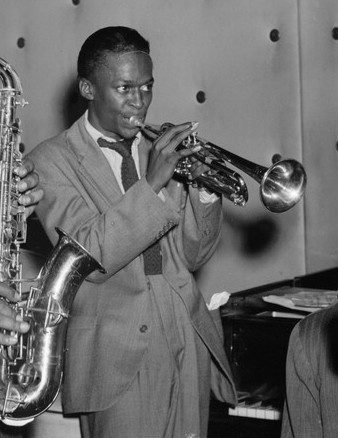
What made those two days extraordinary was not only the lineup of musicians, but also the physical room and the recording engineering designed to capture its acoustics. Columbia’s 30th Street Studio–nicknamed “The Church”–was a former Armenian Orthodox church that Columbia had purchased and converted into a recording venue. Its soaring ceiling, sturdy wooden floorboards, and stone walls produced a natural reverberation unlike any conventional studio. To make the most of the sanctuary’s acoustics, recording engineer Fred Plaut combined close microphones on individual instruments with ambient room microphones that captured the air of the hall, mixing them live onto three-track tape. Every note sounded by Davis’s trumpet set the vast volume of the former church vibrating, trailing a long, luminous decay into the microphones. The physical acoustics of that building completed the meditative, sublime atmosphere of modal jazz.
2. Complete Track-by-Track Listening — Five Sonic Landscapes
Each of the five pieces on Kind of Blue embodies stillness and negative space through a distinct structural lens. Following the album’s sequence rather than recording chronology, let us walk through these five landscapes in order.
1. So What (9:22)
The manifesto of modal jazz. The track opens with a quiet rubato piano introduction by Bill Evans. Its impressionistic harmonies, reminiscent of Debussy, hand the baton to Paul Chambers’s solo double bass line. To each phrase stated by the bass, the horns answer with two chords as if asking “So what?”–and the piano voicing stacked in perfect fourths beneath a major third that Evans plays here became known as the “So What chord,” one of the most influential harmonic inventions in jazz piano history. Evans voices this structure first as E-flat minor seventh suspended and drops it a whole step to D minor seventh suspended, establishing D Dorian as the tonal center alongside Chambers’s bass pedal. The tune’s architecture is a 32-bar AABA form: sixteen bars of D Dorian, eight bars shifted up a half step to E-flat Dorian, and a final eight bars returning to D Dorian. Davis’s trumpet solo pares note counts down to the bone, each phrase slicing through the studio air with poised tension. John Coltrane’s following tenor solo hints at his burgeoning rapid-fire scalar style while still respecting the piece’s contemplative calm. Cannonball Adderley’s alto solo infuses blues warmth, and the contrast among the three horn voices is captured in lifelike balance. “So What” went on to become an enduring jazz standard performed by countless musicians, the unmistakable face of the album even for listeners unfamiliar with the term modal jazz. Davis himself kept the tune in his live repertoire for years, drawing a fresh path across the same D Dorian landscape each time his band’s personnel evolved.
2. Freddie Freeloader (9:46)
The sole blues track on the album featuring pianist Wynton Kelly. Cast in a classic 12-bar blues form, it is the most immediately approachable of the five pieces–a sunny cove along a quiet coast. Davis loved the visceral swing and blues feeling at the root of jazz every bit as much as the cool intellect of modal theory. Kelly’s introduction and comping contrast sharply with Evans’s meditative voicings: buoyant, crisp, and infectious in their percussive key attack. Jimmy Cobb’s brushwork sweeping across the snare and Chambers’s muscular walking pizzicato convey the essence of the blues. It serves as a welcome resting place midway through a journey across deep stillness. Deliberately leaving one familiar blues road inside a newly drawn modal map reflects Davis’s keen sense of pacing–and his leadership in giving newcomer Kelly the spotlight where his natural voice shone brightest.
3. Blue in Green (5:37)
One of the most hauntingly introspective ballads in jazz history. Although the original LP liner notes credited the composition solely to Davis, Bill Evans later received co-composer credit when he recorded the piece on his trio album Portrait in Jazz, and in 2002 the Miles Davis estate formally recognized Evans’s co-authorship. Lacking a conventional cadential resolution, the piece follows a circular ten-bar form preceded by a four-bar introduction, turning endlessly like a quiet wheel. Opening with Evans’s delicate rubato arpeggios, Davis’s Harmon-muted trumpet spins a melody that drifts like mist across water. In the middle sections, the bass and piano create the subtle illusion of double-time motion while the overall mood remains suspended in stillness–a feat of ensemble poise. With Adderley sitting out, only trumpet, tenor saxophone, and piano converse along the deepest channel of silence on the record. At five minutes and thirty-seven seconds, the shortest track on the album folds the greatest density of negative space inside its brief span. The long debate over its authorship itself testifies to how inseparably the piece was born from the confluence of Davis’s and Evans’s sensibilities.
4. All Blues (11:33)
A hypnotic blues cast in a swaying 6/8 waltz meter. Over Chambers’s repeating pedal riff and Evans’s gentle triplet comping, Davis states the theme on open horn. The whisper of Jimmy Cobb’s brushes is brought into vivid relief by the high-frequency clarity of Plaut’s microphone placement, creating a gentle tidal pulse. This unhurried 6/8 ebb and flow carries the longest track on the album–eleven and a half minutes–without a single moment of drag. “All Blues” later became a perennial favorite on compilations, symbolizing how deeply the roots of the blues run beneath the surface of Kind of Blue. Where “Freddie Freeloader” walked the blues in buoyant 4/4 time, “All Blues” traces a slow 6/8 eddy–two tributaries flowing from the same blues headwaters inside a single album.
5. Flamenco Sketches (9:32)
Possessing no written melody at all, this closing track represents modal jazz in its purest form: each soloist improvises across five predetermined scale areas–C Ionian, A-flat Mixolydian, B-flat Ionian, D Phrygian (Spanish Gypsy scale), and G Dorian–deciding on the fly how many bars to dwell in each mode before cueing the band to move to the next. With no fixed bar count, only the shared breathing of the musicians serves as a compass. In the brief instants where Coltrane or Adderley hands off a solo and only bass and drums remain in the open space, the natural reverberation of the 30th Street Studio rings quietly across the room. Even the air of the moments when no horn is playing is preserved on tape. You can literally hear each soloist stepping onto an unpaved path and drawing the road underfoot in real time. Subtle common tones link adjacent scales so that each modal shift glides seamlessly into the next, yet more than any theory, it is the sense of space among the players that draws the map of this piece.
3. A Detour into a Slightly Sharp “Blue” — The Original Pitch Issue and Later Restoration
Alongside the music itself, Kind of Blue carries a famous technical footnote. During the March 2, 1959 session that produced Side 1 of the original LP (“So What,” “Freddie Freeloader,” and “Blue in Green”), the primary three-track master tape recorder ran ever so slightly slow; when the tape was played back at standard speed for mastering, those three tracks sounded roughly a quarter-tone sharp. For more than three decades, nearly every vinyl pressing, cassette, and early CD reissue circulated with Side 1 playing slightly faster and higher in pitch than performed in the studio. The speed discrepancy persisted through the initial 1987 CD era until engineers finally corrected the pitch using the safety reel for the 1992 Gold Mastersound and Columbia Jazz Masterpieces remasters. Subsequently, the 1997 CD reissue added the complete alternate take of “Flamenco Sketches” as a bonus track, and the pitch-corrected transfer has remained the standard through the 2008 50th Anniversary Edition and beyond. Though the pitch difference is less than a semitone, the story illustrates how closely generations of listeners and engineers have examined every detail of this recording.
Across the digital era, the album has been reissued in numerous landmark editions. In 1982, CBS/Sony issued a dedicated audiophile remaster in Japan, and in 1986 the album anchored the launch of the Columbia Jazz Masterpieces series. On the 1997 reissue, producer credits were briefly listed jointly as Townsend and Macero before subsequent editions restored the accurate sole credit to Irving Townsend. In 2005, a DualDisc edition paired the album with a 5.1 surround mix and the documentary Made in Heaven tracing its creation. Released on September 30, 2008, Columbia/Legacy’s two-disc 50th Anniversary Collector’s Edition established the modern reference benchmark for later reissues.
4. Beyond Five Million Copies — The Territory Opened by Silence
Released on August 17, 1959, Kind of Blue has been hailed by critics for decades as one of the supreme achievements in jazz history. In 2002, the United States Library of Congress selected it among the inaugural class of fifty recordings inducted into the National Recording Registry as works that are “culturally, historically, or aesthetically significant.” On Rolling Stone magazine’s list of the “500 Greatest Albums of All Time,” it ranked No. 12 in the 2003 edition and No. 31 in the 2020 revision. Commercially, the Recording Industry Association of America (RIAA) certified the album 5x Platinum (five million units shipped) in 2019, cementing its status as the best-selling jazz album of all time. Between 1991–when Nielsen SoundScan began tracking point-of-sale data–and 2016 alone, it sold 3.6 million copies in the United States.
Its influence radiated far beyond the boundaries of jazz. Allman Brothers Band guitarist Duane Allman remarked that his soloing style came from “Miles and Coltrane, and particularly Kind of Blue,” while Pink Floyd keyboardist Richard Wright stated that the chord progression opening “Breathe” on The Dark Side of the Moon was directly inspired by the harmonic world of this album. Producer Quincy Jones famously said, “I listen to Kind of Blue every day–it’s like my orange juice.” The subsequent paths of the session’s sidemen were equally fertile: Bill Evans formed his groundbreaking trio with Scott LaFaro and Paul Motian; Cannonball Adderley led a wildly popular quintet alongside his brother Nat; and the rhythm section of Kelly, Chambers, and Cobb continued working as a unit, anchoring classics such as Hank Mobley’s Soul Station (1960), Oliver Nelson’s The Blues and the Abstract Truth (1961, featuring Evans and Chambers), and recordings with Coltrane and Wes Montgomery. The Kelly-Chambers-Cobb trio also remained the core rhythm section of Davis’s own band on Someday My Prince Will Come and the live albums At the Blackhawk and At Carnegie Hall. Meanwhile, Coltrane pushed the modal concepts explored here to fierce new heights on his own leader dates, reshaping the course of 1960s jazz.
Critical acclaim has been equally unanimous. AllMusic’s Stephen Thomas Erlewine called the record “towering above its peers, universally acknowledged as the definitive jazz album,” while Rolling Stone described it as “a painterly masterpiece and one of the most important, influential and popular albums in jazz.” Music writer Colin Larkin ranked it No. 1 on his jazz albums list in 1994, calling it “the greatest jazz album in the world,” and placed it at No. 14 across all genres in the third edition of his book All Time Top 1000 Albums (2000). Vibraphonist and Berklee educator Gary Burton noted that “it wasn’t just one tune that was a breakthrough, it was the whole record,” praising the uniform perfection of all five tracks. In December 2009, the U.S. House of Representatives passed a resolution honoring the album’s 50th anniversary and reaffirming jazz as a national treasure.
Even so, the immediate reaction upon release in 1959 was quieter than its later legend might suggest. That same year, Ornette Coleman’s residency at the Five Spot and release of The Shape of Jazz to Come sent shockwaves through the New York jazz scene, diverting some of the immediate press spotlight to Davis’s annoyance. Yet the stature of Kind of Blue grew steadily decade after decade. Pianist Chick Corea remarked that Davis “almost created a new language of music,” while hip-hop artist Q-Tip compared the album to the Bible–“you just have one in your house.” Reference guides awarded it their highest honors, with The Penguin Guide to Jazz Recordings placing it in its essential Core Collection and bestowing its coveted Crown award. In 2014, the jazz ensemble Mostly Other People Do the Killing even released Blue, a note-for-note recreation of the entire album as a conceptual homage. More than half a century later, this quiet record continues to summon new generations of listeners.
Characteristically, Davis himself refused to wax nostalgic about the record. In a 1986 interview, he remarked unsentimentally that “‘So What’ or Kind of Blue, they were done in that era, the right hour, the right day, and it happened. It’s over… What I used to play with Bill Evans, all those different modes, and substitute chords, we had the energy then and we liked it. But I have no feel for it anymore.” And when singer Shirley Horn asked him in 1990 to revisit the gentle ballad style of the Kind of Blue era, he declined, saying, “Nah, it hurts my lip.” For Davis, who spent his life walking forward without looking back, this album was terrain he had already crossed. For listeners, however, it remains a landscape we can walk afresh as many times as we wish.
5. A Listening Route for First-Time Walkers
Here are a few practical tips for experiencing the full sonic depth of Kind of Blue. First, whenever possible, listen over a properly positioned pair of stereo speakers in a room rather than on headphones. Because the magic of this recording lies in the natural spatial reverberation of the former church at 30th Street Studio, hearing the sound project from speakers and interact with the walls of your room brings that three-dimensional hall ambiance to life. In the stereo soundstage–with Davis’s trumpet placed slightly left of center, Coltrane’s tenor to the right, and Adderley’s alto to the left–listen for how Bill Evans’s piano dissolves across the entire width of the room. As an audiophile checkpoint, pay close attention to Paul Chambers’s bass pizzicato in the opening of “So What”: on a well-balanced system, each plucked note rises cleanly without low-end bloat and decays with crisp definition. When that bass foundation is reproduced accurately, the cool, almost sacred air of the studio materializes right before you. And as a practical tip when choosing a pressing or digital edition, because pre-1992 masters carry the slight Side 1 pitch error, selecting a post-1997 remaster or the 2008 50th Anniversary Edition is the most reliable choice.
If you are new to jazz and unsure how to approach choosing or listening to your first records, reading Jazz for Beginners: How to Choose Your First Album — How to Listen Matters More Than Best-Of Lists first will bring the landscape of this album into even sharper focus. Conversely, once your ears have settled into the stillness of Kind of Blue, a rewarding next excursion is to visit jazz’s other great New York epicenter in 5 Essential Blue Note Albums | The RVG Sound and Aesthetics of Space in Jazz’s Golden Era to hear a contrasting philosophy of space sculpted by Rudy Van Gelder.
6. Conclusion — Folding Up the Map
To listen to Kind of Blue is to enter into quiet dialogue with a record of stillness left behind across just two days in a former church by musicians standing at the summit of modern jazz. Abandoning dense chord progressions to stake everything on the weight of a single note and the beauty of open space, this album–even across decades of slightly sharp Side 1 pressings–built a territory surpassing five million copies and shines with undimmed clarity today. As the map at the start of this article suggested, there is no single prescribed way to walk through this record. Simply sit before your speakers on a quiet night and lend your ears to the shades of blue woven by Miles Davis and his sextet.
Further Reading
- Modal Jazz and the Aesthetics of Ma — The Stillness Freed from Chord Changes
- 5 Essential Blue Note Albums | The RVG Sound and Aesthetics of Space in Jazz’s Golden Era
Deep Dive: The Essence of Modal Jazz — Constraint and Freedom on “Kind of Blue”
The reason Miles Davis’s Kind of Blue stands as the towering monument of jazz history is that it did not merely document great performances–it transformed the structural grammar of the music itself. From bebop through hard bop, mainstream jazz improvisation had centered on “chord-based playing”: navigating rapid-fire chord progressions with virtuosic speed and harmonic acrobatics. Davis, however, felt that harmonic density had reached a saturation point.
Convinced that thick thickets of chords boxed soloists into predetermined patterns, Davis and Bill Evans turned instead to improvisation based on musical modes (scales). Take the opening track, “So What,” as an example: the entire piece is built upon just two scales, D Dorian and E-flat Dorian. Stripped of the familiar signposts of rapid chord changes, the soloists had to construct a compelling narrative using only their own melodic invention, rhythmic placement, and the open space between notes.
The Trumpeter Who Played Silence
Across this album, Davis’s trumpet solos use remarkably few notes. Rather than filling every bar with flurries of technique, he selects a single tone with care, releases it into the open air of the room, and waits patiently for the next note to arrive. This aesthetics of space is the unmistakable signature of Miles Davis. While John Coltrane radiates incandescent heat with his dense “sheets of sound,” Davis commands the entire room with a single cool, honed note.
Kind of Blue remains timeless because the ultimate melodic freedom born from harmonic constraint speaks as pure acoustic beauty not only to jazz devotees, but also to listeners who love ambient music and post-rock. The resonant air of the 30th Street Studio, the shimmering decay of the cymbals, and the stillness pierced by Davis’s Harmon-muted trumpet–all of it is etched in ideal proportion across forty-five miraculous minutes.
References and Sources: Original Columbia Records liner notes (Bill Evans, “Improvisation in Jazz,” 1959), Ashley Kahn, Kind of Blue: The Making of the Miles Davis Masterpiece (Da Capo Press, 2000), RIAA Gold & Platinum certification records, United States Library of Congress National Recording Registry (2002 induction), and the English Wikipedia article “Kind of Blue” (verification of recording dates, reception history, and historical quotes / CC BY-SA 4.0).
When you tune your ears to the stillness unfolding behind the melody, the presence and breathing of the musicians come alive with startling realism. Take your time and savor the nuances of the notes left unplayed.