Choosing between open-back and closed-back headphones is usually framed as a matter of sonic taste. In practice, however, what decides the outcome is the quietness of your room and your tolerance for sound leakage—both of which are conditions set by your living environment rather than personal preference. Taking the area-category decibel benchmarks defined in Japan’s Environmental Quality Standards for Noise as our starting point, this guide maps out how to decide between open-back and closed-back designs based on the real-world conditions of your home.
Before Sound Quality, the Two Types Differ in Their “Boundary”
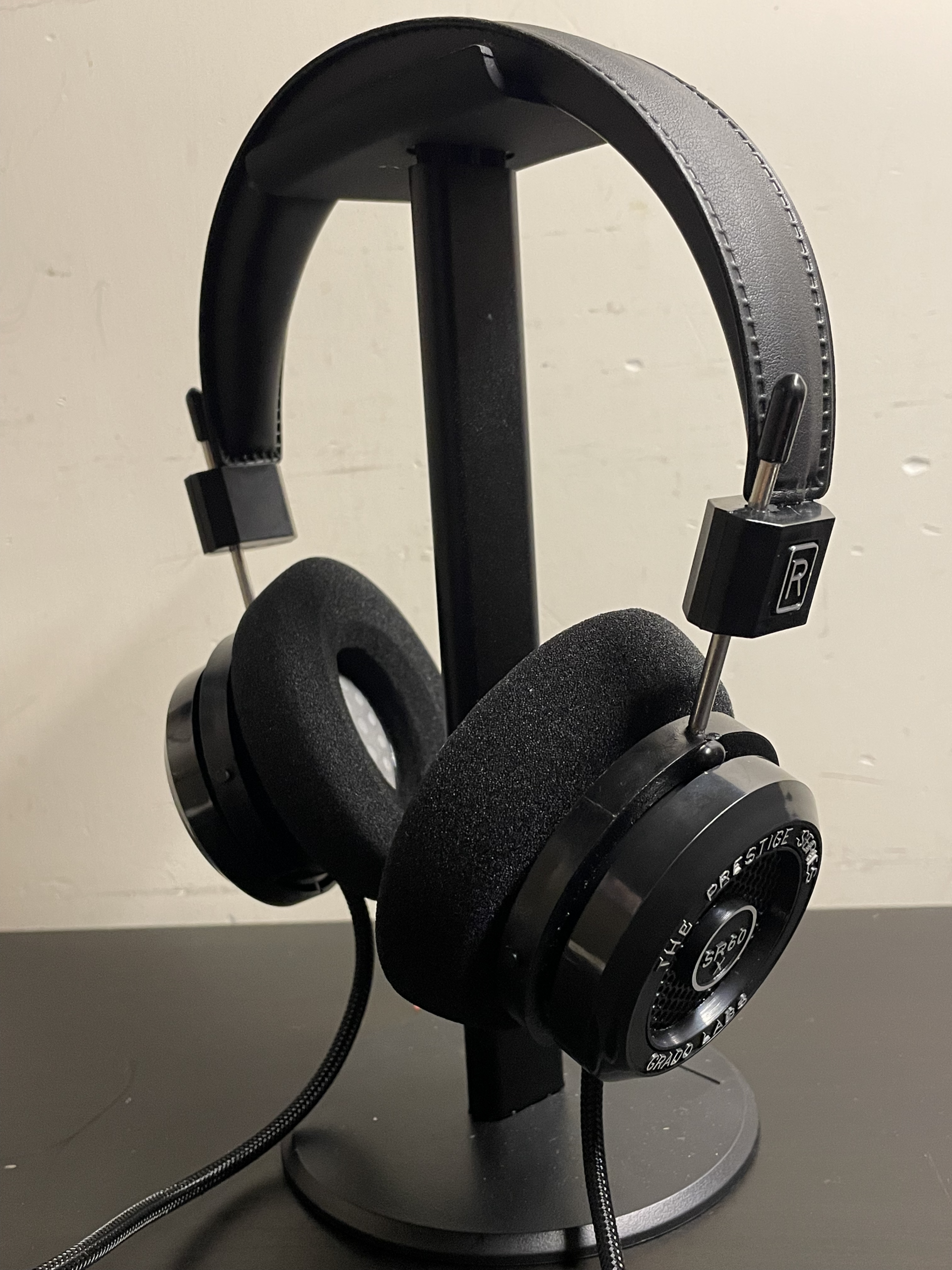
Closed-back headphones seal the outer shell of the earcup, creating an enclosed chamber around the ear. Open-back headphones deliberately leave the rear of the housing open so air behind the diaphragm vents freely to the outside. The primary difference produced by that structural divide is not tonal character, but the nature of the boundary: whether outside sound gets in, and whether inside sound gets out.
Sonic tendencies are merely a byproduct of that boundary. Closed-back enclosures naturally reinforce low frequencies within a sealed space, while open-back designs allow rear pressure to escape so bass blends into the surrounding air. Neither approach is inherently superior; closing or opening the acoustic boundary simply shows up directly in the contour of the sound. Consequently, the first question to ask when choosing is not “Which sound signature do I prefer?” but “Do I need to close the boundary?”
Reframing Your Home’s Quietness in Numbers
Whether you need to close the acoustic boundary depends on your room’s ambient noise floor. Here the area categories defined by environmental noise standards provide a handy yardstick. The standards specify desirable maximum noise levels by area type and time of day: Category A covers exclusively residential areas, Category B covers primarily residential areas, Category C covers mixed residential, commercial, and industrial zones, and Category AA applies to areas requiring special quietness, such as districts around medical or recuperative facilities.
| Area Category | Daytime (6:00 a.m. – 10:00 p.m.) | Nighttime (10:00 p.m. – 6:00 a.m.) |
|---|---|---|
| AA (Special quietness required) | 50 dB or below | 40 dB or below |
| A & B (Residential focus) | 55 dB or below | 45 dB or below |
| C (Mixed residential / commercial / industrial) | 60 dB or below | 50 dB or below |
These figures set by the Ministry of the Environment’s Environmental Quality Standards for Noise represent administrative target levels rather than mandatory household measurements, so they will not necessarily match a reading taken inside your room. Even so, they work well for estimating the baseline quietness of your neighborhood. Because prefectural governors and municipal mayors assign categories zone by zone, you can look up your home’s classification in your local government’s noise-mapping publications.
The Answer Changes Between Day and Night
Read the table vertically, and you immediately notice a roughly 10 dB gap between daytime and nighttime in the exact same location. For Categories A and B, the standard sets 55 dB or below during the day and 45 dB or below at night. In terms of human loudness perception, a 10 dB difference corresponds to roughly a twofold change in perceived volume. A residential neighborhood at night, in other words, should be treated as a fundamentally different acoustic environment from the exact same neighborhood at noon.
That distinction leads to a practical conclusion. If you only listen late at night, a room in a Category A or B neighborhood can easily support open-back headphones. Where ambient noise drops toward 45 dB, quiet playback is unlikely to be buried even without acoustic isolation. Listen in that exact same room during the day against a 55 dB baseline, however, and an open-back pair will pull you toward turning the volume up. As we covered in Headphone Conditions for Late-Night Low-Volume Listening, whether you can keep the volume down heavily influences how low frequencies are perceived.
If you want a single pair of headphones to cover both day and night, the daytime figure sets your baseline. Choosing for a 55 dB daytime environment makes closed-back headphones the straightforward pick. Using open-back headphones during the day forces you to raise the volume to overcome ambient noise, adding unnecessary strain on your ears.
Facing a Multi-Lane Road Changes the Premise
One important caveat is that areas facing roadways are governed by separate limits. Zones in Category A facing a road with two or more lanes are set at 60 dB daytime / 55 dB nighttime, while Category B zones facing two or more lanes and Category C zones facing any laned road rise to 65 dB daytime / 60 dB nighttime. For spaces immediately adjacent to major arterial roads, special exceptions allow up to 70 dB daytime / 65 dB nighttime.
The 65 dB nighttime ceiling permitted near major arterial roads sits a full 20 dB higher than the 45 dB nighttime standard for ordinary residential zones. In that environment, open-back headphones are almost entirely ruled out; because the music cannot rise above the ambient noise floor, you have no choice but to turn the volume up. In buildings where living with windows closed is the norm, indoor transmitted-noise standards (45 dB daytime / 40 dB nighttime or below) may apply instead, so conditions improve in seasons and rooms where you can keep the windows shut. Conversely, during seasons when you open the windows, the acoustic premise shifts right back.
Note also that these general environmental noise standards do not apply to aircraft noise, railway noise, or construction noise. If you live near an airport, beside train tracks, or next to an active construction site, you cannot rely on the numbers in the table above; taking an actual measurement in your room or defaulting to a closed-back design is the safer route.
The Real-World Constraint on Open-Back Headphones Is Sound Going Out
Everything so far has concerned outside sound coming in, yet the stricter practical constraint on open-back headphones is often the sound going out. Because the rear of the earcup is open, a portion of the sound reaching the listener radiates directly into the room. If someone else is in the same room, if you live in an apartment building with thin walls, or if family members are sleeping nearby late at night, sound leakage decides the issue long before isolation ever enters the picture.
Closed-back headphones do not eliminate leakage completely either, but the amount of sound escaping into the room is unmistakably smaller than with an open-back pair. When planning a late-night setup, check your acceptable leakage threshold first, and only then evaluate your room’s ambient noise floor. The broader design of a nighttime listening routine is laid out in our Practical Checklist for Late-Night Low-Volume Listening.
Night-Only Listening, Road Proximity, and Leakage Tolerance
Turn these considerations into a decision sequence, and every item you check is an environmental condition rather than a matter of musical taste.
- Do you listen only at night, or during the day as well? If you listen strictly at night, open-back headphones can work well in Category A and B residential areas. If you also listen during the day, judge by the daytime noise numbers
- Does your room face a busy road? If your home faces a road with two or more lanes or sits near a major arterial route, take open-back designs off the table
- Can your room tolerate sound leakage? If you share the room or live in a thin-walled apartment building, lean toward a closed-back pair
Only when open-back headphones survive all three checks does it make sense to choose by tonal character. When they are ruled out, prioritizing clamping comfort and low weight within the closed-back category is far more likely to give you a pair you can enjoy for years.
Acoustic Isolation Cannot Be Compared by Catalog Specs Alone
What environmental noise standards tell you is strictly the baseline quietness assumed for a given piece of land. They do not measure whether your actual room stays within that level, and even at the exact same decibel reading, one listener may be bothered by the low hum of a refrigerator while another barely notices it. Passive isolation itself varies widely from model to model and cannot be compared from catalog specifications alone.
Even so, placing the two axes of area category and time of day at the start shifts the choice between open-back and closed-back from a debate over personal taste to a concrete check of your living environment. Techniques for increasing satisfaction without raising the volume are covered in The Art of Rich Low-Volume Audio, and ways of listening that lead gently into sleep are explored in Silence, Sleep, and Music.