Quiet music needs a map. Where to enter, where to pause, and where to emerge: the fewer notes that are sounding, the easier it is for the listener to lose their way. In that sense, the environmental music (Kankyo Ongaku) that blossomed in 1980s Japan was both a quiet signpost placed within the city and everyday life and a form of spatial acoustic design. The white walls of art museums, hotel lobbies, shopping complex corridors, or a small private living room: written for concrete places like these, these sounds neither asserted themselves as the main attraction nor vanished completely into the background, existing instead to wrap gently around the listener’s footsteps and the surrounding air. This essay traces the aesthetics of stillness left behind by pioneers such as Hiroshi Yoshimura, Satoshi Ashikawa, and Midori Takada, offering an in-depth guide that dissects why these sounds are being rediscovered and cherished around the world today. (Note: Historical data and works discussed in this article are based on primary sources and documentation verified as of July 2026.)
Primary source and reference material: Light in the Attic Official Site (Kankyo Ongaku Release Notes) (verified July 2026, source cited)
1. Concept and Historical Background – Urban Proliferation and the Birth of Acoustic Design
Urban Space, Consumer Society, and the Soundscape Philosophy in 1980s Japan
From the late 1970s into the 1980s, Japan stood in the midst of sweeping urban redevelopment and consumer culture following an era of unprecedented rapid economic growth. High-rise buildings were constructed one after another in Tokyo and other major metropolises, underground shopping arcades spread out like vast webs, and commercial spaces transformed from simple venues for buying and selling goods into staged environments where sensibilities and lifestyles were consumed. Yet that urban expansion simultaneously brought noise pollution: the ceaseless roar of automobile traffic, the hammering of construction sites, and the clamor spilling from street loudspeakers.
Introduced to Japan as a quiet revolution of awareness against this urban din was the concept of the “soundscape” proposed by the Canadian composer and acoustic ecologist R. Murray Schafer. Schafer reconceived the world as a vast musical composition and emphasized the importance of perceptually redesigning the acoustic environment in which human beings listen. Whereas conventional noise-control measures took the passive, physical approach of erecting walls to block out sound, soundscape thought took an active design approach, asking what kind of sounds should exist to enrich the spatial experience of a given place. Young Japanese musicians, architects, and acoustic engineers resonated deeply with this philosophy, embarking on a quest for “environmental music” that was neither concert music for close contemplation nor cheap background music, but a medium for harmonizing the relationship between space and human beings.
Corporate Culture and Spatial Production – Sonic Experiments by the Saison Group, Shiseido, and MUJI
A defining characteristic of 1980s Japanese environmental music is that it did not remain an isolated experiment by avant-garde artists, but unfolded in close partnership with cutting-edge corporate culture and spatial production. Its greatest catalyst was the Saison Group (Seibu Department Stores, Parco, Nami no Kai, and the Wave record shop) led by Seiji Tsutsumi. The Saison Group pursued a strategy of incorporating avant-garde culture, including contemporary art, serial music, and minimalism, into the identity of its commercial spaces, launching one new acoustic production after another for its stores and galleries.
The music playing inside Seibu Department Stores, the exhibition spaces of Parco, and the BGM series later launched by MUJI (Mujirushi Ryohin) were not produced as pop songs to stir up purchasing impulses, but as environmental acoustics designed to elevate the quality of time and awareness customers experienced inside those spaces. Composers such as Hiroshi Yoshimura, Satoshi Ashikawa, and Takashi Kokubo received commissions from corporations including Seibu, Shiseido, major electronics manufacturers, and housing developers, writing dedicated pieces for model homes, museum lobbies, public plazas, and the spatial acoustics of newly built apartment complexes. Supported by generous corporate production budgets, the latest audio equipment, and wide creative freedom, Japanese environmental music crystallized into a high-precision music production for spaces unlike anything else in the world.
The Decisive Difference Between Brian Eno’s Ambient Music and Japanese Kankyo Ongaku
Discussions of environmental music frequently compare it with the “Ambient Music” proposed by Brian Eno in 1978. In the liner notes to his landmark album Ambient 1: Music for Airports, Eno defined ambient music as music that must be able to accommodate many levels of listening attention without enforcing one in particular, remaining as ignorable as it is interesting. Eno’s aim was to build an acoustic system that softened spatial tension in public environments where people feel anxiety or boredom, such as airport waiting lounges, without making forceful claims on the listener’s consciousness.
Japanese environmental music (Kankyo Ongaku), while absorbing Eno’s ambient philosophy, underwent a distinct evolution deeply intertwined with traditional Japanese spatial concepts and architectural thought. The greatest difference lies in the sense of ma (negative space or interval) found in Japanese architecture and gardens, together with an aesthetic devotion to decaying sound (the process by which a tone fades away). Consider the abstract light filtering through shoji paper screens in a traditional Japanese house, the beauty of spatial arrangement in a stroll garden, or the culture of the suikinkutsu (buried water harp), which savors the stillness of a space after a water droplet falls. Rather than Western harmonic progressions or melodic architecture, Japanese environmental musicians prized the lingering resonance from the moment a single note is struck, reflects off the walls and ceiling of a space, and dissolves into the air. Treating sound not as an object that asserts itself, but as a medium that transforms the air of a space itself, marks the decisive originality of Japanese environmental music.
2. The Aesthetics of Stillness and Expressive Techniques Built by Three Pioneers
Hiroshi Yoshimura – Scooping Up Everyday Light and Shadow in an Unrippled Daily Life
Hiroshi Yoshimura (1940-2003) was the most important poet and pioneer of Japanese environmental music. Having studied in the Fine Arts track of the First Department of Literature at Waseda University, he approached sound from the perspective of graphic design, visual art, and soundscape design rather than that of a traditional conservatory-trained composer. Beginning in the 1970s, Yoshimura designed sound for public spaces of every kind across the city, including sound compositions at the Kanagawa Prefectural Music Hall in Yokohama, the opening commemorative acoustics for the Hara Museum of Contemporary Art, subway stations, courtyards, and clock-tower time signals.
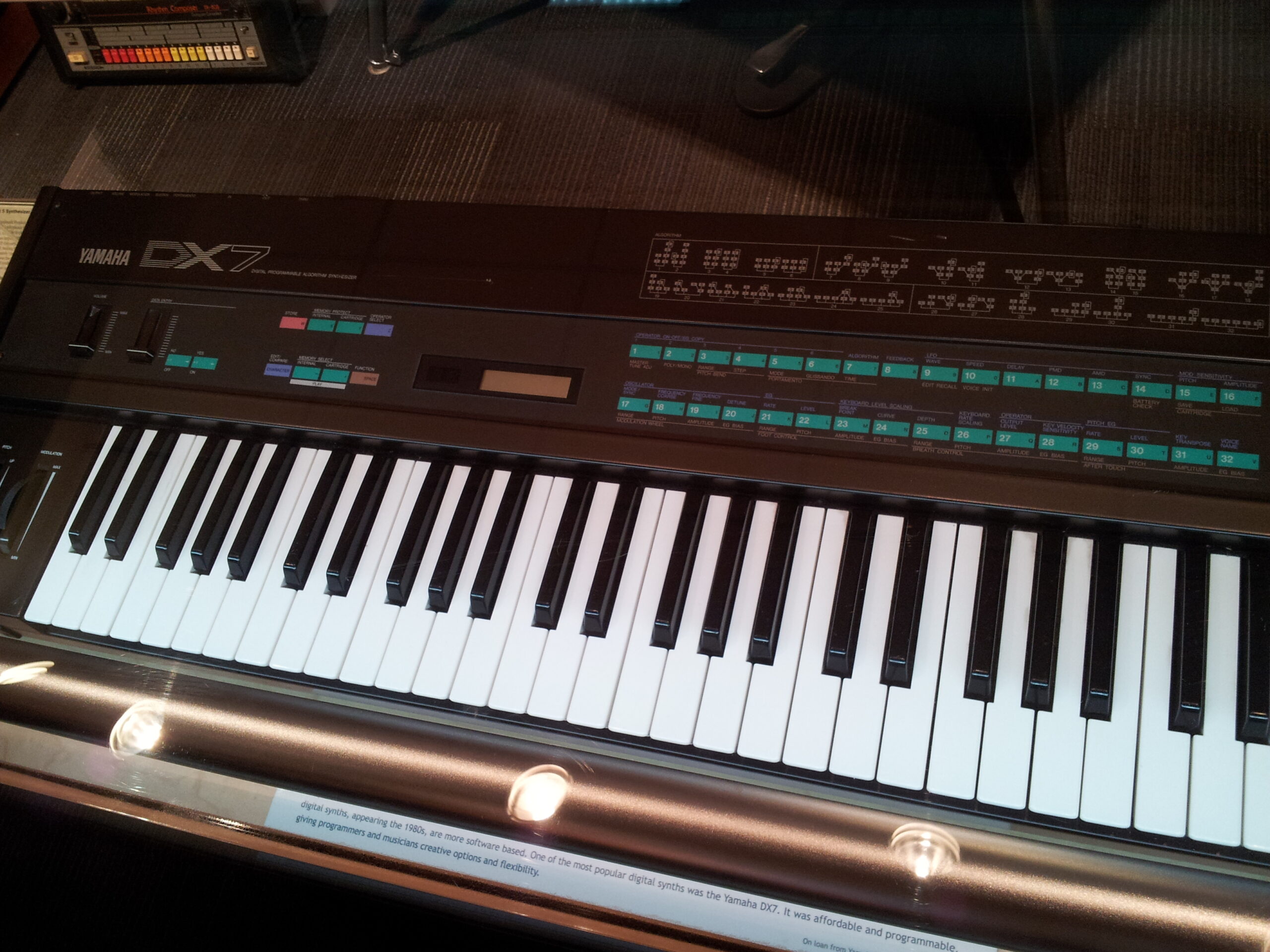
Yoshimura’s expressive technique is characterized by note placements pared down to the utmost simplicity and crystal-clear timbres free of muddiness. Using the Fender Rhodes electric piano and the Yamaha DX7 digital synthesizer introduced in the mid-1980s, he placed warm particles of sound rich in overtones into a space. Yoshimura’s phrases never display dramatic climaxes or emotional outbursts. Just as afternoon sunlight filtering through a window moves slowly across the floor with the passage of time, fragments of sound are presented at measured intervals. For him, sound was not a vehicle for shouting out personal emotion, but a prism of light that quietly brings into relief the light, wind, and architectural margins already present in the world.
Satoshi Ashikawa – Wave Notation and the Geometry of Wavelengths
Although his active career was cut tragically short by his death at the age of thirty, Satoshi Ashikawa (1953-1983) left a decisive footprint on the structuring and theorization of Japanese environmental music. Ashikawa founded Sound Process, a production organization that conceived of music as the acoustic layout of space, and launched the Wave Notation record series, an enduring monument in the history of environmental music.
At the root of Ashikawa’s aesthetic lay the idea of treating acoustics as a line drawing (geometry) that alters the dimensions of a space. On his first and final solo album, Wave Notation 2: Still Way, released in 1982, Ashikawa arranged the delicate resonances of acoustic instruments, including flute, harp, piano, and vibraphone, in poised equilibrium. The dynamics and duration of every tone were calculated with precision, so that the length of silence left behind after a single note sounds functions like the span between columns in a building. When you play Ashikawa’s music, the density of the air in the room seems to shift, creating the illusion that the distance to the walls has subtly changed. That is because the sound does not dominate the space, but rather brings its hidden framework (geometry) into view.
Midori Takada – The Intersection of Minimalism and an Asian Worldview
Having majored in percussion at Tokyo University of the Arts and built an accomplished career as a classical performer, including appearances with the Berlin Philharmonic Orchestra, Midori Takada is a singular musician who expanded her gaze toward traditional African and Asian music as well as minimal music. Whereas Hiroshi Yoshimura and Satoshi Ashikawa centered their work on ambient waveforms generated by synthesizers and keyboards, Midori Takada expressed stillness through the decaying tones and overtone structures of acoustic percussion.
Overdubbed in just three days and released as her solo album in 1983, Through The Looking Glass shines with extraordinary brilliance in the history of Japanese environmental music. Xylophone, marimba, bells, harmonica, ocarina, and her own breath and voice overlap while forming ordered polyrhythms, causing particles of sound to rise as multidimensional layers. By nature, percussion instruments are instruments of decay whose volume peaks at the instant of impact and rapidly vanishes. Midori Takada concentrated every nerve on the reverberation of that decaying instant, crafting a rich microcosm on the threshold where sound disappears. Her music proves that stillness is not the absence of sound, but the overlapping of meticulously placed sonic resonances.
3. Inside the Global Reappraisal of Kankyo Ongaku
The Miracle of the YouTube Algorithm and Discovery by Overseas Listeners
In the mid-2010s, in a corner of the digital music world, an unexpected cultural phenomenon took flight. YouTube’s recommendation algorithm began surfacing LP jacket images of obscure environmental music records made in 1980s Japan on the screens of countless users worldwide. Albums such as Hiroshi Yoshimura’s Music for Nine Post Cards and GREEN, along with Satoshi Ashikawa’s Still Way, were automatically fed one after another into the playlists of young overseas listeners who had been streaming lo-fi hip-hop and chillout music.
Gracing the album covers were simple, refined Japanese graphic designs and watercolors. The moment listeners pressed play, a transparent, soul-cleansing sound unlike anything they had heard before poured from their speakers. The comment sections overflowed with voices of gratitude in English, Spanish, French, Russian, and dozens of other languages: “Finding this music in the middle of stressful college assignments saved me,” or “It makes me feel like I am standing in a rainy Tokyo afternoon in the 1980s, a place and time I have never visited.” Long out of physical print and traded for years at collector prices, Japanese environmental music reached a young global generation seeking mental health support and relaxation through a serendipitous turn of the algorithm.
The Impact of the Grammy-Nominated Compilation Kankyo Ongaku
It was the acclaimed Seattle archival label Light in the Attic that kept this global digital phenomenon from remaining a passing internet trend and reconstructed it as formal music history. Bringing years of research to fruition, Spencer Doran of the ambient duo Visible Cloaks curated and released the compilation album Kankyo Ongaku: Japanese Ambient, Environmental & New Age Music 1980-1990 in 2019.
This lavish two-CD (three-LP) anthology surveyed the full panorama of acoustic design intentionally and derivatively created in 1980s Japan, encompassing not only central figures such as Hiroshi Yoshimura, Satoshi Ashikawa, and Midori Takada, but also Haruomi Hosono, the extended Yellow Magic Orchestra (YMO) circle, Yasuaki Shimizu, Akira Ito, and Takashi Kokubo. Unearthing and including non-commercial recordings originally distributed as corporate novelties or in-store background music, accompanied by extensive English liner notes, the release achieved the historic milestone of being nominated for Best Historical Album at the 62nd Annual Grammy Awards in 2020. Through this recognition, Japanese environmental music secured its formal global standing not as a mere retro curiosity, but as a vital chapter in late-20th-century electronic music and sonic art.
A Lost Bubble-Era Japanese Vision of the Future as Vaporwave and Nostalgia
Why do young listeners across Europe, the Americas, and Asia today feel such deep nostalgia for 1980s Japanese environmental music created before they were born? In cultural criticism, this phenomenon is often explained through the word “anemoia,” a poignant longing for a time one has never personally experienced.
In internet culture from the 2010s onward, the image of the 1980s Japanese metropolis presented by vaporwave and city pop was embraced as an advanced, refined technological Arcadia touched by a gentle melancholy. Environmental music expressed the deepest, quietest core of that urban image. For modern people exhausted by an overload of digital information and social media stimuli, the music’s refusal of self-assertion and its affirmation of space and silence acted as the lingering afterimage of a lost, peaceful future, exerting a powerful healing effect.
4. Five Essential Albums for Listening to Japanese Environmental Music
Here we dissect five landmark albums to hear first in order to experience the essence of Japanese environmental music. Every one of them remains a masterpiece that shines across time in its tonal quality, spatial approach, and unhurried resonance.
Music for Nine Post Cards by Hiroshi Yoshimura (1982) – Piano Filtering Through White Museum Walls
Hiroshi Yoshimura’s debut album and the supreme starting point of Japanese environmental music. Composed in 1982 for the white architectural space of the Hara Museum of Contemporary Art in Shinagawa, Tokyo, and the lush garden visible through its large windows, Yoshimura used the Fender Rhodes electric piano and a small keyboard to layer minimal fragments of sound like gentle waves.
The nine pieces (“post cards”) collected on the album have no conventional dramatic arc. Like ripples spreading when a drop of water falls onto a still surface, a note is softly placed, and only after its resonance fades away is the next note set down. Played at a low volume through your room speakers, it fills the space with a transparent, refreshing air, as if the walls of your own room had transformed into the white gallery walls of an art museum.
Listening link: Listen to “Hiroshi Yoshimura – Music for Nine Post Cards” on Spotify / Apple Music
GREEN by Hiroshi Yoshimura (1986) – A Corridor of Light Where Leaves Brush Past One Another
Released in 1986, GREEN is Hiroshi Yoshimura’s signature work and a masterpiece praised by ambient fans worldwide as a flawless album. The crystal-clear tones of digital synthesizers centered on the Yamaha DX7 fuse in remarkable balance with field recordings of birdsong and wind captured by Yoshimura himself.
Just as the title suggests, what rises from this album is the fresh presence of sun-drenched young foliage swaying in the breeze as leaves brush softly against one another. As the clean-edged waveforms unique to digital synthesis blend with natural field recordings, the boundary between the artificial and the natural dissolves completely. No music is better suited to waking up in the morning or reading on a quiet afternoon.
Listening link: Listen to “Hiroshi Yoshimura – GREEN” on Spotify / Apple Music
Wave Notation 2: Still Way by Satoshi Ashikawa (1982) – Negative Space Flowing Through a Still Room
The second installment in the Wave Notation series released by Satoshi Ashikawa on Sound Process, and the supreme acoustic work that became his final testament. While employing an acoustic instrumentation of flute, harp, piano, and vibraphone, it presents a thoroughly pared-down spatial architecture.
As the title Still Way indicates, what resides here is not emotional turbulence, but the quiet movement of consciousness walking through a still space. Ashikawa’s true aesthetic intent lies less in the moments when notes are sounding than in the intervals of blank space after a tone ceases and before the next appears. It is an essential record to listen to quietly when you want to clear the air of a room and bring clarity to your thoughts.
Listening link: Listen to “Satoshi Ashikawa – Wave Notation 2: Still Way” on Spotify / Apple Music
Through The Looking Glass by Midori Takada (1983) – A Multilayered World Drawn by Percussion Resonance
Midori Takada’s solo debut, released on RCA in 1983. The album was produced by Takada herself multi-tracking acoustic instruments including xylophone, marimba, percussion, bells, and ocarina. Spanning four tracks and roughly 34 minutes, the performance stretches the acoustic possibilities of percussion to their outer limits.
True to its title, Through The Looking Glass, the crisp attack of each strike and the acoustic reverberation that unfolds behind it construct a multilayered hall of mirrors inside the listening room. Within its minimalist repetitive structures dwells a timeless sensibility drawn from Africa and Asia, guiding the listener into a deep meditative experience. It is a historic, epoch-making work that sparked the global reappraisal of Japanese ambient and environmental music.
Listening link: Listen to “Midori Takada – Through The Looking Glass” on Spotify / Apple Music
Kankyo Ongaku: Japanese Ambient, Environmental & New Age Music 1980-1990 (2019) – A Compendium of Sound Wrapping an Era
Released by the US archival label Light in the Attic, this compilation album comprehensively surveys 1980s Japanese environmental, new age, and ambient music. Alongside signature pieces by Hiroshi Yoshimura, Satoshi Ashikawa, and Midori Takada, rare recordings by Haruomi Hosono, Akira Ito, Takashi Kokubo, and Yasuaki Shimizu are included in beautifully remastered sound.
For readers walking across the vast terrain of Japanese environmental music for the first time, this release serves as an ideal map. Packed with sonic ideas approached from diverse angles, from acoustics crafted for commercial spaces to meditative music turned toward the individual interior, it lets you experience firsthand the high ambition with which Japanese musicians of the era tackled the design of sound and space.
Listening link: Listen to “V.A. – Kankyo Ongaku: Japanese Ambient, Environmental & New Age Music 1980-1990” on Spotify / Apple Music
5. How to Prepare Your Space and Sound for First-Time Listeners
Unlike conventional popular music meant to be heard at high volume through tightly sealed earphones, environmental music has its own distinct way of being heard and enjoyed. Here we explain how to prepare your room and playback setup so first-time listeners can savor its appeal to the fullest at home.
Room Acoustics, Gradations of Light, and Volume Settings
The single most important rule when experiencing environmental music is to turn the volume down to the absolute minimum (low-volume playback). Turn the volume knob on your audio amplifier or speakers down to half of your usual listening level, or even to the threshold where the music is barely audible.
By lowering the volume, the particles of sound emitted from the speakers reflect softly off the walls, ceiling, and furniture of your room, blending into the air of the entire space. Dimming the room lights slightly and resting within the gradations of indirect lighting or natural daylight from a window allows both hearing and sight to relax, letting you feel the acoustics dissolve into the room as part of the interior.
The Unsounded Notes That Emerge Through Low-Volume Listening
Playing music at a hushed volume brings about an intriguing shift in human perception. Faced with loud, assertive music, we can only passively bathe in the sound. In an environment where sounds are placed quietly, however, our brain and ears begin to explore the space actively on their own.
From beyond the quiet volume, the beautiful lingering trail of a decaying tone and the several seconds of silence (negative space) where no note is sounding emerge in sharp relief. At the same time, real-world ambient sounds outside your room, such as a distant train, wind brushing against the windowpane, or the quiet hum of an air conditioner, begin to harmonize with the recorded environmental music. That sensation of the boundary between music and reality gently blurring is the greatest pleasure of listening to environmental music.
Morning, Afternoon, and Late Night – How Environmental Music Changes Expression Across Times of Day and Seasons
Environmental music changes its expression dramatically depending on the time of day, weather, and season. Rotating records to match the rhythm of your daily life turns ordinary hours into something restorative.
- Waking up in the morning and forenoon: Hiroshi Yoshimura’s GREEN or Music for Nine Post Cards. Alongside clear morning light, they bring a lucid awareness for starting the day.
- Afternoon work and reading hours: Satoshi Ashikawa’s Wave Notation 2: Still Way. Without intruding on your thoughts, it constructs a calm grid of space that quietly sustains concentration.
- Dusk and summer evenings: Midori Takada’s Through The Looking Glass. Letting the rich overtones of percussion ring out as twilight gathers creates a visionary sense of depth in the room.
- Late-night stillness and before sleep: The serene tracks on the compilation Kankyo Ongaku. They gently untangle the tension of the day and guide the listener toward restful sleep.
6. Conclusion – Toward the Stillness of Sound That Leaves a Resonance and Departs
The greatest joy of drawing a map lies in the moment of tracing a line across a place where no road yet exists. The environmental music (Kankyo Ongaku) born in 1980s Japan was a quiet line drawn so that people surrounded by excessive consumption and urban clamor could recover their own stillness. The transparent keyboard resonances of Hiroshi Yoshimura, the geometric structural beauty of Satoshi Ashikawa, and the multilayered percussion trails of Midori Takada continue to bring beautiful negative space into the rooms we inhabit more than forty years later.
A rich world that emerges not by sounding more notes, but by subtracting them. If you feel worn down by the rush of everyday life, turn your speaker volume gently down and open the map of stillness left behind by Japanese environmental music. Stretching out before you is a quiet sanctuary waiting to be walked on your own terms.
Further reading: Brian Eno’s Ambient Quartet – Sound Vanishing into the Background and the Architecture of Silence
Further reading: The Art of Listening Richly at Low Volume – Playback Environments for Savoring Negative Space
Further reading: Introduction to Ambient Music – The First Five Albums Tracing Stillness and Resonance
I have always felt that the greatest reward of mapmaking is the instant you draw a line across uncharted ground. When I first heard the music of Hiroshi Yoshimura and Satoshi Ashikawa, it felt like a landscape without contours to me as well. Yet as I played those sounds repeatedly in daily life and listened closely, I came to see that there were corridors of light, hours of ebbing tide, and quiet coves in which to pause. My hope is that you will use this guide as a starting point to draw your own map of “the sounds that are not there.”