When we listen to quiet music, we strain our ears. Yet what we are listening to is not merely the physical vibration of a speaker cone. We are sinking our awareness into the intervals that open up between one tone and the next—into negative space itself. Between the late 1980s and the 1990s, in a quiet corner of the British pop music scene, one band underwent a remarkable metamorphosis: Talk Talk, led by Mark Hollis. Setting sail originally from the harbor of New Romanticism and synth-pop and scoring a string of international hits, they eventually abandoned that buoyant formula altogether. Instead of following the shipping lanes of commercial success, they steered into an ocean of radical subtraction where sound fades away and merges with silence. In this article, we trace Talk Talk’s journey to the wellspring of post-rock and analyze, from both an acoustic and spiritual perspective, the three landmark albums in which their philosophy crystallized most deeply. This is the record of artists who redrew the contour lines of music along the borderline where sound vanishes. Detailed biographical and discographical archives can also be explored through primary sources and Wikipedia. (Information reflects research current as of July 16, 2026.)
1. From the Harbor of Pop Music to the Sea of Negative Space
The history of Talk Talk is the trajectory of a radical course change. Formed in London in 1981, the band was initially positioned at the time of their debut as peers trailing in the wake of New Romantic pop heroes such as Duran Duran and Culture Club. Indeed, their second album, It’s My Life (1984), paired buoyant synthesizer melodies with Mark Hollis’s wistful, aching vocals to become a major international hit. At that stage, their music was vivid and richly colored, tailored seamlessly to the polished format of commercial radio pop.
Inside the mind of frontman and principal songwriter Mark Hollis, however, an intense dissatisfaction with that commercial packaging was gathering like sediment. The artificial walls of sound built from synthesizers, drum machines locked with mechanical precision to a click track, and above all song structures forced into a “marketable mold”—Hollis saw clearly that the essence he wanted to express lay beyond those synthetic ornaments. As he remarked in interviews from the period, he wanted to capture the unrepeatable moment of live improvisation, noting that perfectly programmed sound lacks human breath. What he was searching for was an acoustic space that felt more uncertain, more immediate, and open enough to converse with the listener.
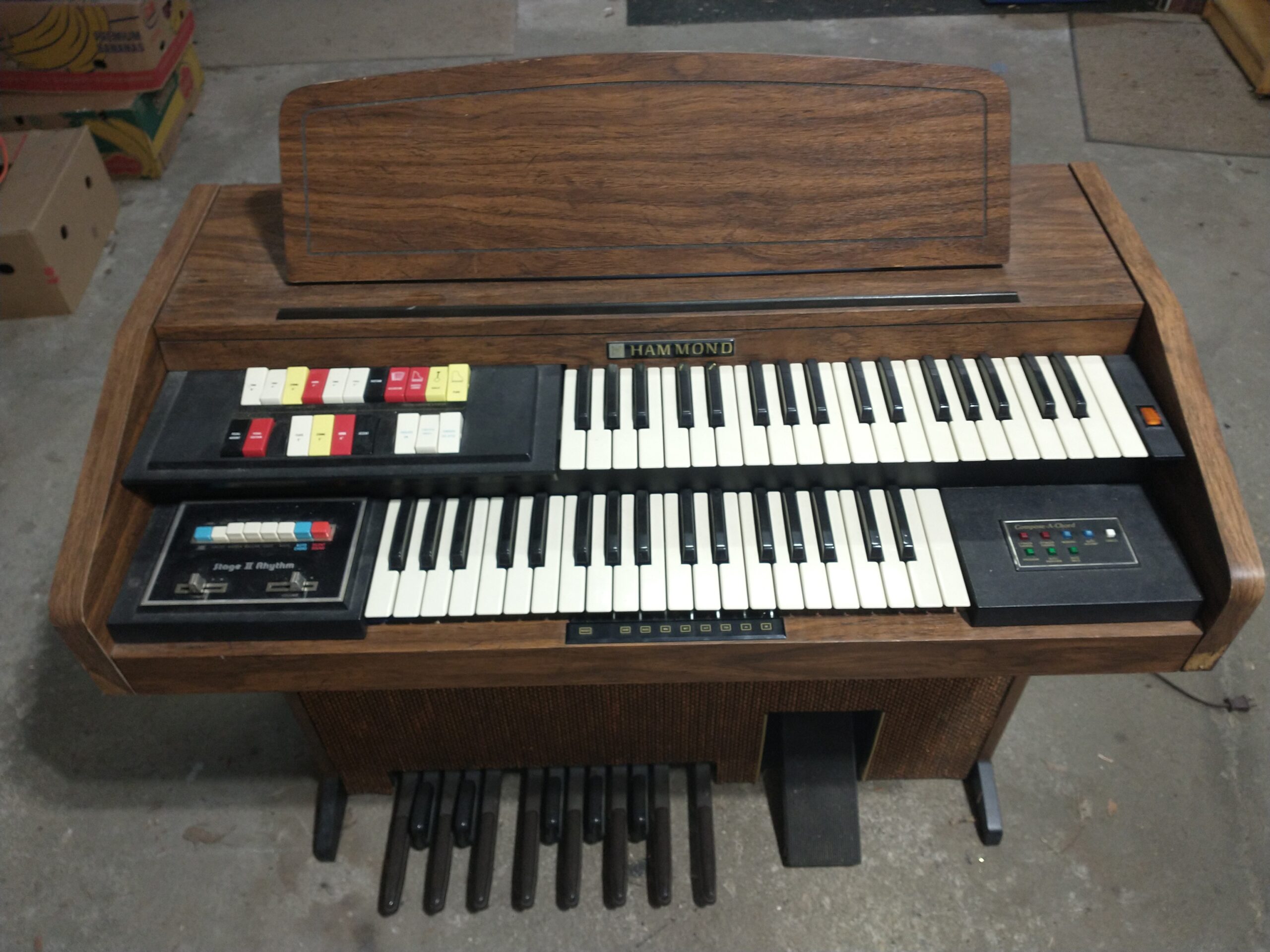
The first unmistakable signs of that shift appeared as early as their third album, The Colour of Spring (1986). On this record, Hollis sharply curtailed the synthesizers that had defined their earlier catalog, turning instead to acoustic and electro-mechanical instruments: organ, piano, acoustic guitar, harp, and woodwinds. Improvisational touches slipped into the gaps of the arrangements, and the overall note density dropped noticeably. Even so, the album reached a career-high No. 8 on the UK Albums Chart and became a major commercial triumph. For Mark Hollis, that success provided a decisive conviction: listeners did not need a glittering wall of synthesizers to hear the emotion inside the spaces between the notes. Armed with a generous production budget from EMI Records, the band stepped into a recording process with zero commercial guarantees—a session now remembered as one of the miracles of modern music history. It meant rowing out from the harbor of pop into a deep sea of silence from which they would never return.
2. The Blueprint of Subtraction: “Do Not Sully the Silence”
The supreme doctrine running through Talk Talk’s late work and Mark Hollis’s solo album is an uncompromising aesthetic: never play a note unless it improves upon silence. That principle is far harder to practice than to state. Inside a recording studio, “adding” sound is technically easy and offers immediate commercial reassurance. Lush reverb, stacked guitar overdubs, and heavy compression to boost perceived loudness all function as ornaments that mask musical absence or boredom. Yet Hollis and his creative partner, producer Tim Friese-Greene, were gripped by an obsession with subtraction—stripping every ornament away.
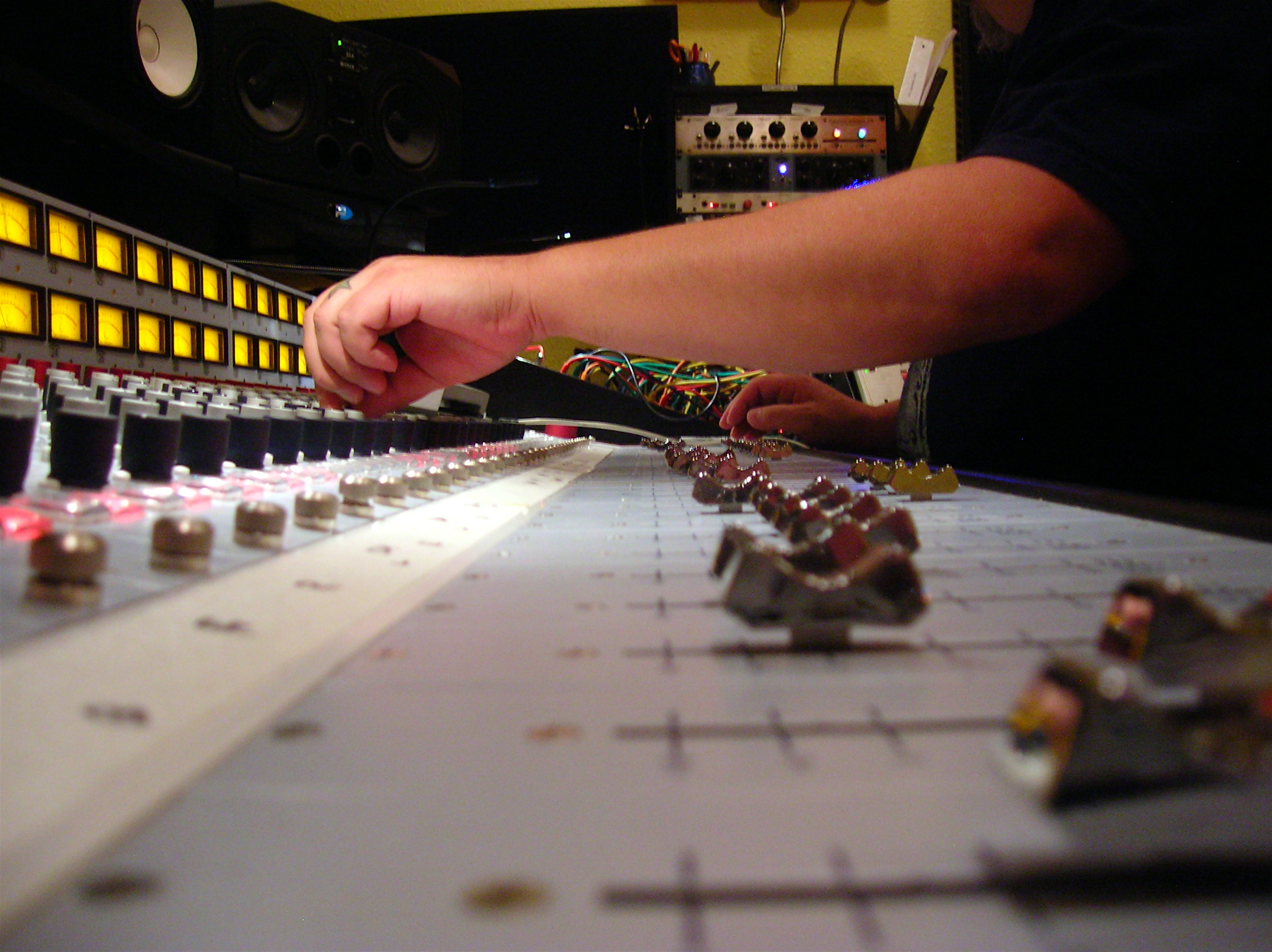
The recording process they devised was extraordinary. Shutting themselves inside London’s Wessex Sound Studios for months on end, they blacked out the room and blocked all natural light from outside. Hollis invited improvisers from across jazz, classical, and contemporary music into the studio, giving them no strict chord charts or time signatures and asking them simply to play whatever they felt in the moment. Trumpet, oboe, double bass, and organ were recorded onto tape for dozens of hours without a click track.
The true act of subtraction began only after those vast reels of improvisation had been recorded. Hollis and Friese-Greene immersed themselves in the painstaking work of erasing unneeded notes from the multitrack tapes. In one passage, out of a gorgeous trumpet solo lasting several minutes, they kept only a single frayed long tone and cut everything else away. In another, they muted the drum beat entirely, bringing forward only the low resonance of the double bass and the faint rustle of clothing as a player shifted in their chair. For them, recording was not the act of stacking sounds together, but a sculptural process of carving away excess material until a sonic form emerged inside the silence. The notes that survived reach the listener’s ear with overwhelming physical presence, like a lighthouse beam blinking through heavy fog. The longer the stretch in which no note is played, the heavier the weight of the single note that follows. That dynamic tension became the core blueprint for the genre that would later be named “post-rock.”
3. A Guide to Three Essential Albums Along the Deep Inlets (Three Milestones)
The three albums left behind as Talk Talk departed the shore of synth-pop and sailed toward silence each mark a distinct watershed in acoustic sculpture. Unpacking these records in chronological order allows us to retrace their exact stride—how they pared sound away step by step before finally touching down in complete silence.
Spirit of Eden (1988) — The First Watershed Opening in the Twilight
Spirit of Eden is the first monument Talk Talk erected after breaking completely with the conventions of pop music and committing to the radical process of improvisation and erasure described above. Across roughly a year between 1987 and 1988, the album took shape inside a studio whose windows were boarded over in black, lit only by candles and oil lamps. Whenever executives from EMI visited the studio, Hollis refused to let them hear a single bar, brooking no outside interference until the record was finished. EMI had hoped for accessible singles; what was delivered instead was a sweeping six-part suite in which hushed ambience and sudden bursts of ferocious distorted guitar collided head-on.
At the opening of the album, a quiet organ drone and the faint breath of a trumpet sketch a stillness like standing on a tidal flat at low tide. When Mark Hollis’s trembling voice murmurs “The rainbow’s end…,” the listener feels stranded in the middle of a dense fog. The drum beat abandons steady metronomic time, drifting through the room like the breathing of a living creature, swelling and receding by turns. Most striking of all is the extreme contrast in dynamics. Across a dead-silent room, a jagged bolt of guitar feedback suddenly slashes through the air, only to be swallowed back into silence a moment later as its decay trails off. Every sound on this album stands poised on a knife-edge. Jazz improvisation, the chamber-music sonorities of twentieth-century classical composers like Debussy and Satie, and the raw cry of the blues are bound together more organically than ever before by the adhesive of negative space. EMI was baffled over how to market the record and even took legal action against the band, yet the album’s acoustic impact became a decisive touchstone for generations of musicians to follow.
- Listen: Stream on Spotify / Stream on Apple Music
Laughing Stock (1991) — Waveforms Echoing Inside the Ebb Tide
After parting ways with EMI following Spirit of Eden, Talk Talk signed with the historic jazz imprint Verve under Polydor. The move was deeply symbolic: their music had already stepped outside the borders of rock and pop, approaching the territory of Miles Davis’s In a Silent Way—music defined by improvisation and command of acoustic space. The album created under those auspices was their final group statement and the historic masterpiece that fixed the term “post-rock” in music history: Laughing Stock.
The recording sessions were conducted under even more uncompromising conditions. Hollis forbade the musicians from looking at clocks and sealed the studio windows shut. With illumination inside the room reduced almost to zero, the players worked in near-total darkness, relying solely on each other’s presence and the reverberation of the room. Drummer Lee Harris was asked to play without any click track, responding purely to the subtle air currents left by Hollis’s organ. Released completely from mechanical tempo, the resulting drum grooves sway like a living heartbeat while carrying an unmistakable ritual intensity.
Dominating the entire record is an acoustic texture that recedes quietly like an ebb tide. On “Myrrhman,” over an exceedingly slow repetition of bass and drums, Mark Hollis’s vocal rises and sinks unsteadily like a small boat adrift on acoustic waves. On “Ascension Day,” an urgent drum grid suddenly rears up and chaotic guitar feedback storms across the room—only to be severed abruptly by total silence. Listening to this album, you find your emotions shaken more powerfully by the silence at the instant a sound stops than by the moment the sound is ringing. That is acoustic design pursued to the outer limit of subtraction—the primordial post-rock waveform that Chicago’s post-rock circle and European bands such as Bark Psychosis, Slint, and Tortoise would study and build upon with fierce devotion.
- Listen: Stream on Spotify / Stream on Apple Music
Mark Hollis (1998) — The Headland Closest to Silence
Following the release of Laughing Stock, Talk Talk ceased activity, effectively disbanding. Mark Hollis withdrew from the music industry and chose a quiet life with his family. Yet one final ritual of silence remained for him to fulfill. Seven years later, in 1998, he quietly released his sole solo album, Mark Hollis. It is the literal terminus of his journey of subtraction—the headland closest to silence itself.
On this record, electric instruments are eliminated altogether. The instrumentation consists strictly of acoustic guitar, piano, bassoon, flute, pairs of woodwinds, and double bass. Within the barest possible acoustic frame, those instruments are played as thinly and quietly as daylight slipping through a crack in a paper screen. Recorded using a room-microphone setup placed several meters back from the players, the sessions capture not only the individual instruments, but the physical air of the room and the resonance of empty space in extraordinary detail. In effect, the stillness of the moments when no note is sounding is mixed right into the record as an instrument in its own right.
Opening with the solo piano piece “The Colour of Spring,” the album makes us aware of the faint sound of Mark Hollis drawing a breath, the friction of fingertips brushing against acoustic guitar strings, and the quiet decay of room reverb passing like a draft of air. Rather than conventional music, it feels closer to a spatial installation meant for listening to the room itself. With this album, Hollis retired permanently from making music. Declaring that quiet time spent with his children mattered far more than recording, he never appeared in the public eye again before his passing in 2019. The final record he left behind stands on the sacred borderline where sound sheds its identity as music and returns to silence as part of nature.
- Listen: Stream on Spotify / Stream on Apple Music
4. The Contour Lines of the Blank Territory Called Post-Rock
The acoustic space Talk Talk carved open on Spirit of Eden and Laughing Stock stood worlds apart from the raw tides of alternative rock and grunge that dominated the era. Yet from the mid-1990s onward, their spatial architecture of subtraction and liberation of acoustic dynamics spread around the globe, forming the vast musical network that came to be known as post-rock.
When British music critic Simon Reynolds first used the term “post-rock” in The Wire in 1994 while reviewing Bark Psychosis’s debut album Hex, Talk Talk’s late records stood unmistakably in the background. Reynolds defined post-rock as music that uses rock instrumentation (guitar, bass, drums) for non-rock purposes—dismantling traditional verse-chorus structures to make timbre, texture, and acoustic space the true protagonists. To recreate the exact room air Talk Talk had achieved, Bark Psychosis undertook extended studio sessions and practiced rigorous subtractive editing. For them, Mark Hollis was the towering forerunner upon whose contour lines they placed their own notes.
That philosophy passed into the quiet unease of Kentucky band Slint’s Spiderland (1991), the multilayered minimalism of Chicago post-rock flagship Tortoise, and the expansive ambient rock of Iceland’s Sigur Rós. In particular, Tortoise’s approach—treating the recording studio itself as an instrument and reconstructing live takes afterward through collage and erasure—was a direct modern update of the secretive recording methodology Mark Hollis had pioneered on Spirit of Eden.
Furthermore, Talk Talk’s shadow falls deeply across Radiohead’s turn-of-the-millennium leap into electronics and jazz on Kid A and Amnesiac, as well as the hushed piano-and-strings spatial design of A Moon Shaped Pool. Thom Yorke has repeatedly expressed his admiration for Talk Talk, especially Mark Hollis’s vocal phrasing and command of negative space. Just as Talk Talk once stood at the summit of commercial pop and chose to strip everything away, Radiohead dismantled their own crown as the world’s biggest rock band and rowed out into acoustic negative space. The map of blank territory that Talk Talk drew remains one of the most trusted keys for artists seeking new ways to listen today.
5. Conclusion: What It Means to Lend Your Ears to the Unplayed Note
In a contemporary world where information is consumed at breakneck speed and every gap is stuffed with noise and content, listening to Talk Talk’s late catalog functions as a form of quiet resistance. The moment we press play on their records, we feel the air in our own room grow taut. That happens not because their sound pushes forward with forceful assertion, but because as the notes recede and the open spaces widen, the physical stillness of the room we inhabit begins to resonate back.
No musician felt the responsibility of breaking silence more acutely than Mark Hollis. For him, music was never a display of ego; it was the act of placing a note gently and respectfully against the most beautiful natural state of all: silence. The path he walked—departing from the bustling harbor of synth-pop, crossing the wilderness of subtraction, and finally extinguishing sound altogether on the headland of silence—reaches beyond the career of a single artist to ask us what it truly means to listen.
Listening to music is not merely chasing the notes that are ringing. It is loving the nameless blank space that stretches between the moment a tone fades away and the moment the next tone rises. Guided by the contour lines Talk Talk redrew, we walk through that open space again today. What reaches us from the speakers may be the reverberation of a distant past, yet after its decay vanishes, the silence left behind in our room feels richer than before, as if a cool breeze had just passed through. For the approach of treating the recording studio itself as an instrument, see Tortoise and the Acoustic Craft of Post-Rock; for an overview of the genre as a whole, visit our Introduction to Post-Rock; and for the lineage that arrived at stillness through walls of guitar noise, read our Introduction to Shoegaze.
6. Further Reading
- Hiroshi Yoshimura Environmental Music Guide: 5 Essential Albums for Listening to Negative Space and Stillness
- 5 Essential Blue Note Albums: The RVG Sound and Aesthetics of Negative Space in Jazz’s Golden Era
- Introduction to Ambient Music: A History of Silence and Essential Works
Source: Album artwork references and streaming metadata verified against Apple Music catalog pages (verified on 2026-08-05).