When someone asks, “What actually is alternative rock?” it is surprisingly hard to sum up in a single sentence. Used for decades as an umbrella term for music positioning itself as “another choice” outside the commercial mainstream, “alternative” describes an artistic attitude far more than a single guitar tone or rhythm pattern. In this guide, we unpack the heart of that attitude through the twin lenses of subtraction and negative space—tracing the genre’s historical family tree, three distinct entry points with landmark albums, and the uniquely inventive world of Japanese alternative rock.
What Was “Alternative” Originally an Alternative To?
Understanding where the word came from brings the entire map into focus. In the 1980s United States, while corporate FM radio, MTV, and major record labels poured money into glossy arena rock and hair metal, a grassroots network of student-run university stations (“college radio”) and regional independent record labels quietly built an underground distribution circuit of their own—think SST Records and Sub Pop in the US, or 4AD and Rough Trade in the UK. The music circulating through those independent veins came to be called “alternative.” In other words, “alternative” originally referred not to a sonic style, but to an independent infrastructure of distribution and economics.
That history also clarifies its relationship with the word “indie.” Strictly speaking, “indie” denoted capital ownership (bands signed to independent labels), while “alternative” described the broader cultural movement emerging from that circuit—until the autumn of 1991 turned the music industry upside down. When Nirvana’s Nevermind knocked Michael Jackson off the top of the Billboard charts, major labels rushed to buy up underground bands and market “Alternative” as a commercial storefront. Overnight, the word became a Grammy category and a corporate chart heading, hollowing out its literal meaning as an “alternative to the mainstream.” Why, then, does this guide still treat alternative rock as a living attitude? Because even after the label was co-opted, the bands that endure from this lineage share a unmistakable core: a willingness to question the default grammar of popular music. Before asking “what kind of riff should we play?”, alternative music asks, “where, how, and for whom are we making this sound?”
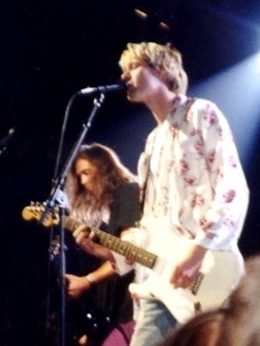
The Essence of Alternative: Subtraction and Negative Space
Rather than dazzling listeners with 1980s-style instrumental flash and multi-tracked studio polish, the greatest alternative records generate atmosphere by deliberately pulling notes away. Three classic examples illustrate how this works in practice.
First is the quiet-loud-quiet dynamic pioneered by Pixies and carried to the entire planet by Nirvana on “Smells Like Teen Spirit” (where Kurt Cobain openly admitted he was simply trying to write a Pixies song). Because the verse strips down to a skeletal two-note guitar figure and a bassline, the sudden wall of distortion in the chorus hits like a physical shockwave. The emotional weight of the noise is determined entirely by the silence that precedes it.
Second is the taut, suffocating negative space of Slint’s Spiderland (1991). Sustaining forty minutes across six tracks through little more than half-whispered spoken-word narratives, dry interlocking guitar harmonics, and the unbearable tension of waiting for an explosion that only arrives at the final precipice, this Louisville quartet drew the architectural blueprint for everything later called post-rock.
And third is Talk Talk’s Spirit of Eden (1988). Walking away from their lucrative career as a British synth-pop hitmaker, Mark Hollis and producer Tim Friese-Greene locked themselves in a darkened studio, recorded hours of free improvisation by guest musicians, and then painstakingly erased most of it—building an album through the act of subtraction. As Hollis famously remarked, “Before you play two notes, learn how to play one note—and don’t play one note unless you’ve got a reason to play it.” That devotion to the tension of what is not being played is the exact reason Nai-Oto places alternative rock on the same shelf as ECM jazz and ambient music.
A Technical Catalog of Subtraction
“Subtraction” in alternative rock is not a vague spiritual slogan; it is a concrete toolkit of studio and instrumental techniques. Take lo-fi recording: bands like Pavement, Sebadoh, and Guided by Voices deliberately embraced the hiss, tape wobble, and room bleed of four-track cassette recorders, shattering the industry dogma that “expensive studio fidelity equals emotional truth.” They discovered that sonic imperfection translates directly into human intimacy. Take alternate guitar tunings: Sonic Youth abandoned standard EADGBE tuning altogether, tuning multiple strings to the same pitch or strange intervals so that open strings rang out with complex, beating overtones no standard barre chord could produce. Or take dynamic mix placement: burying the lead vocal beneath the guitars (My Bloody Valentine) or recording the drums with raw room microphones (Steve Albini) turns the question of “what to withhold from the listener” into the artist’s signature. Stepping off the escalator of technical virtuosity opened up an entire continent of sonic invention.
Make no mistake: subtraction is not musical poverty or laziness. Removing superfluous notes is the most luxurious resource allocation a band can make, concentrating 100 percent of the listener’s attention onto the few sounds that remain. That is why the seemingly “sparse” masterpieces of alternative rock reveal fresh micro-details on the fiftieth listen. Musical density is measured not by the number of notes per bar, but by the density of attention each note commands.
A Five-Minute Lineage Map
Every map of alternative rock begins with The Velvet Underground (1967–1970). As Brian Eno famously quipped, their debut album sold only thirty thousand copies in its first few years, “but everyone who bought one of those thirty thousand copies started a band.” Their coexistence of abrasive viola drone and tender, whispered balladry remains the genetic code of alternative music. Tracing the trunk forward: after the 1977 explosion of punk, British post-punk acts (Joy Division, Wire, Public Image Ltd) discovered how to carve stark architectural space around the bassline; in the 1980s, American college rock (R.E.M.’s Murmur in 1983), the cathedral noise-architecture of Sonic Youth’s Daydream Nation (1988), and the quiet-loud surrealism of Pixies’ Doolittle (1989) formed a deep underground aquifer. In 1991, Nirvana’s Nevermind blew that aquifer through the crust of the earth into the global mainstream. In the wake of that eruption, the 1990s branched outward into post-rock, slowcore, shoegaze, and Midwest emo, culminating at the turn of the millennium when Radiohead dismantled rock music from the inside out across OK Computer (1997) and Kid A (2000).
The 2000s and Beyond: The “Post-Alternative” Landscape
What happened to the trunk after the year 2000? At the dawn of the new century, The Strokes and The White Stripes revitalized the stripped-down urgency of garage rock in New York and Detroit, while Montreal’s Arcade Fire turned indie rock into a communal, cathedral-sized catharsis on Funeral (2004). As MP3 blogs, MySpace, and Bandcamp accelerated musical discovery, the 2010s gave rise to “bedroom pop”—where a solo artist recording on a laptop in their bedroom could reach millions of listeners worldwide without ever signing to a label. From Clairo and Mac DeMarco onward, “cheap” home recording ceased to be an economic constraint and became a deliberate aesthetic texture: the lo-fi rebellion of the 1990s had become the default factory setting of a democratized music world. When anyone can record and listen outside the corporate mainstream, “alternative” did not die—it dissolved into the air we breathe.
The Singularity Called Radiohead
Placed at the apex of our 1990s lineage map, Radiohead deserves a closer look. When OK Computer (1997) was hailed worldwide as the definitive monument of late-twentieth-century guitar rock, the Oxford quintet responded at the height of their commercial power by largely abandoning guitars altogether. Kid A (2000) reassembled rock’s emotional core using the vocabulary of Warp Records electronica, Krautrock rhythm, Olivier Messiaen’s chamber harmonies, and free jazz brass—polarizing critics on release day before being universally recognized as the defining album of the 2000s. Then, in 2007, they released In Rainbows digitally under a radical “pay-what-you-want” model after leaving EMI, questioning the economic infrastructure of the record industry just as 1980s college rock had done. Continuously demonstrating an “alternative” in both sound and business, Radiohead stands as a one-band singularity.
Another Branch: Emo
Let us also fill in “emo,” which appeared briefly on our family tree. The genre began in mid-1980s Washington, D.C., when hardcore punk veterans (most notably Rites of Spring and Embrace, on Ian MacKaye’s Dischord Records) shifted the focus of punk’s intensity from political anger to raw, personal emotional confession—dubbed “emotional hardcore.” In the 1990s, bands like Sunny Day Real Estate, Mineral, and American Football wedded quiet, intricate arpeggiated guitars to soaring dynamic crescendos, long before the word “emo” was repackaged into 2000s mall-punk fashion. In Japan, the raw, unvarnished lyricism of Sapporo veterans eastern youth and bloodthirsty butchers resonated deeply with this exact circuit, proving that channeling awkward, unguarded honesty through loud amplifiers needed no translation. Where slowcore and post-rock practice subtraction, emo practices emotional addition—yet both grow from the same refusal to fake a polished commercial smile.
At the opposite extreme from quiet confession lie records built to pursue sheer sonic weight and unflinching ferocity. For a close look at Bring Me The Horizon’s 2006 deathcore debut—and how its 2026 re-recording alters the duration and pacing of each track—see our track-by-track analysis in The Extra 83 Seconds Added in Bring Me The Horizon’s Re-Recording.
Three Entry Points by Style (and Essential Albums)
1. Dream Pop & Shoegaze: Sinking Into a Wall of Sound
Here, distorted or chorus-drenched guitars are woven into a shimmering wall of sound where the human voice floats as one texture among many. Rather than parsing every lyric like a novel, you immerse yourself in the temperature of the air. Start with the glossolalia-like vocal flights of Cocteau Twins’ Heaven or Las Vegas (1990, the pinnacle of 4AD dream pop) and the velvet modern daydream of Beach House’s Teen Dream (2010). If you want to push all the way into blissful guitar noise, head straight to My Bloody Valentine’s Loveless, covered in depth in our Introduction to Shoegaze.
The joy of this lineage lies in catching the exact moment the human voice stops acting as a narrator and becomes a pure musical instrument. On Heaven or Las Vegas, Elizabeth Fraser sings in an invented phonetic language of her own, freeing her soprano from the gravity of literal dictionary meaning. Music where the lyric sheet cannot help you is not being evasive—it is speaking directly to emotions that exist before words are formed. For the loud, feedback-drenched side of this family, our shoegaze guide serves as the direct sequel.
2. Post-Rock & Slowcore: Wordless Drama and the Aesthetics of Slowness
Stepping back from verse-chorus vocal hooks, these records build towering emotional arcs through repetition, patient pacing, and dynamic contrast. Experience the terrifying quiet-to-loud eruptions of Scotland’s Mogwai on Mogwai Young Team (1997), the glacial bowed-guitar majesty of Iceland’s Sigur Rós on Ágætis byrjun (1999), or the breathtaking live interplay of Tokyo’s toe, where acoustic drums and clean guitars braid together like lacework. And if you find yourself drawn to the beauty of slowness itself, listen to Minnesota slowcore pioneers Low on I Could Live in Hope (1994)—where dropping the tempo and stripping the arrangement down to a snare brush, a bass note, and two harmonizing voices gives every single note the weight of a boulder.
A famous piece of lore surrounds Slint’s Spiderland: the iconic black-and-white cover photograph showing the four band members treading water neck-deep in an abandoned Indiana limestone quarry was snapped by their friend Will Oldham (later known as Bonnie “Prince” Billy). The band broke up almost immediately after finishing the sessions, and the LP became a legend entirely through word of mouth among musicians. An album that barely registered on the charts in 1991 reshaped the terrain of rock ten years later—the classic time-delayed detonation of alternative music. We mapped out this entire branch in a 10,000-character feature in our Introduction to Post-Rock.
3. Hooked by the Song: Indie Rock & Alternative R&B
If twenty-minute instrumental crescendos or walls of feedback feel intimidating at first, enter through the door where songwriting and melody lead the way: the wry melancholy and chiming Johnny Marr guitar arpeggios of The Smiths’ The Queen Is Dead (1986), the gloriously loose, off-kilter charm of Pavement’s Crooked Rain, Crooked Rain (1994) (whose seemingly casual “slacker” delivery conceals razor-sharp arrangement instincts), and the intimate, ghostly storytelling of Phoebe Bridgers’ Punisher (2020). Cross genre lines into contemporary alternative R&B and you find Frank Ocean’s Blonde (2016)—a masterpiece that strips away drums across long stretches to leave only voice, guitar, and negative space, carrying the exact philosophy of subtraction into modern pop.
One more indispensable songwriter in this lane is Elliott Smith and his 1997 classic Either/Or. Double-tracking his own whispered vocals and fingerpicked acoustic guitar into an impossibly close, headphone-ready intimacy, Smith stood on the Academy Awards stage in a white suit in 1998 to perform “Miss Misery” (from Good Will Hunting) right alongside Celine Dion—a surreal, unforgettable intersection of underground tenderness and Hollywood spectacle. When a barely audible whisper hits harder than a belted power ballad, subtraction is doing its work.
Women in Alternative Rock: The Other Half of the History
Any honest history of 1990s alternative rock must emphasize that women were never token sideplayers in this movement—they were central architects of the earthquake. Consider the fearless theatrical blues-punk of PJ Harvey, the infectious, Platinum-selling off-kilter pop of Kim Deal’s The Breeders (formed after her tenure in Pixies), and the blistering, unsparing confessional roar of Courtney Love’s Hole on Live Through This (1994). In the Pacific Northwest and Washington, D.C., bands led by Bikini Kill, Bratmobile, and Heavens to Betsy ignited the Riot Grrrl movement—confronting sexism in the mosh pit and society head-on through zines and punk shows, and laying the groundwork for the towering guitar interplay of Sleater-Kinney.
That lineage connects directly to the present day. When artists like Mitski, Japanese Breakfast, Snail Mail, and Phoebe Bridgers command arena-sized devotion through quiet, fiercely specific self-examination, they are building on expressive territory pried open in the early 1990s. Alternative rock is too often caricatured as a boys’ club of flannel shirts and distortion pedals, when in reality it was an expansion of who gets to hold the microphone and on what terms. Every artist named in this section doubles as an essential gateway record.
What Was Grunge? The Three Years Alternative Swallowed the Mainstream
The moment on our lineage map where the underground “blew through the crust of the earth” deserves its own brief chapter. In late-1980s Seattle, a rainy port city largely ignored by the Los Angeles and New York music industries, local bands recording for the scrappy independent label Sub Pop began fusing the raw speed of punk with the sludgy, detuned riff weight of early Black Sabbath. Marketed half-jokingly as “grunge,” that regional sound conquered the globe virtually overnight when Nirvana’s Nevermind and Pearl Jam’s Ten (both released in late summer 1991), alongside Soundgarden and Alice in Chains, sold tens of millions of copies—even sending thrift-store flannel shirts down Paris high-fashion runways.
Yet that sudden commercial coronation tormented the very musicians who created it. Nobody felt the contradiction of “underground anti-corporate music becoming the biggest corporate product on earth” more acutely than Kurt Cobain, and his death in April 1994 marked the emotional end of the grunge era. In the aftermath, the underground instinctively retreated inward—turning away from stadium-sized choruses toward the quieter, more private worlds of lo-fi, slowcore, post-rock, and chamber indie. Those three feverish years between 1991 and 1994 demonstrated both the explosive power and the structural limits of what happens when the “alternative” becomes the center. Thirty years later, the raw urgency in those recordings has not aged a day.
Listening With Your Eyes: Album Artwork as the Other Half
Alternative rock has always been a visual medium as much as an audible one. Right at the genre’s birth in 1967, The Velvet Underground’s debut LP wore Andy Warhol’s famous peel-away yellow banana on a stark white sleeve, sealing a lifelong pact between fine art and underground rock. In the 1980s and 90s, British graphic designer Vaughan Oliver (with photographer Simon Laroche at v23) crafted such an unmistakable visual identity for the 4AD label—misty textures, classical typography, and surreal still-lifes—that record buyers around the world regularly bought albums sight-unheard simply because they trusted the sleeve. From the quarry photograph on Slint’s Spiderland to the mysterious vintage postcard collage on Neutral Milk Hotel’s In the Aeroplane Over the Sea, great alternative covers act as visual riddles rather than literal advertisements, setting the listener’s imagination in motion before the needle ever touches the groove.
Remarkably, that visual intuition still works in the streaming era. Even shrunk down to a one-inch square thumbnail on a smartphone screen, alternative records retain an unusually high hit rate when you choose an album purely by its cover art. Trusting your eyes is not a nostalgic vinyl-collector quirk; it is a genuine way of recognizing a kindred aesthetic sensibility before a single word of criticism is read. Try lining up the covers of the “Next Ten Albums” below—half the story of alternative rock is written right across those sleeves.
Japanese Alternative Rock: Invention, Not Translation
- NUMBER GIRL — SAPPUKEI (2000) — Razor-wire Fender Telecaster guitar slashes paired with frontman Shutoku Mukai’s incantatory Hakata-dialect cadence and sharp urban imagery. Recorded with producer Dave Fridmann, it sounds like no other band on earth.
- bloodthirsty butchers — kocorono (1996, a monument of Japanese alternative rock) — Tracked in an abandoned Hokkaido factory across eleven monthly chapters (deliberately leaving out December so the album remains eternally unfinished), Hideki Yoshimura’s guitar turns raw human vulnerability into a roaring wall of catharsis.
- Fishmans — Kūchū Camp (Aerial Camp) (1996) / LONG SEASON (1996) — Blending Jamaican dub bass space with weightless pop melancholy, culminating in the thirty-five-minute single-track odyssey LONG SEASON. Over the past decade, international listeners on Rate Your Music and YouTube have elevated Shinji Sato’s band into one of the most revered groups of the 1990s anywhere in the world.
- Yura Yura Teikoku — Kūdō Desu (Hollow Me) (2007) — The final studio album by Shintaro Sakamoto’s psychedelic rock trio, stripping away rock distortion until the music feels simultaneously hollow and hypnotically dense. There is no finer Japanese ambassador for the aesthetics of subtraction—just as NUMBER GIRL’s triumphant 2019–2022 reunion proved how deeply these bands remain etched into modern Japanese music culture.
A brief historical note is essential here: Japanese alternative bands were never passive imitators importing Western trends ten years late. By the early 1990s, Osaka noise-rock visionaries Boredoms were touring directly with Sonic Youth and playing the main stage of America’s Lollapalooza festival, while Osaka pop-punk trio Shonen Knife was championed personally by Kurt Cobain, who invited them to open for Nirvana on the Nevermind tour. Influence flowed across the Pacific in both directions from the very beginning.
The secret incubator behind Japan’s alternative longevity is the domestic livehouse circuit—a dense network of small, ticketed basement venues across Tokyo, Osaka, Kyoto, Sapporo, and Fukuoka where uncompromising bands can hone their craft for years without needing mainstream radio hits. NUMBER GIRL, bloodthirsty butchers, and Fishmans all grew out of that underground soil. While the loud wing of that scene connects directly to the Japanese chapter of our Shoegaze guide, the quiet wing flows seamlessly into the environmental music of our Introduction to Ambient Music—making Japan one of the few countries on earth whose underground is celebrated globally for both its most extreme noise and its deepest silence.
If you want to trace the evolution of Japanese alternative rock through the catalog of a single band, Kyoto’s Quruli integrated samplers and four-on-the-floor rhythm machines on TEAM ROCK (2001) before heading to London to record the nocturnal electronica-tinged THE WORLD IS MINE (2002). We mapped out all fourteen of their original studio albums in our Beginner-to-Deep-Cut Listening Order for Quruli’s Albums.
The Next Ten Albums: From the Trunk Out to the Branches
Including several touchstones mentioned along the way, here are ten essential albums that deepen your understanding of the main historical trunk:
- Pixies — Doolittle (1989) — The ground zero of quiet-loud dynamics, balancing surrealist biblical and cinematic imagery with indelible pop hooks.
- Sonic Youth — Daydream Nation (1988) — Seventy minutes where detuned guitar feedback transforms into grand architectural beauty; the crowning achievement of 1980s American underground rock.
- R.E.M. — Automatic for the People (1992) — The undisputed kings of 1980s college rock arriving at a quiet, string-arranged meditation on mortality and grace.
- PJ Harvey — Rid of Me (1993) — Recorded by Steve Albini with blistering room-mic immediacy, capturing every intake of breath and explosive guitar lurch.
- Yo La Tengo — I Can Hear the Heart Beating as One (1997) — Feedback squalls, whispered lullabies, Krautrock pulse, and bossa nova warmth coexisting peacefully under one roof—the Platonic ideal of American indie rock.
- Neutral Milk Hotel — In the Aeroplane Over the Sea (1998, a landmark of US indie) — Overdriven acoustic guitars, singing saws, brass horns, and Jeff Mangum’s incandescent vocal delivery; a cult folk-rock monument whose devotion has only grown over twenty-five years.
- Modest Mouse — The Moon & Antarctica (2000) — The pivotal moment when Pacific Northwest highway claustrophobia expanded into a vast, philosophical cosmos.
- Wilco — Yankee Hotel Foxtrot (2002) — Rejected by Reprise Records, streamed for free online by the band, and subsequently bought back by a sister Warner label to become a career-defining classic—a textbook lesson in both sonic deconstruction and alternative economics.
- Arcade Fire — Funeral (2004) — Turning real-life family bereavement into a life-affirming communal choir; one of the defining peaks of 2000s indie rock.
- Deerhunter — Halcyon Digest (2010) — Bradford Cox and Lockett Pundt distilling the hazy ghosts of 1990s dream pop and garage rock into modern classicism.
Think of these ten records as major transfer stations along the main line: whichever album grabs you first, exploring the releases recorded two years before and after it in the same scene will naturally draw your personal subway map.
Practical Tips for Listening
- Listen by full album from track one. Alternative records are almost always sequenced with deliberate dramatic pacing; playing an album straight through delivers an immersion that shuffled algorithmic playlists cannot replicate.
- Pay attention to intentional volume drops. When a verse suddenly drops so low that you feel tempted to reach for the volume knob, resist the urge and wait—the producer is setting a trap so the ensuing chorus hits with maximum force.
- Experience the quiet-loud drop live in person. The physical sensation of a band cutting from a pin-drop hush to a full-stack roar is something home speakers can only approximate; check our Summer Festival Calendar to catch these bands on stage.
- Save the lyric sheet for your second listen. Because alternative lyrics often favor fragmentary imagery over literal storytelling, reading them before you feel the music can get in the way. Fall in love with the sonic silhouette first, then look up the single line that keeps echoing in your head.
- Enjoy the historical context alongside the sound. We included plenty of studio and label stories in this guide because alternative is deeply contextual music; watching one documentary (such as 1991: The Year Punk Broke or Dig!) or reading an oral history like Michael Azerrad’s Our Band Could Be Your Life will make the exact same records sound twice as vivid.
For Those Who Still Can’t Pick Their First Album
If you are still hesitating in front of so many titles, let three simple questions decide your tonight’s spin. If you want to sink into a luminous ocean of guitar sound, take Entry 1 (Loveless or Heaven or Las Vegas). If you want forty minutes that feel like a wordless late-night film, take Entry 2 (Mogwai Young Team or Spiderland). If you want intimate songs to walk alongside you on headphones, take Entry 3 (The Queen Is Dead or Punisher). And if none of those immediately click, put on Fishmans’ Kūchū Camp—effortless on the surface, bottomless underneath. Once you have narrowed it down that far, all that is left is to press play.
Frequently Asked Questions
Q. How should I actually distinguish between “alternative” and “indie” in everyday conversation?
In casual conversation today, the two words are used almost interchangeably, so there is no need to walk on eggshells. Strictly speaking, “indie” refers to independent label ownership and DIY scale, whereas “alternative” refers to the broader musical lineage that crystallized in the 1980s and 1990s. On Nai-Oto, we use “alternative” in its widest philosophical sense: music driven by an attitude that questions mainstream formulas. As a rule of thumb, thinking of “1990s-rooted guitar/art-rock lineage = alternative” and “2000s-onward independent artists = indie” will carry you smoothly through any conversation.
Q. Does “alternative rock” still exist as a meaningful category in the 2020s?
Our view is that while the word survives as a streaming playlist tag and chart category, the spirit has become omnipresent. In an era where a teenager recording on a laptop in their bedroom can reach millions of listeners without a major label, the old Berlin Wall between “corporate mainstream” and “underground alternative” has largely dissolved. Yet the listener’s habit of actively seeking out strange, personal music that an algorithm would never spoon-feed you is the exact same practice as tuning a college radio dial at 1:00 a.m. in 1987—and in that sense, alternative is very much alive.
Q. Why are so many alternative songs melancholic or dark? Won’t listening to them bring my mood down?
Think of it not as “depressing music,” but as music with higher emotional resolution because it refuses to force a mandatory cheerful smile. Strangely enough, most listeners find that great melancholic records leave them feeling lighter rather than heavier afterwards—because the music gives an honest, external shape to unnamed feelings you were already carrying inside. Everyone has experienced a rough night when an upbeat, relentlessly positive pep-talk song only makes you feel more alienated; alternative rock is the music built specifically to keep you company on those nights.
Q. Do I need experience playing guitar or drums to appreciate this music?
Not in the slightest. In fact, because alternative rock consciously stepped off the treadmill of showing off fast guitar solos and conservatory technique, a curious ear for texture, mood, and human context is far more useful than knowing music theory. You may have noticed that we barely mentioned technical chops anywhere in this entire guide.
Q. What if I listen to a critically acclaimed “masterpiece” and feel nothing at all?
That is completely normal—in fact, it is practically a rite of passage in this genre. Many of the greatest alternative albums took ten years for the wider culture to catch up with, and the exact same time delay happens inside an individual listener’s life. Someone who finds Slint’s Spiderland or Talk Talk’s Spirit of Eden bafflingly dry at age twenty often comes back three years later and is moved to tears. Never force yourself to like a canonized record; just set it back on the shelf for six months and try track one again on a different season’s night.
Q. Is there still any reason to buy physical CDs or vinyl records in the streaming age?
Yes, for two reasons. First, holding a twelve-inch gatefold sleeve and reading the liner notes completes the visual half of the artwork experience we discussed earlier. Second, on a purely practical level, buying a record or a T-shirt at the merch table of a small live venue puts money directly into the band’s gas tank so they can keep making music. The underground economy still runs on small, human-scale transactions: discovering widely on streaming and buying your favorites at the show is the healthiest way to keep this ecosystem alive.
Q. Can I still enjoy Japanese or English alternative rock if I don’t catch every lyric right away?
Absolutely. As we saw with Cocteau Twins, My Bloody Valentine, and Fishmans, much of this music treats the human voice primarily as an atmospheric instrument rather than a speech podium. Let the overall sonic silhouette wash over you first, and only look up a translation when a particular phrase tugs at your sleeve—or start with Japanese alternative bands to get a feel for the dynamic grammar before crossing the ocean. Both routes lead to the same place.
Conclusion: What Refusing to Chase Hits Left Behind
The enduring paradox of alternative rock is that music created without making “commercial mass appeal” its first priority ends up outliving the chart hits of its era by decades. The Velvet Underground, Slint, Talk Talk, and Fishmans were all largely ignored by the mass market in real time. Hearing a record that once sounded too strange or too quiet for its own decade be hailed ten years later as a prophetic classic—and savoring that historical time lag itself—is one of the deepest pleasures of being a music fan. If an album does not click tonight, it may simply be waiting for the right year of your life. Pick the single title from this guide that sparked your curiosity, and play it from the opening second to the final fade.
Further Reading: Introduction to Shoegaze / Introduction to Ambient Music
Let us leave you with a three-step action plan. Tonight, play the opening three tracks of Pixies’ Doolittle (starting, of course, with “Debaser”). This weekend, dim the lights and play Side A of Slint’s Spiderland without looking at your phone. And next month, walk into a small local live venue to watch an opening band whose name you have never heard before—because that final step is the most authentically “alternative” experience of all. Your own alternative is waiting not on an algorithmic chart, but in a room like that.
Listen on Streaming
- The Velvet Underground & Nico — Spotify / Apple Music
- Pixies — Doolittle — Spotify / Apple Music
- Slint — Spiderland — Spotify / Apple Music
- Talk Talk — Spirit of Eden — Spotify / Apple Music
- Yura Yura Teikoku — Hollow Me (Kūdō Desu) — Spotify / Apple Music
The phrase “subtraction and negative space” actually came to me on the night I first heard Yura Yura Teikoku’s Hollow Me (Kūdō Desu). There are so few notes playing at any given moment, yet the entire atmosphere of the room changes the instant the needle drops. Ever since that night, whenever I hear an over-stuffed arrangement, I catch myself wondering, “Does that extra guitar track really need to be there?” If you have a personal “album of subtraction” that changed how you hear space in music, I would love to read about it in the comments.