“I want to start listening to jazz, but I have no idea where to begin.” Almost every serious music listener hits this wall at least once. Open a traditional jazz canon guide and you are immediately confronted by hundreds of “mandatory” albums, which only makes the doorway feel narrower. This long-form guide is written for anyone standing right at that threshold—walking you step by step from how to pick your very first album, to essential masterpieces organized by ensemble type, to the art of listening by record label, all the way to the vibrant contemporary scene. Everything is sequenced to feel natural for ears coming from rock, alternative, or electronic music. Feel free to jump straight to whichever section catches your eye; by the time you reach the bottom, you will know exactly which record to put on tonight.
Conclusion: Choose by Your Daily Rhythm, Not by a Canon Checklist
The single biggest reason newcomers stall out when exploring jazz is the unspoken obligation that “I have to start at the historical beginning and do my homework in order.” In reality, you will fall in love with jazz much faster if you start with a sound that matches the temperature and pace of your own daily life. Does it feel good in a quiet room at midnight? Can you play it while working or cooking without feeling crowded? Trust that physical intuition first; the history and theory will follow naturally on their own. Below, we divide the doorway into three ensemble types and introduce the definitive starting records for each.
The Real Reason Jazz Feels “Intimidating”
Before we drop the needle, let us clear up one pervasive myth: the fear that “you cannot really appreciate jazz unless you understand chord substitutions and musical modes.” To put it plainly, you need zero music theory to enjoy jazz. Jazz improvisation is a live, unscripted conversation between players in a room, and what a listener needs is not a conservatory textbook, but an ear that senses the warmth, humor, and tension of the exchange. Just like watching a great basketball or soccer match, you do not need to memorize the referee’s rulebook to get goosebumps when an extraordinary play unfolds in real time. Let the physical thrill of a solo come first, and only look up the historical footnotes to the extent your curiosity asks for them. Trying to “study before listening” is the main culprit that has kept people away from jazz for decades.
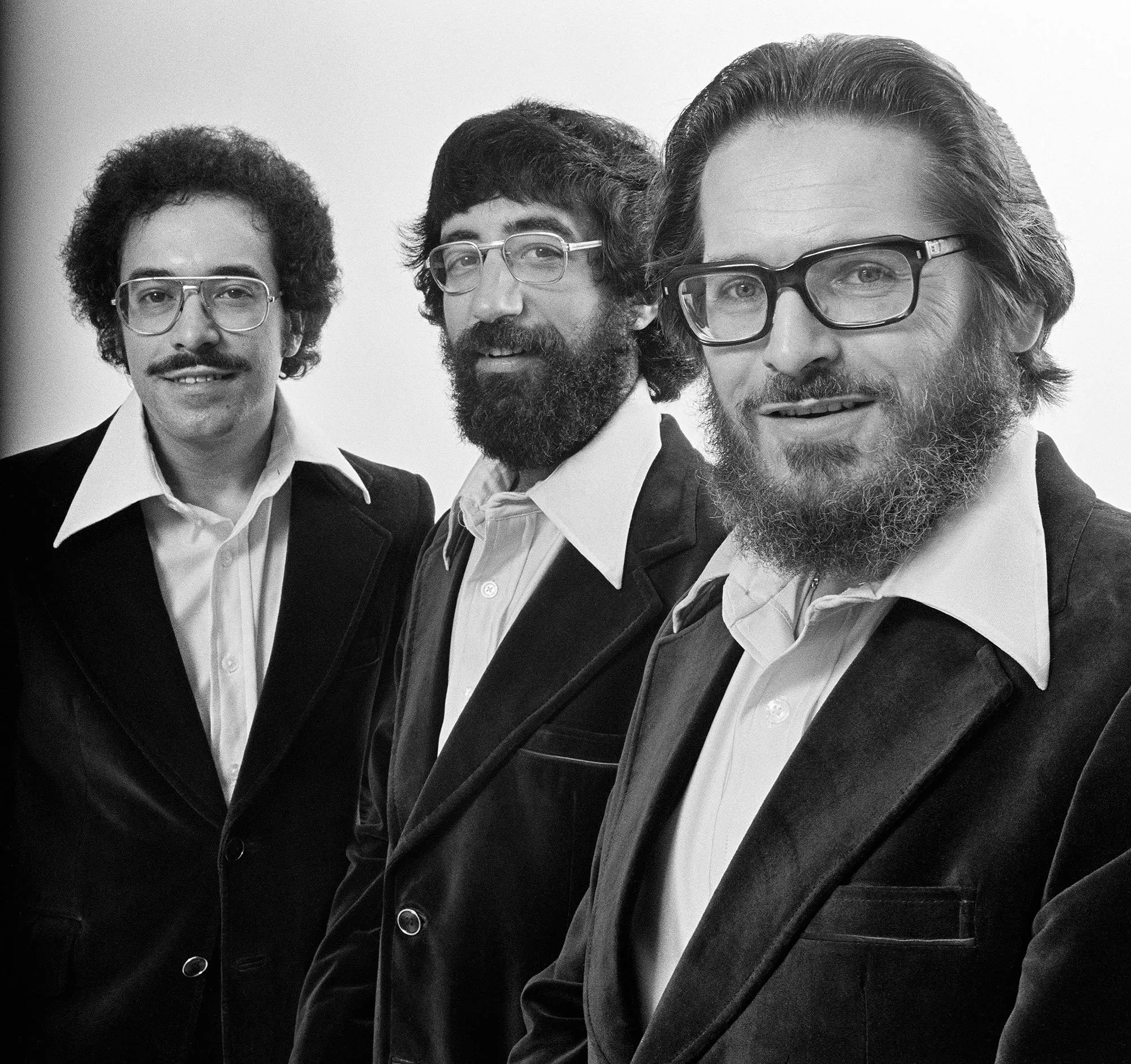
Entry 1. The Piano Trio: The Classic Format Where Rhythm and Melody Shine
A three-piece ensemble of piano, upright bass, and drums keeps the sonic field uncluttered, making it effortless to follow the melody and rhythmic interplay. For a first-time listener, no format is more welcoming.
Bill Evans Trio — Waltz for Debby (1961)
Recorded live on June 25, 1961 at the Village Vanguard in Greenwich Village, New York. Right alongside the soft clinking of cocktail glasses and the low murmur of the Sunday crowd, the tape captures an intimate three-way conversation between pianist Bill Evans, bassist Scott LaFaro, and drummer Paul Motian. Rather than walking a dutiful four-beats-to-the-bar accompaniment, LaFaro’s bass sings in the upper register as an equal partner to the piano—overturning the old hierarchy of the jazz rhythm section. Just eleven days after this performance, twenty-five-year-old Scott LaFaro died in a car crash. Knowing that history makes the fragile beauty of every exchange on this record resonate all the more deeply.
From the exact same day’s sets at the Vanguard came the companion album Sunday at the Village Vanguard, sequenced after the accident to showcase LaFaro’s virtuosity; together, the two LPs form a complete portrait of that legendary Sunday. Evans’s introspective, impressionistic touch became the lingua franca of post-1960s jazz piano, flowing directly into the chamber aesthetic of ECM Records and European jazz. If someone asked me to name one record for a quiet, rainy afternoon indoors, this would still be my first answer.

Waltz for DebbyBill Evans Trio
Ahmad Jamal Trio — At the Pershing: But Not for Me (1958)
The ultimate masterclass in playing the silence between the notes. Recorded live at the Pershing Lounge in Chicago, Jamal strips away dense bebop flourishes and lets negative space carry the groove—most famously on the eight-minute “Poinciana,” whose infectious rhythmic bounce still sounds shockingly modern more than sixty-five years later. Miles Davis famously revered Jamal’s sense of space and dynamic restraint, modeling his own late-1950s rhythm section directly after Jamal’s trio. Among jazz pianists, Jamal was one of the earliest architects of what Nai-Oto calls “the sound that isn’t there.”
Remarkably for an instrumental jazz live album, At the Pershing spent over two years on the Billboard pop charts, becoming a genuine jukebox and living-room sensation. Decades later, 1990s hip-hop producers (from Pete Rock on Nas’s “The World Is Yours” to De La Soul and Common) mined Jamal’s sparse piano figures as a goldmine of boom-bap samples, proving how naturally his aesthetics of subtraction connect to modern beat culture. Performing actively right up until his passing in 2023 at age ninety-two, Jamal remained a lifelong innovator.
If you want to connect the piano trio directly to modern rock and electronic ears, explore Brad Mehldau (renowned for his spellbinding trio interpretations of Radiohead, Nick Drake, and The Beatles) or Manchester’s GoGo Penguin, who translate Aphex Twin-style electronic repetition and breakbeats onto acoustic piano, double bass, and drums.
Entry 2. Modal Jazz: Bathing in the Atmosphere First
Miles Davis — Kind of Blue (1959)
If you only ever own one jazz record in your life, this remains the undisputed first choice. Rather than forcing soloists to sprint through a dense obstacle course of rapidly changing chords, Miles Davis gave his sextet spacious musical scales (“modes”) in which each player could stretch out and sing at their own pace. Tracked across just two studio sessions at Columbia’s 30th Street Studio with almost no prior rehearsal, nearly every master on the album is a first complete take. Listen to the opening bass-and-horn call-and-response of “So What” and you will immediately feel the essence of jazz: the magic lives in the unhurried breathing space between phrases. Look at the lineup on the sleeve—John Coltrane, Cannonball Adderley, Bill Evans, Wynton Kelly, Paul Chambers, Jimmy Cobb—and you are looking at the crossroads from which the next twenty years of jazz history branched out.

Kind of BlueMiles Davis
Often cited as the best-selling jazz album of all time, Kind of Blue achieves its hypnotic balance of calm and tension through Jimmy Cobb’s delicate brushwork, the natural cathedral reverb of the former church studio, and modal harmonies that float in mid-air without rushing toward a conventional cadence. Because there is not a single filler bar across all five tracks, it works equally well as late-night background atmosphere or close headphone study. Once it clicks, step one year backward to Miles’s Milestones (1958) to hear the fiery birth of modal jazz, and ten years forward to In a Silent Way (1969) to hear the hushed dawn of his electric era—the sheer speed of one artist’s evolution will leave you dizzy.
John Coltrane — My Favorite Things (1961)
Here, the charming Rodgers & Hammerstein Broadway waltz from The Sound of Music is transformed by John Coltrane’s soprano saxophone and McCoy Tyner’s modal piano vamp into a fourteen-minute hypnotic incantation. The sensation of a simple two-chord figure circling endlessly while the soloist spirals higher and higher hits the exact same pleasure center as minimal techno, Krautrock, or post-rock. From this pivotal Atlantic album, Coltrane would accelerate toward the spiritual suite of A Love Supreme (1965) and the cosmic free jazz of his final years—making My Favorite Things the ideal boarding station for his catalog.
A brief note on the horn itself: before 1960, the straight soprano saxophone had largely fallen out of use in modern jazz since the era of Sidney Bechet. Coltrane’s sinuous, reed-like tone on this single record single-handedly revived the instrument and established the association between the soprano sax and meditative, Eastern-inflected modal exploration. In live concerts, Coltrane regularly stretched this piece past thirty minutes, turning a show tune into a vehicle for collective transcendence.
Entry 3. Hard Bop: Grabbed by the Groove and Fire
If the piano trio is contemplation, hard bop is kinetic motion. Driven by gospel, blues, and R&B rhythms, the punch of a two-horn front line speaks directly to ears raised on rock guitar riffs.
Art Blakey & The Jazz Messengers — Moanin’ (1958)
From the opening second—where pianist Bobby Timmons lays down a bluesy, church-infused call and Lee Morgan’s trumpet and Benny Golson’s tenor sax answer back like a congregation shouting “Amen!”—the title track delivers pure soul euphoria. Every time Art Blakey unleashes one of his trademark thunderous press rolls, the temperature in the room rises a degree. If anyone still harbors the stereotype that “jazz is polite, cerebral background music,” put this on first.
The backstory is equally rich. While Timmons wrote the unforgettable title hook on tour between gigs, musical director Benny Golson engineered the crisp arrangements across the LP (“Blues March,” “Along Came Betty”). Blakey’s Jazz Messengers served for over three decades as the ultimate finishing school of modern jazz, graduating generation after generation of future legends—from Lee Morgan, Wayne Shorter, and Freddie Hubbard to Keith Jarrett and Wynton Marsalis. Beloved in Japan for generations, “Moanin'” is a melody you have almost certainly heard even if you never knew its name.

YThe Pop Group
Sonny Rollins — Saxophone Colossus (1956)
Opening with the sunlit Caribbean calypso bounce of “St. Thomas,” this Prestige classic showcases tenor saxophonist Sonny Rollins at the peak of his storytelling powers. What makes Rollins extraordinary is that his improvisations are both architecturally rigorous—taking a tiny three-note motif and turning it inside out—and so melodically infectious you can whistle them on the street. No album better demonstrates with physical joy that jazz improvisation is not “random noodling,” but real-time melodic composition.
Rollins is also the protagonist of one of jazz history’s greatest legends. In the summer of 1959, at the height of his fame and critical acclaim, he felt dissatisfied with his own playing and abruptly withdrew from public performance for two years—spending up to fifteen hours a day practicing his horn alone high above the East River on the pedestrian walkway of the Williamsburg Bridge, before returning in 1962 with the aptly titled The Bridge. Hearing the barrel-chested authority of his tenor sax with that lifelong devotion in mind makes every phrase hit harder.

Saxophone ColossusSonny Rollins
Cannonball Adderley — Somethin’ Else (1958)
Credited on the cover to alto saxophonist Julian “Cannonball” Adderley, this Blue Note masterpiece is universally known as a de facto Miles Davis leadership session in disguise. Its opening eleven-minute rendition of the French chanson standard “Autumn Leaves” is the definitive performance of the tune in jazz history—and once you get its haunting melody in your bones here, you unlock the lifelong pleasure of comparing how dozens of other jazz greats interpret the exact same song.
Because Miles Davis was under exclusive contract to Columbia Records in 1958, appearing as a sideman on Adderley’s Blue Note date was a rare one-off dispensation. The contrast between Miles’s brooding, Harmon-muted trumpet creeping out of the shadows and Cannonball’s exuberant, blues-drenched alto saxophone creates an irresistible interplay of shadow and sunlight. Right down to Reid Miles’s minimalist green-and-white typographic sleeve, Somethin’ Else is the Platonic ideal of Blue Note’s legendary 1500 series.
YThe Pop Group
Listening by Record Label: Where Judging a Record by Its Cover Actually Works
More than almost any other genre, classic jazz was shaped by independent record labels whose founders, recording engineers, and graphic designers stamped a distinct personality onto every release. When you are unsure what to play next, following a label is one of the smartest ways to navigate.
- Blue Note Records — Founded in New York by German immigrant Alfred Lion and Francis Wolff, defined visually by designer Reid Miles’s bold modernist typography and sonically by engineer Rudy Van Gelder’s punchy, immediate studio sound. Releases in the classic 1500 and 4000 catalog series are famous among collectors for having virtually zero duds; both Moanin’ and Somethin’ Else live here.
- Prestige Records — Run by Bob Weinstock, who favored unvarnished, no-rehearsal “blowing sessions” that captured the raw, spontaneous electricity of a live club date—home to Sonny Rollins’s Saxophone Colossus and Miles Davis’s legendary marathon 1956 quintet sessions (Cookin’, Relaxin’, Workin’, Steamin’).
- Impulse! Records — Instantly recognizable by its striking orange-and-black gatefold spines (“The House That Trane Built”), capturing the spiritual intensity and avant-garde reach of 1960s jazz from John Coltrane’s A Love Supreme to Pharoah Sanders and Alice Coltrane.
- ECM Records — Founded in Munich in 1969 by producer Manfred Eicher under the motto “The Most Beautiful Sound Next to Silence.” Celebrated for its crystalline, spacious European acoustic aesthetic and Keith Jarrett’s solo piano landmark The Köln Concert (1975), ECM forms a direct bridge to our Introduction to Ambient Music.
A 30-Second Lineage Map
Skipping the academic weeds, keeping a simple chronological rail map in your pocket prevents you from ever getting lost: Swing (1930s big bands built for dancing) → Bebop (1940s small-group revolution led by Charlie Parker and Dizzy Gillespie, turning jazz into high-velocity art music) → Cool Jazz & Hard Bop (1950s West Coast restraint vs. East Coast blues-and-gospel fire) → Modal Jazz (1959’s Kind of Blue, replacing chord hurdles with open scales) → Free Jazz (Ornette Coleman and late Coltrane dismantling fixed meter and harmony) → Electric Jazz & Fusion (Miles Davis’s 1970 Bitches Brew Plugging into rock, funk, and studio tape editing) → and finally the Hip-Hop / Neo-Soul / Post-Genre Era of the 1990s to the present. You can board the train at any station, and knowing what comes one stop before and after your favorite album makes choosing your next spin effortless.
Remember Just Three Turning Points
Across that century-long arc, three moments fundamentally changed how jazz sounds to the ear. First is 1940s Bebop, when jazz stepped off the ballroom dancefloor into small after-hours clubs as an art form meant for close listening. Second is the Electric Turn around 1969–1970, when Miles Davis embraced electric guitars, Fender Rhodes keyboards, and James Brown- / Sly Stone-inspired rhythms, choosing to evolve alongside contemporary youth culture rather than embalm his music in a museum. Third is the Hip-Hop Reunion from the late 1980s onward, when groups like A Tribe Called Quest, Gang Starr, and J Dilla sampled Blue Note records into the DNA of alternative hip-hop (even bringing legendary Miles Davis bassist Ron Carter into the studio on 1991’s The Low End Theory)—raising the generation of musicians who lead today’s jazz renaissance. Every time jazz collides with an outside music culture, it comes back younger.
The Miracle Year of 1959
If you only memorize a single four-digit year in jazz history, make it 1959. Within that single calendar year, four radically different masterpieces were recorded: Miles Davis’s modal landmark Kind of Blue, Dave Brubeck’s odd-time-signature smash Time Out, Charles Mingus’s gospel-charged workshop opus Mingus Ah Um, and John Coltrane’s harmonic marathon Giant Steps (plus Ornette Coleman’s free-jazz manifesto The Shape of Jazz to Come). Modal stillness, rhythmic experimentation, earthyblues-gospel orchestration, and harmonic extremity all erupted simultaneously in four directions. Exploring the records made within twelve months of 1959 covers eighty percent of a classic jazz education.
Mini-Glossary of Five Essential Terms
Head (Theme) = The main composed melody of a piece, typically played by the band at the very beginning and again at the very end to frame the performance. Improvisation (Ad-Lib / Solo) = Music composed in real time by each soloist in the middle of the piece, navigating the underlying chord progression or mode like a walker choosing their own path across a map. Standard = A shared repertoire song (from Broadway show tunes like “My Funny Valentine” to jazz originals like “‘Round Midnight”) interpreted by hundreds of different artists, forming the basis of comparative listening. Rhythm Section = The foundational trio of piano (or guitar), bass, and drums; once your ear starts catching the conversational commentary they play behind the horn soloist, you are officially an intermediate listener. Blue Note = A expressively flattened pitch (typically the third, fifth, or seventh degree of the scale) rooted in African American blues singing—and the namesake of the famous label. Bookmark this paragraph whenever a review term trips you up.
Jazz Happening Right Now: Gateways to the Contemporary Scene
Jazz is anything but a museum exhibit. Over the past fifteen years, a generation raised equally on J Dilla beats, club culture, indie rock, and conservatory training has redrawn the global map:
- Kamasi Washington — The Epic (2015) — A monumental three-hour triple album complete with strings and choir that returned spiritual tenor saxophone jazz to the center of cultural conversation, released right after Washington’s decisive contributions to Kendrick Lamar’s To Pimp a Butterfly.
- Robert Glasper Experiment — Black Radio (2012) — The Grammy-winning milestone featuring Erykah Badu, Lupe Fiasco, and Yasiin Bey (Mos Def) that erased the border between neo-soul, hip-hop, and jazz piano; countless modern listeners start here and work backward to Bill Evans and Herbie Hancock.
- The London / UK Jazz Explosion — Born out of multicultural London dancefloors and community music programs (Tomorrow’s Warriors), fusing afrobeat, dubstep sub-bass, and modal jazz—start with Mercury Prize winners Ezra Collective, tenor saxophonist Nubya Garcia, or Shabaka Hutchings.
- Contemporary Japan — New York-based composer and conductor Miho Hazama (whose chamber-large ensemble m_unit has earned Grammy nominations) and ubiquitous drummer-producer Shun Ishiwaka (who moves effortlessly between avant-garde jazz and chart-topping Japanese pop with Kenshi Yonezu and Sheena Ringo) lead a thriving live scene you can witness in clubs tonight.
The Vocal Shortcut: Entering Jazz Through the Human Voice
Up to this point we have focused on instrumental records, yet having lyrics and a human voice at the center of the mix is one of the warmest, most natural shortcuts into jazz. Start with Ella Fitzgerald: her famous 1950s Verve “Song Book” series celebrating Cole Porter, George & Ira Gershwin, and Rodgers & Hart remains the definitive dictionary of the Great American Songbook. Turn to Billie Holiday when you want a voice that prioritizes lived-in emotional shadow and rhythmic phrasing over vocal range, cutting straight to the heart after midnight. And for listeners coming from indie rock, slowcore, or bedroom pop, there is no closer kindred spirit than trumpeter-vocalist Chet Baker on Chet Baker Sings (1954), whose fragile, genderless whisper feels like it could have been recorded in a quiet bedroom yesterday.
Vocal jazz also unlocks a secret ear-training bonus: once you learn the melody and emotional story of a standard like “Autumn Leaves” or “My Funny Valentine” with words, your brain automatically carries that melodic template with you when you hear Miles Davis or Bill Evans play an instrumental version without lyrics—making it ten times easier to hear how the soloist is bending and reinventing the song.
From the classical poise and civil-rights fire of Nina Simone to the theatrical brilliance of contemporary Grammy favorite Cécile McLorin Salvant, the lineage of jazz singing continues to renew itself. Better still, great vocal recordings almost never feel “dated” to modern ears: while studio drum and bass tones shift with each decade’s microphone technology, an unadorned human voice in front of a ribbon mic remains timelessly life-sized.
Japan and Jazz: The Invention of the Jazz Kissa
Japan is home to a listening institution found almost nowhere else on earth in its original form: the jazz kissa (jazz coffeehouse). Born in the post-war decades when imported American LPs cost a month’s student wages, these specialized cafés equipped themselves with towering horn speakers (JBL Paragon or Altec Lansing) and vacuum-tube amplifiers so patrons could sit for hours over a single cup of coffee and experience new records at lifelike volume—in some legendary shops, with casual conversation strictly forbidden. Famous novelists including Haruki Murakami (who ran his own jazz bar, Peter Cat, in Kokubunji and Sendagaya before becoming a writer) grew up inside this acoustic culture.
In the 2020s, the Japanese jazz kissa has been reverse-exported around the globe as the “hi-fi listening bar” movement across London, New York, Los Angeles, and Melbourne, while historic Tokyo and regional shops are welcoming a new wave of twenty-something listeners. Stepping into a real jazz kissa or listening bar for an hour is one of the best ways to fall in love with the music: hearing the physical brass weight of Art Blakey’s Moanin’ pushed through vintage JBL horns at volume is an experience home earbuds cannot begin to Hint at.
At the same time, Japan’s own domestic jazz recordings from the 1960s and 1970s—widely known overseas as “Wa-Jazz” (Japanese Jazz), led by visionaries like Masabumi Kikuchi, Terumasa Hino, Masahiko Togashi, Ryo Fukui, and the Three Blind Mice (TBM) label—are in the middle of a massive international vinyl reappraisal driven by European and American crate-diggers, mirroring the exact cross-border rediscovery arc of Japanese City Pop.
Practical Tips for Listening: Start with One Track and Follow the Solo Relay
- Never treat a full album as mandatory homework. When a single track grabs you, loop that one song ten times, check the liner credits to see who played the instrument you loved, and follow that sideman’s name to the next record—that daisy-chain method is how lifelong jazz fans are made.
- Listen for the relay baton between solos. Most classic jazz tracks follow a clear arc: full-band Head (melody) → Trumpet Solo → Saxophone Solo → Piano Solo → Bass/Drum exchanges → closing Head. Notice which player’s solo makes your shoulders move, and you have found your guide.
- Compare three versions of the same standard. Play “Autumn Leaves” by Cannonball Adderley/Miles Davis, Bill Evans, and Chet Baker back to back; holding the song constant makes each musician’s personal voice jump out in three dimensions.
- Use streaming playlists as the lobby, then step into full albums. Algorithmic playlists are great for stumbling across a track, but once an artist hooks you, play their original album from track one—the true emotional temperature of a session lives in its sequencing.
Crossing Back and Forth with Other Genres: The Nai-Oto Approach
If you already read Nai-Oto, you never have to treat jazz as a walled island. Chicago post-rock pioneers Tortoise, featured in our Introduction to Post-Rock, share members (such as guitarist Jeff Parker) directly with the Chicago underground jazz scene, and their studio interplay is pure jazz thinking. Behind the immaculate grooves of our Introduction to City Pop stand Tokyo session musicians steeped in 1970s jazz fusion. And the hushed Nordic chamber jazz of ECM Records shares an open border with Ambient Music. In short, jazz sits upstream of nearly every genre covered on this site; paddling upstream from the music you already love is the most natural way in.
How Playback Format Shapes the Sound: Streaming, CD, and Vinyl
At the beginning, stream everything freely without overthinking equipment. Just keep in mind that classic 1950s and 1960s sessions were engineered specifically for the midrange warmth and physical dynamics of twelve-inch vinyl LPs, and hearing them on an analog turntable (or through Rudy Van Gelder’s own “RVG Edition” CD remasters) gives the horns a palpable three-dimensional body in your room. Once a particular album becomes a personal favorite, buying that single title on vinyl is a revelation.
One friendly word of caution: because iconic albums like Kind of Blue and Waltz for Debby have been reissued dozens of times across mono, stereo, SACD, and audiophile pressings, it is easy for newcomers to get sucked into internet forum debates over mastering matrices before they even know the tunes. Fall in love with the music on standard streaming first; comparing pressings is a dessert best saved for after you have lived with an album for ten spins.
The Next Ten Albums: Expanding Your Personal Map
Surrounding the seven gateway records above, here are ten unmistakable classics with distinct personalities—pick whichever description matches your mood tonight:
- John Coltrane — Blue Train (1957) — Coltrane’s sole leader session for Blue Note Records; a textbook monument of hard bop where three-horn compositional rigor meets white-hot soloing.
- Charles Mingus — Mingus Ah Um (1959) — Gospel shouts, political satire, Ellingtonian elegance, and volcanic bass-led collective improvisation (“Better Git It in Your Soul,” “Goodbye Pork Pie Hat”).
- The Dave Brubeck Quartet — Time Out (1959) — Bold experiments in 5/4 and 9/8 meter (“Take Five,” “Blue Rondo à la Turk”) that somehow sound as breezy and memorable as pop songs.
- Stan Getz & João Gilberto — Getz/Gilberto (1964) — Home to “The Girl from Ipanema”; the supreme marriage of cool tenor sax and Brazilian bossa nova whisper, undefeated on a sunlit Sunday morning.
- Lee Morgan — The Sidewinder (1964) — Anchored by an irresistible, hard-driving eight-beat boogaloo title track that bridges jazz directly to rock and funk ears.
- Herbie Hancock — Maiden Voyage (1965) — A concept album of oceanic modal impressionism where brass and rhythm section paint the swell and spray of the open sea.
- John Coltrane — A Love Supreme (1965) — Jazz elevated to a four-part spiritual devotion; one of the select few records in history meant to be experienced from start to finish in a single sitting.
- Wayne Shorter — Speak No Evil (1966) — Mysterious, folkloric, and darkly luminous harmonies featuring Herbie Hancock, Ron Carter, Elvin Jones, and Freddie Hubbard; the compositional peak of 1960s Blue Note.
- Herbie Hancock — Head Hunters (1973) — Sly Stone- and James Brown-inspired synthesizer funk (“Chameleon”) that opens a wide highway from club music and hip-hop straight into jazz.
- Keith Jarrett — The Köln Concert (1975) — Sixty-six minutes of completely improvised solo acoustic piano recorded live in Cologne on a flawed rehearsal instrument—an eternal companion for sleepless nights.
Once you have explored even half of this list, you are no longer a beginner; you are ready to read the sideman credits on the back of your favorite sleeve and start drawing your own map.
Frequently Asked Questions
Q. Jazz tracks are often seven to ten minutes long, and my attention wanders halfway through. Is that normal?
Completely normal—and you do not need to listen at maximum concentration for every second. Catch the opening melody (the first minute) and tune back in when your favorite instrument steps up to solo. Historically, jazz grew up in bustling dance halls and noisy nightclubs; sitting motionless like a statue is a much later concert-hall habit. Let it play casually around the house, and your ear will naturally start noticing new details on its own.
Q. Going to a live jazz club feels intimidating. Are there unspoken rules I might break?
None at all. Almost every jazz club operates on a simple music charge plus a one-drink minimum, and casual everyday clothing is completely fine. If you are wondering when people clap during the middle of a song, audiences customarily applaud whenever an individual soloist finishes their improvisation and steps back—though you never have to force it. Rather than starting with an expensive international arena tour, try a neighborhood jazz bar or a live night at a local jazz kissa; feeling the physical air pressure of an unamplified ride cymbal and upright bass just three meters away will change how you hear every record at home.
Q. Is it disrespectful to the musicians to play jazz as background music while working or reading?
Not in the slightest—blending gracefully into the fabric of everyday life is one of jazz’s greatest strengths. All we suggest is that once out of every fifty spins, you dim the lamp, set your phone down, and give the band thirty minutes of your undivided company. Experiencing how an album you thought you knew as pleasant background music suddenly steps forward and speaks directly to you makes both ways of listening twice as rewarding.
Q. Why do some classic 1950s recordings sound thin or lopsided on headphones?
Start with late-1950s and 1960s stereo recordings (virtually all seven gateway albums in this guide qualify). Note that early stereo mixes often panned the horns hard to the left channel and the drums hard to the right—which sounds natural when mixing in the air of a room through speakers, but can feel extreme inside sealed earbuds. Curiously, the deeper you fall into jazz, the more you may eventually come to love the centered punch of original 1950s mono mixes, though you can happily save that rabbit hole for later.
Q. At first, several instrumental jazz albums blur together and sound the same to me. How do I tell them apart?
Do not worry—every listener starts there. Differentiation begins the moment you have one single “home base” album that you know by heart. Once you have spun Kind of Blue or Waltz for Debby ten times, every subsequent record automatically comes into focus by comparison (“this drummer hits harder than Jimmy Cobb,” “this pianist leaves more space than Bill Evans”). Listening to one favorite album ten times builds your ear much faster than skimming ten unfamiliar albums once.
Q. I am still torn between all the choices. Name just one album for tonight.
If you are a night owl listening after dark, put on Bill Evans’s Waltz for Debby. If you are listening during the day or early evening, put on Miles Davis’s Kind of Blue. Both sit dead-center in Nai-Oto’s aesthetic of “quiet yet deeply dense,” and the odds of either letting you down are practically zero. Remember: the job of your first jazz album is not to be the final destination of your life, but simply to make you curious enough to reach for a second.
Conclusion: Three Doors Into the Same Room
Three doors stand open: the intimate three-way conversation of the piano trio, the spacious modal air of Kind of Blue, and the blues-charged drive of hard bop. Whichever handle you turn first, waiting inside are the distinct aesthetics of great record labels, seventy years of interconnected history, and a contemporary scene reinventing the music in clubs tonight. Start with a single track—everything else begins from there.
Further Reading: Introduction to Ambient Music: The First 5 Albums for Listening to the Sound That Isn’t There
Let us close with a simple four-step listening plan. Tonight, play just the opening nine minutes of “So What” from Kind of Blue. Tomorrow evening, pour a drink and play Side A of Waltz for Debby. On Sunday afternoon, turn up Art Blakey’s Moanin’ to raise the temperature of the room—and sometime next month, step inside a local jazz café or live bar for a single set. By then, those intimidating hundred-album canon lists will look not like an exam, but like a playground.
When you are ready to dive deeper into Bill Evans after finishing this guide, you can feel the infectious enthusiasm of fellow listeners in our curated thread archive, A Jazz Beginner Moved to Tears by Bill Evans’s Masterpieces (Thread Anthology).
Personally, I have always believed that falling in love with jazz is much easier when you look for “one favorite track” rather than forcing yourself to master “one canonical album.” Loop a single tune on streaming as many times as you like, then look up who played the solo that caught your ear and follow their name to the next session—that organic daisy chain is the real joy of jazz. My own doorway years ago was Art Blakey’s “Moanin'”: that opening piano riff permanently added a new soundtrack to my life. Whenever you find your own first track, let me know in the comments.