Most introductory guides to Krautrock simply line up albums under the broad banner of “German experimental rock.” Yet what later generations actually inherited from this music was neither ideology nor nationality, but a single structural shift: the way repetition was treated changed. This guide traces that shift chronologically using the original release years published by the rights-holding labels. Release years for CAN are drawn from the official Spoon Records release list, while those for NEU! and Harmonia come from the product pages of rights-holder Groenland Records (all verified on August 12, 2026).
The boundaries of the term “Krautrock” have never been fixed. Some use it as a historical label for music from the German-speaking world between 1968 and the late 1970s, while others use it to point to a specific playing method. This guide takes the latter approach, selecting ten albums strictly from the lineage in which keeping a steady pulse ceased to be a means and became the subject itself. Works leaning toward symphonic progressive-rock epics or pure electroacoustic experimentation are therefore left out.
There is also a path into Krautrock that starts from progressive rock. In a listening thread on the Open2ch progressive rock board, posters moved from Japanese prog through King Crimson before arriving at CAN in the second half; those thirty-five posts are archived in our Prog Board “Listen to Every Prog Track Posted” Digest.
The ten releases were selected by our editorial team. Rather than claiming encyclopedic coverage, the selection is the result of narrowing down strictly to works whose original release years can be verified directly from official rights-holder documentation. Albums whose release years could not be verified from primary label sources were excluded even if they are widely considered canonical. Biographical anecdotes are omitted as well; what follows is limited strictly to release years, track running orders, and what can be heard in the recordings themselves.
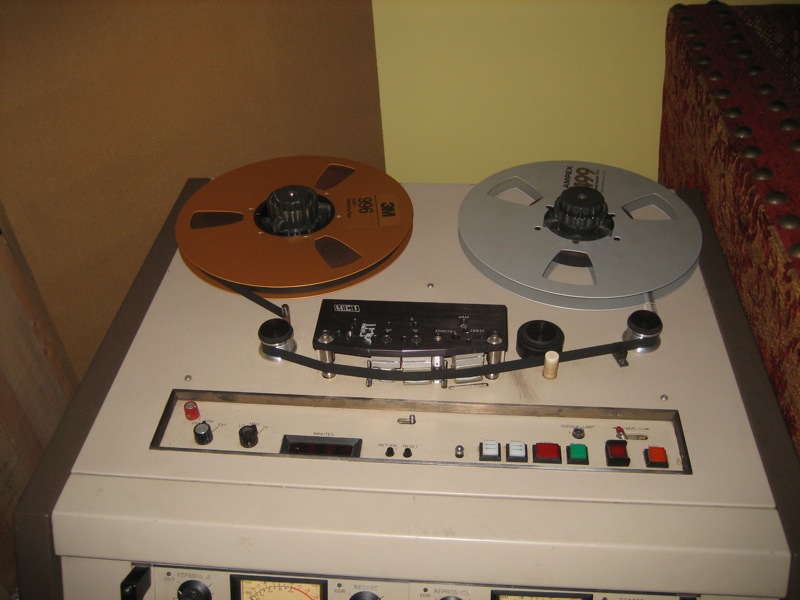
Chronology
| Year | Album | Source / Catalog |
|---|---|---|
| 1969 | CAN, Monster Movie | Spoon 004 |
| 1971 | CAN, Tago Mago | Spoon 006/7 (2LP) |
| 1972 | NEU!, NEU! | Groenland |
| 1973 | CAN, Future Days | Spoon 009 |
| 1973 | NEU!, NEU! 2 | Groenland |
| 1974 | Cluster, Zuckerzeit | Bureau B |
| January 1974 | Harmonia, Musik von Harmonia | Groenland |
| 1975 | NEU!, NEU! ’75 | Groenland |
| August 20, 1975 | Harmonia, Deluxe | Groenland |
| Recorded 1976 / Released November 4, 1997 | Harmonia & Eno ’76, Tracks and Traces | Groenland |
The first point to note is that all ten recordings fit inside a seven-year span. Turning repetition into the central subject did not happen gradually over decades; it happened in a concentrated four-year burst between 1972 and 1975.
1969-1971: Improvisation Still Had the Lead Role
CAN did not begin from pure repetition. On the Spoon Records discography, their debut Monster Movie is listed in 1969, followed in 1971 by Tago Mago under catalog number Spoon 006/7—a double album.
That double-LP format speaks directly to how the music was made. The band rolled tape across extended studio jams and spliced the results together afterward to build structure; what you hear is a succession of unpredictable events unfolding atop a continuous groove. The pulse stays steady, but what happens above it never settles. Repetition served as the floor that held the performance together, not the object placed on display.
At this stage, the music remained contiguous with collective jazz improvisation: set minimal rules, let the tape run, and keep the strongest passages. The only difference was that the performance was preserved through razor-blade tape editing rather than the players’ memory.
1972-1973: Repetition Itself Becomes the Subject
The turning point arrives with NEU!’s self-titled 1972 debut, NEU!. According to Groenland’s product documentation, the tracklist runs Hallogallo / Sonderangebot / Weissensee / Im Glück / Negativland / Lieber Honig, and the opening track “Hallogallo” drives the exact same eighth-note pulse forward for roughly ten minutes.
What happens here is the exact inverse of CAN’s early method. Events above the beat are stripped away so the beat itself becomes what you listen to. The guitar refuses to move through chord progressions, staying anchored to a single tonal center while shifting its timbre. The absence of dramatic incident is the design itself, redirecting the listener’s attention from “What will happen next?” to “How is the texture sounding right now subtly changing?”
On 1973’s NEU! 2, this procedure becomes even more explicit. Side A opens with a track titled “Für Immer” (“Forever”), while Side B lines up fragments of an already-released single played back at altered turntable speeds. Instead of performing new material, the band hit upon the idea of taking an existing repetition and manipulating its playback mechanics to create a different sense of time.
In that same year, 1973, CAN released Future Days (Spoon 009). Here CAN stepped back from their early rawness and smoothed their groove into a seamless flow. A record that approached repetition from the side of improvisation and a record that started directly from repetition thus arrived in the exact same year. 1973 was the point where the two trajectories came closest together.
1974-1975: Layers Gather Above the Pulse
What unfolded over the next two years was the work of layering harmony and machines onto bare repetition.
Released in January 1974, Harmonia’s Musik von Harmonia runs Watussi / Sehr Komisch / Sonnenschein / Dino / Ohrwurm / Ahoi! / Veterano / Hausmusik. Sustained organ and synthesizer tones are stacked onto NEU!’s linear forward drive, thickening the vertical sonic image. The pulse remains, but because harmonic color shifts above it, the listener’s focus moves from “the sensation of traveling forward” to “the color of the place where you are standing.”
That same year, 1974, saw the release of Cluster’s Zuckerzeit. Rights-holder Bureau B describes this album as a clear turning point toward shorter track lengths and firmer rhythmic frameworks compared to the duo’s earlier, more diffuse recordings, noting the increased use of drum machines and sequencers. It is a transition that can be summed up in a single line: the pulse previously kept by human hands was handed over to a machine.
On NEU!’s 1975 album NEU! ’75, the method splits in two. The tracklist runs Isi / See Land / Leb Wohl / Hero / E-Musik / After Eight, pairing a quiet, floating first half with an aggressive, driving second half. Within a single band, the use of repetition forked into two distinct paths, and the question of which side later generations would inherit begins right here.
Released on August 20, 1975, Harmonia’s Deluxe runs Deluxe (Immer wieder) / walkie-talkie / Monza (Rauf und Runter) / Notre Dame / Gollum / Kekse. The fact that the opening title track carries the subtitle “Immer wieder” (“Again and again”) shows just how self-aware the method had become by this point.
1976: Crossing Over to Britain
The tenth album is an anomaly. Harmonia & Eno ’76’s Tracks and Traces was recorded in 1976, but Groenland’s product documentation lists its release date as November 4, 1997—a twenty-one-year gap.
What makes this recording pivotal is that it documents the exact moment when Germany’s experiments in repetition met Britain’s emerging design philosophy of ambient music inside the same room. From this point onward, repetition shifts its role from “a subject placed front and center” to “a continuous presence placed within an environment.” The lineage covered in our Introduction to Ambient Music picks up from this exact junction.
Because the release was delayed by twenty-one years, the apparent order of historical influence was warped as well. Recordings heard by the public for the first time in 1997 are routinely discussed as events of the 1970s. Laying out a strict chronology makes that hindsight distortion visible.
Tracklists Across the Ten Releases
A tracklist is the most concise primary document of what an album set out to do. For the releases where the rights-holder’s official pages list the running order, here they are side by side.
NEU!, NEU! (1972)
Hallogallo / Sonderangebot / Weissensee / Im Glück / Negativland / Lieber Honig
The album places its longest uninterrupted repetition right at track one and spends the remaining tracks dismantling it—declaring its core method up front before lining up the exceptions.
NEU!, NEU! 2 (1973)
Für Immer / Spitzenqualität / Gedenkminute / Lila Engel / Neuschnee / Super / Neuschnee / Casetto / Super 78 / Hallo Excentrico / Super
Notice that “Neuschnee” and “Super” appear multiple times. Identical song titles recur across the running order so that the album’s structure itself becomes an act of repetition. While commentators often point to budget shortages that left the duo without enough new material to fill Side B, the practical result was that the theme of “hearing the exact same material at different speeds” was implemented at the level of the tracklist.
NEU!, NEU! ’75 (1975)
Isi / See Land / Leb Wohl / Hero / E-Musik / After Eight
Read the six tracks as three on Side A and three on Side B, and the split between stillness and propulsion is written directly into the running order.
Harmonia, Musik von Harmonia (January 1974)
Watussi / Sehr Komisch / Sonnenschein / Dino / Ohrwurm / Ahoi! / Veterano / Hausmusik
At eight tracks, the album has a relatively high track count with shorter individual durations. Rather than pushing through with a single side-long piece, it lines up compact miniatures that share a common tactile surface.
Harmonia, Deluxe (August 20, 1975)
Deluxe (Immer wieder) / walkie-talkie / Monza (Rauf und Runter) / Notre Dame / Gollum / Kekse
Compared to its predecessor, the track count drops from eight to six while each piece grows longer—shifting from a collection of miniatures toward sustaining single tracks over a wider span.
Harmonia & Eno ’76, Tracks and Traces (Recorded 1976 / Released November 4, 1997)
Welcome / Atmosphere / Vamos Companeros / By The Riverside / Luneburg Heath / Sometimes in Autumn / Weird Dream / Almost / Les Demoiselles / When Shade Was Born / Trace / Aubade
At twelve tracks, this is the longest running order of the group. What sets it clearly apart from the earlier German releases is the appearance of landscapes and places in the titles. Instead of dry, matter-of-fact words like “Watussi,” “Dino,” or “Kekse,” we get titles like “Atmosphere” and “By The Riverside”—words that name the space in which the sound is placed. The shift in how repetition functioned shows up even in how the pieces were named.
What a Chronology Reveals: Release Year Is Not Recording Year
This lineage includes several albums where a vast gap separates the recording sessions from the public release. Because you cannot build an honest timeline without addressing that gap, here are three verified examples.
- CAN, Delay 1968 — Placed in 1981 (Spoon 012) on the Spoon Records list, though as the title states, the material was recorded in 1968. Its catalog number is also lower than the surrounding 1980s releases.
- Harmonia & Eno ’76, Tracks and Traces — Recorded in 1976, released November 4, 1997. A twenty-one-year gap.
- Harmonia, Documents 1975 — As the title indicates, a document of 1975 recordings, released by Groenland on March 18, 2016. A forty-one-year gap.
What these three cases demonstrate is that conflating “when a recording could first be heard” with “when it was played” turns lines of influence upside down. Listeners who first heard a newly unearthed archival release in 1997 absorbed it as “a 1970s sound” and reflected it in their own work. On a naive timeline, the arrow of influence appears to point backward into the 1970s, when in reality the impact radiated outward from the 1997 release date.
Introductory articles can so easily assert that “Album X influenced Artist Y” precisely because they gloss over this distinction. That is why this guide builds its main table strictly around official release dates and refrains from making sweeping claims about who influenced whom.
Where the Three Lineages Went After 1975
After the four-year window in which repetition stood as the primary subject, each of the three lineages moved in a different direction. CAN’s path can be followed directly down the official Spoon Records list.
Following Soon Over Babaluma (1974, Spoon 010), the band continued through Saw Delight (1977, Spoon 027) and Can (1979, Spoon 028), bringing their 1970s chapter to a close. During this period the lineup expanded and absorbed external rhythmic styles—a choice not to distill repetition any further, but to blend repetition with other musical vocabularies.
NEU! fell silent for a long stretch after NEU! ’75; according to Groenland’s product pages, NEU! ’86 arrived in 1986. Its eleven-track running order—Intro (Hyden Slo-Mo) / Danzig / Crazy Drive (basic spark) / La Bomba (Stop Apartheid World-Wide) / Elanoizan Wave / Mother Paradise Walk / Euphoria / Vier ½ / Good Life / November / KD—uses a naming vocabulary unmistakably removed from the three 1970s albums. Eleven years of silence remain audible right in the titles.
Harmonia’s lineage paused once it connected with British ambient music as noted above, continuing thereafter through the solo and collaborative work of its individual members. Right up to Michael Rother’s recent Groenland release As Long As The Light (January 21, 2022), the thread has never been broken.
What all three lineages share is that none of them abandoned repetition, yet none of them continued on repetition alone. The four years from 1972 to 1975 stand out so sharply in retrospect precisely because the window in which pure repetition could serve as the sole subject was so brief.
Where to Start Listening
There is no need to work through all ten albums in chronological order. Depending on what you are looking for, here are three distinct entry points.
If you want to experience repetition itself, start with NEU! (1972). The single opening track “Hallogallo” tells you almost everything about what this movement set out to do. Whether you find ten minutes without dramatic incident hypnotic or tedious will tell you immediately whether to keep exploring this lineage.
If you want the heat of live interplay, start with CAN (1971). A double album is a heavy first step, but Tago Mago remains the clearest proof that repetition need never be static.
If you want harmonic color and warmth, start with Harmonia (1974). Of the three lineages, it is the most immediately welcoming, and its shifting chord colors make the first listen effortless.
If you want to trace repetition-focused music further upstream, our Introduction to Minimal Music covers the earlier foundations, while downstream lies the wordless architectural rock explored in our Introduction to Post-Rock. This guide sits squarely between the two.
If you prefer listening on vinyl, reissues of the albums covered here are relatively easy to find in print. Practical preparation for playing records is laid out in our Getting Started with Vinyl guide.
Reading Album Structure from Track Counts
Having lined up the official tracklists, let us summarize what can be read directly from them. Because exact running times are not listed on the rights-holders’ product pages, we do not speculate on durations, yet track counts alone reveal each album’s structural policy.
| Album | Year | Tracks | Structural Tendency |
|---|---|---|---|
| NEU!, NEU! | 1972 | 6 | Long repetition at track 1, dismantled across later tracks |
| NEU!, NEU! 2 | 1973 | 11 | Identical titles recur; built from speed-altered fragments |
| Harmonia, Musik von Harmonia | 1974 | 8 | Lines up compact miniatures of similar texture |
| NEU!, NEU! ’75 | 1975 | 6 | Splits method cleanly between Side A and Side B |
| Harmonia, Deluxe | 1975 | 6 | Sustains individual pieces over longer spans |
| Harmonia & Eno ’76 | Recorded 1976 | 12 | Many short pieces; titles point to scenes and places |
| NEU!, NEU! ’86 | 1986 | 11 | Naming vocabulary breaks sharply from the 1970s |
Harmonia’s two studio albums drop from eight tracks to six across a year and a half—moving from lining up short pieces of similar feel to sustaining fewer tracks at greater length. NEU!, by contrast, swings from six tracks to eleven and back to six, showing that changes in track count correspond to shifts in method rather than degrees of polish. NEU! 2 has the highest track count at eleven not because the duo wrote more songs, but because they multiplied existing material through mechanical processing.
One caution here is that you should never infer sonic density from track count alone. Six tracks do not automatically mean sprawling epics, and twelve tracks do not automatically mean sketchy fragments. What the table above labels “Structural Tendency” is strictly what can be stated from track order and song titles without relying on unverified running times.
Even Official Discographies Do Not Always Align Years and Catalog Numbers
Building a chronology always runs into the question of how critically to read primary sources themselves. Inspect the official Spoon Records release list closely, and you find places where list order, release year, and catalog number do not line up.
On that same list, for example, UNLIMITED EDITION is listed as 1975 (Spoon 023/24), FLOWMOTION as 1975 (Spoon 026), and LANDED as 1976 (Spoon 025). LANDED carries the earlier catalog number, yet FLOWMOTION is assigned the earlier release year. Either catalog numbering diverged from release order, or one of the listed dates is inaccurate.
That discrepancy is the exact reason this guide left both albums out of the main chronology, following the rule of not building claims on points where a primary source contradicts itself. When introductory articles run into conflicting dates, a common shortcut is to compare secondary databases and settle the year by majority vote—a habit that counts how often a number was copied rather than how reliable its origin is. When a source contradicts itself, either omitting the entry or stating the contradiction plainly is the more honest route.
For the exact same reason, the chronology in this guide mixes entries verified down to the exact day with entries verified only to the year. Harmonia’s two albums and the Harmonia & Eno release carry full dates on Groenland’s pages, whereas the remaining entries list only the year. Rounding every entry down to the year just to make the table look uniform would throw away verified precision.
The Lineage Remains Unbroken
Although the ten albums at the heart of this guide cluster between 1969 and 1976, the artists who made them remain active. Former NEU! guitarist Michael Rother continues to release new work through Groenland; his recent album As Long As The Light came out on January 21, 2022, featuring an eight-track running order—Edgy Smiles / Exp 1 / You Look At Me / Curfewed / See Trough / Forget This / Codrive / Me Happy (Slow Burner)—recorded with collaborating musicians.
That release sits a full fifty years after 1972’s NEU!. While it may seem like an understated detail to close an introductory guide, it demonstrates that music built around repetition as its subject is not a closed “1970s historical movement.” Cutting the timeline off in 1976 makes the music look like a finished museum piece when it is still ongoing.
The same holds for Harmonia, whose 1975 archival recordings were released on March 18, 2016 as Documents 1975. So long as recordings from that era continue to surface forty years after the fact, the chronology of this lineage will keep being rewritten. The timeline presented here is a provisional snapshot of what could be verified from primary label sources as of August 2026.
Sources and Scope of Verification
Introductory guides rarely list their sources, yet once an article makes chronology its central argument, readers cannot test its claims unless we state clearly what we were able to verify and what we could not reach.
Sources reached — For CAN, we used the official release list published by the band’s own label, Spoon Records, which lists every album alongside its catalog number and serves as a primary source of the first order. For NEU! and Harmonia, we used the official product pages of rights-holder Groenland Records, which document original release years and tracklists. For Cluster’s Zuckerzeit, we relied on the album description published by rights-holder Bureau B, which verifies the 1974 release year as well as the shift toward shorter tracks, clearer rhythmic frameworks, and expanded use of drum machines and sequencers.
Sources not reached — Kraftwerk’s official discography returned HTTP 404 at the time of verification, preventing us from confirming original release years from a primary label source. We were similarly unable to reach the individual album pages for Faust on Bureau B, and the same limitation applied to Amon Düül II and Popol Vuh. While secondhand record marketplaces and user-edited discography databases list dates for all of those artists, those entries represent editor-submitted secondary data and were excluded under this guide’s sourcing rules.
As a direct result, the ten albums in this guide skew heavily toward three specific lineages: CAN, NEU!, and Harmonia / Cluster. As a survey of Krautrock as a whole, obvious gaps remain. That skew reflects source reachability rather than critical bias; as additional primary label sources become verifiable, this guide will be expanded.
Notes on Scope
Three final caveats apply. First, as noted above, album selection is strictly constrained by primary-source reachability and does not claim to be exhaustive; this guide is published with full awareness of its tilt toward three lineages.
Second, the chronology lists original release years rather than recording years unless explicitly noted. Because the two can diverge by twenty-one years—as with Tracks and Traces—lines of musical influence cannot be read directly off the table.
Third, our observation that “repetition separated from improvisation” describes only what can be heard across the sequenced recordings themselves, not the personal intentions of the musicians. Studio anecdotes and interview statements are outside the scope of this article.