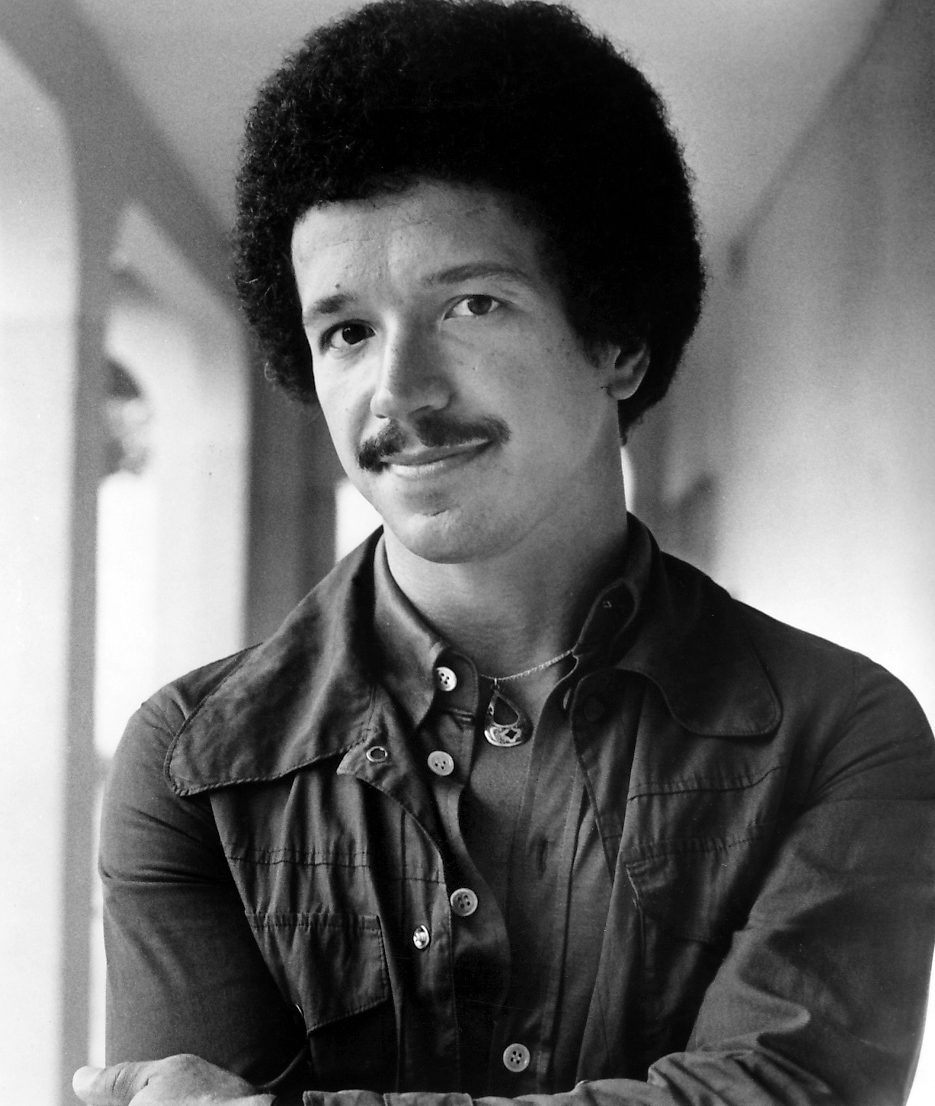
The Köln Concert is a completely improvised solo piano performance recorded at the Cologne Opera House at 11:30 p.m. on January 24, 1975. The instrument sitting on stage that night was not the concert grand Keith Jarrett had requested, but a small, worn Bösendorfer wheeled out of a rehearsal room. Its upper register sounded tinny and metallic, its bass was muted, and its pedals did not work properly. The 66 minutes Jarrett played by adapting to those very defects became the best-selling solo piano album in jazz history and was inducted into the Library of Congress National Recording Registry in 2025.
The Night the Piano Never Arrived: Cologne, January 24, 1975
Until 10:00 p.m. that evening, the Cologne Opera House had been staging Alban Berg’s opera Lulu. The only window available to open the hall for a jazz concert came after the opera ended. Curtain time was set for 11:30 p.m., and all 1,300 seats were filled at that late hour.
The concert had been organized by a young woman named Vera Brandes, then one of the youngest concert promoters in Germany. Sources differ slightly on her exact age at the time. A 50th-anniversary article published by the Cologne Opera in 2025 states that she was “only 17 years old at the time,” whereas English Wikipedia and Peter Elsdon’s essay for the Library of Congress both give her age as 18. Even fifty years later, that discrepancy remains unsmoothed, a testament in itself to how many times the details of that single night have been retold.
At Jarrett’s request, Brandes had arranged for a Bösendorfer 290 Imperial. Understanding what kind of instrument the 290 Imperial is makes clear just what was lost that evening. Measuring roughly 290 centimeters in length and weighing 552 kilograms, it has 97 keys rather than the standard 88, spanning eight full octaves from C0 to C8. All nine extra keys are added to the extreme low end. That extended range originated in 1909 when Ferruccio Busoni commissioned the model so he could transcribe organ works that descend to the C below a standard keyboard. Simply put, it is one of the deepest-voiced concert grands in the world.
Yet that instrument sat trapped behind a locked corridor inside the theater and could not be brought onto the stage. According to the Opera House’s own account, “a smaller, older Bösendorfer from a rehearsal room was brought onto the stage instead.” It was a practice piano, and it had not been properly regulated. A pianist who had specified the concert grand with the deepest bass register in the world was instead handed an instrument whose bass barely spoke at all. That was the starting point of the evening.
The condition of the substitute piano is documented in detail. The Opera House writes that “the upper register sounded shrill and the bass register was dull.” Wikipedia goes further, noting that the upper register was thin and metallic, the bass register was weak, and the pedals did not function properly. The piano technicians summoned to the hall inserted felt beneath the hammers in an effort to even out the tone. The Opera House article does not record the names of those technicians.
Conditions on the performer’s side were equally poor. According to Elsdon, Jarrett’s tour itinerary at the time was normally scheduled with a rest day between concerts, but this date fell on the immediate day after his performance in Lausanne, Switzerland the night before. He had traveled overnight from Switzerland in a car driven by ECM founder Manfred Eicher, which Wikipedia identifies as an old Renault 4. Jarrett had barely slept for several nights and was wearing a back brace for severe back pain. By the time he arrived at the theater in the late afternoon, he was already exhausted.
After inspecting the piano, Jarrett said he could not perform on it. The concert came to the verge of cancellation. With a defective instrument, back pain, and exhaustion converging at once, every reason to call off the show was in place. What brought him back was Brandes’s persistent persuasion. According to the words passed down by the Opera House, Jarrett stepped out of the car and told her: “Never forget… only for you.”
All of this unfolded in the final hours before curtain time. As Elsdon observes, “countless versions of the same story have been told by the various participants.” Specific details shift depending on who is telling the story. Only three facts remain fixed: the requested instrument never reached the stage, the performer was utterly depleted, and the music nevertheless began at 11:30 p.m.
Inside the Recording: The Tape Martin Wieland Kept Rolling
Handling the recording on location that night was Martin Wieland, a sound engineer who worked extensively on ECM sessions. As a clue to what transpired in the hall, Elsdon points to Brandes’s reaction the moment the concert ended. She ran straight to Wieland and asked a single question: “Did you get that?”
Eicher and Jarrett listened to the tape in the car on their way to the next venue. It was during that drive that the two concluded that, despite the worst possible circumstances, this performance had to be released to the public. Founded by Eicher in 1969, ECM was still largely unknown to American record buyers at the time.
The nature of ECM as a label also shaped that decision. As Elsdon notes, since founding the label in 1969, Eicher had recorded both American and European musicians, focusing especially on artists working in the avant-garde and experimental wings of jazz. ECM was not an organization chasing commercial formulas. Releasing 66 minutes played on a crippled piano as a commercial album lay squarely along that trajectory.
The record was issued as ECM 1064/65 ST on November 30, 1975. Three independent sources point to that exact release date without discrepancy.
Pressed as a four-side double LP, the album lists four tracks: “Part I,” “Part II a,” “Part II b,” and “Part II c.” Those divisions, however, are not musical divisions. Elsdon explicitly notes that Part IIa and Part IIb are “a single improvisation split in two to fit the side lengths of a double LP.” Only Part IIc has a distinct origin: played as an encore, it was a pre-existing composition by Jarrett himself, later published in sheet music form under the title “Memories of Tomorrow.”
Running times also vary across editions. The track durations printed on the original LP are 26:01, 14:54, 18:13, and 6:56, totaling 1 hour, 6 minutes, and 7 seconds. Meanwhile, the digital edition currently streaming in Japan runs 26:24, 15:01, 19:22, and 7:00, totaling 1 hour, 7 minutes, and 47 seconds. The difference comes to 1 minute and 43 seconds, with 69 of those seconds concentrated in Part IIb alone. That gap reflects different fade points tailored to LP side breaks versus the edit points used on later masters. Depending on which edition of the same night’s recording you pick up, the beginning and end shift by several dozen seconds.
For many years, Jarrett refused to authorize any written transcription of the concert. When he finally agreed to an authorized transcription in 1990, Wikipedia notes that it carried a prefatory remark stating that any pianist attempting to play the piece should treat the recording itself as the final authority. In Jarrett’s view, the score is not a blueprint for performance, but merely an after-the-fact transcript.
Place in the Discography: How the Solo Improvisation Format Was Built
Lining up the works immediately preceding and following Cologne makes clear that this night was no sudden mutation. As Elsdon outlines, Jarrett was 29 years old in 1975 and had already recorded several albums for ECM. Among them, 1972’s Facing You, a solo studio album recorded in Oslo, is now counted among the canonical works of jazz piano.
In 1973, ECM organized an 18-concert European solo tour for Jarrett built around walking onto the stage without a single piece of pre-composed material. The document of that tour is 1973’s Solo Concerts: Bremen/Lausanne, recorded on March 20, 1973 at the Salle de Spectacles d’Epalinges near Lausanne and on July 12 at the Kleiner Sendesaal in Bremen. That period was when performer and label were jointly forging the solo improvisation format itself.
Around the same time, Jarrett was also under contract to the American label Impulse!. Because his contract left room for his work with ECM, he was able to record for both labels in parallel. According to Elsdon, Jarrett became an exclusive ECM artist in 1978, inaugurating one of the longest and most consequential partnerships between a musician and a label in jazz history.
What took place during that parallel period is crucial to understanding how solo improvisation became a viable form. ECM and Eicher were not merely recording Jarrett; they were involved from the ground up in booking and structuring his European tours. Turning the practice of walking onstage with zero prepared material into a sustainable system encompassing concert promotion and recording—rather than leaving it to a single performer’s temperament—was the achievement of those years. Wieland having his tape machine rolling in Cologne that night was part of that same system. The survival of an improvisation played on a broken piano was no accident of someone happening to have recording gear in the room.
Cologne, in other words, was born where two years of accumulated experimentation in solo improvisation met a night of terrible physical conditions. While the popular narrative holds that the performance happened only because the piano was flawed, the accurate sequence is the reverse: the performance held together on a crippled instrument because the formal method was already firmly in Jarrett’s hands.
At the opposite pole of this format sit records that capture the give-and-take among ensemble partners. Within the same ethic of unrepeatable live performance, placing Cologne beside Bill Evans’s Sunday at the Village Vanguard and the Aesthetics of Negative Space—which captures a three-way conversation complete with the clinking glasses of the room—reveals where solo performance gains total freedom and where it loses all shelter. And compared with Miles Davis’s Kind of Blue and the Stillness of Modal Jazz, which engineered quietude through ensemble architecture, it becomes clear that Cologne’s stillness is built not through pre-planned structure, but through sheer duration.
There is also a later chapter to the physical body that sustained this performance. Jarrett suffered strokes in February and May 2018, leaving his left side partially paralyzed. He made the condition public on October 21, 2020 in a New York Times interview with Nate Chinen. The prognosis doctors gave him for his left hand was whether he might eventually be able to hold a cup. “I don’t know what my future is supposed to be,” Jarrett said, explaining that he could not satisfy himself playing with his right hand alone.
In Cologne, it was precisely the relentless repetition of that left hand that compensated for a piano whose bass would not ring. The hand that shouldered the instrument’s defects stopped moving 43 years later. When listening to this record today, that fact cannot be unheard.
Fifty Years of Distance from That Single Night
Running through the entire history of this album is the thread of the performer himself never quite making peace with its runaway success. Jarrett was 29 in January 1975 and turned 80 in the spring of 2025. Since his two strokes, he has lived out of the public eye.
That distance took its clearest public form in the events surrounding the 2025 biographical film Köln 75. Directed by Ido Fluk, the film had its world premiere in the Berlinale Special Gala section of the 75th Berlin International Film Festival on February 16, 2025, followed by its German theatrical release on March 13. Mala Emde stars as Vera Brandes, with John Magaro portraying Keith Jarrett.
The film was made without the cooperation of either Jarrett or ECM. Writing in his newsletter, Nate Chinen—who had broken the news of Jarrett’s strokes in 2020—described it as “an independent film made without the cooperation of either Jarrett or ECM.” Multiple film reviews further reported that Jarrett declined to license his music for the production. As a result, at the climax of the film when the actor playing Jarrett places his hands on the keyboard, what the audience hears is not Jarrett’s performance. At the center of a movie recreating that night fifty years ago, the actual sound of that night is absent.
How Jarrett himself has spoken of the album’s popularity over the decades is continuous with that stance. Remarks suggesting that massive sales are themselves evidence of a work’s suspect nature have been quoted repeatedly, along with his distaste for the record being used as background music for yoga or driving. At the same time, Chinen recognized real value in the film placing Brandes at the center of the story, writing that from now on it will no longer be possible to tell the story of this record while leaving Brandes out. Over fifty years, the solitary-genius myth of one man triumphing over adversity is gradually being reassembled into a broader human story.
Musical Highlights
Part I (26:24): Opening with Stripped-Down Chords
Two theories surround the brief four-note motif that opens the concert. One holds that Jarrett quoted the chime melody rung in the Cologne Opera lobby to summon the audience back from intermission. The other, cited on Wikipedia from the German newspaper Die Welt, argues that the notes came not from the lobby chimes but from a nearby clock chiming the melody of the folk song “Der treue Husar” (“The Faithful Hussar”). The Cologne Opera’s own blog also mentions a local legend of a “mysterious gong” heard that night, adding that “whether that gong actually existed or was an acoustic effect remains unknown.” Fifty years on, even the first few seconds of the recording resist a single settled explanation.
Elsdon analyzes the construction of the music itself in concrete detail. The opening of Part I rests on a harmonic language that deliberately strips away the extensions and altered tones jazz pianists habitually add to chords. As a result, the harmony rings open and bright, with a texture close to what would now be called Americana. From there, Jarrett moves into a layout where his right hand draws long melodic lines across the full span of the keyboard while his left hand sets down only the bare bones of the harmony. As time passes, chromaticism and altered notes accumulate, bringing a more explicitly jazz vocabulary to the fore.
What happens near the close of Part I is unmistakable: the music locks onto a single repeating chord and stretches its resonance out to ecstatic length. Rather than developing themes toward harmonic resolution, the piece builds intensity by staying in one place. That same structural device returns at the end of Part IIb, meaning that the same kind of ending is placed twice within the 66-minute span.
Elsdon summarizes the overall design by noting that a long continuum of time guides the listener through a series of waypoints along a path with its own irresistible sense of direction. Rather than a string of disconnected fragments, the performance is built as a single road. Across 26 minutes, what comes next is unscripted, yet the direction of travel never wavers.
The stylistic range is equally wide. Elsdon points to vocabulary drawn from blues, gospel, folk, funk, and jazz piano. Contemporary music press coverage framing Jarrett as a musician beyond genre categories rested on that breadth—and as Elsdon adds, Jarrett himself benefited considerably from that positioning.
Part IIa (15:01) and Part IIb (19:22): One Continuous Improvisation Divided
As noted above, these two tracks originated as a single continuous improvisation. Listening under the assumption that the music resets at the track break misreads its architecture. The physical time limit of an LP side drew a line down the middle of the music, whereas streaming playback connects the tracks automatically and actually comes closer to how the music unfolded in the hall. The fact that the titles are numbered “Part II a” and “Part II b” reflects that they are not separate compositions.
The opening of Part IIb enters what Elsdon calls Jarrett’s most characteristic mode of playing. Left-hand octaves generate a relentless forward drive whose repetition propels the entire piece. On an instrument whose bass will not project, the only way to fulfill the role of the lower register is not to let chords sit, but to keep striking the keys. The insistence of Jarrett’s left hand in Cologne is the physical body filling in for what the piano lacked. That steady pulse pounding up from the floorboards connects to gospel and folk idioms while simultaneously growing directly out of the physical constraints of the night.
Part IIc (7:00): The Encore
A short piece played after the main improvisation, and the only section later published as a standalone composition under the title “Memories of Tomorrow.” Structurally, a pre-formed piece is placed after an hour of open-ended improvisation. Where the preceding three sections represent time moving forward without a script, this final track introduces an already existing song. The quiet close of the album comes not from the heat of the performance fading, but from a shift in the nature of the material itself.
What First-Time Listeners Might Misread
Choosing this album as an entry point into jazz usually turns into a detour. As Elsdon writes, the music press of the era treated Jarrett as a musician who transcended genre, a positioning from which he also profited. Because blues, gospel, folk, and funk idioms coexist across The Köln Concert, the stretches where traditional jazz vocabulary takes center stage are relatively limited. Listeners who start here and move next to bebop or hard bop often find fewer shared idioms than expected.
Knowing how Jarrett himself has regarded this record also changes how one approaches it. He has repeatedly suggested that the sheer scale of its sales makes the work suspect, and has voiced frustration at hearing it used as accompaniment for yoga or driving. For the performer, it has remained a recording that people fail to listen to with full attention. Equating the size of its fame directly with its artistic value places the listener in the exact opposite position of the person who played it.
How the album is played back can also strip away its design. Because the 66 minutes are conceived as one continuous span of tension and release, hearing a single track pop up on shuffle misses the performance entirely. In addition, Jarrett’s characteristic vocalizations and groans are captured directly by the microphones, which can be a constant distraction for listeners who hear them as extraneous noise. Anyone looking for a sterile studio piano recording free of human breath should look elsewhere.
Where to Listen Next
What the tape captured that night is not limited to the piano. The ambient sounds of a 1,300-seat opera house filled near midnight remain audible on the record. Coughs and rustling movements surface at moments, reinforcing the sense that this is a document of the people who were in that room that night. Elsdon writes that no small part of the album’s fame and appeal stems from the feeling that it caught a single moment of interaction among performer, instrument, and audience. Rather than being heard as a polished work of art, it has been heard as an event that happened.
In the years after Cologne, this recording financially sustained ECM for several years. Elsdon notes that there was no massive advertising campaign behind it. His assessment is that the presentation of an improvised acoustic performance in a German opera house resonated with broader cultural ideals of the era: stripping away technological artifice in favor of unrepeatable self-expression. Wikipedia puts cumulative sales at roughly four million copies, making it both the best-selling solo jazz album and the best-selling solo piano album in history.
The album’s catalog history continues to be updated. On February 14, 2025, The Köln Concert 50 was released digitally (credited to uDiscover Music), and in that same year the original recording was inducted into the Library of Congress National Recording Registry. Elsdon’s essay cited throughout this article was written for that induction. Fifty years later, that single night is still being cataloged and re-examined as part of the official historical record.
For listeners deciding where to go next, one natural path is to explore the label that brought this performance into the world. 5 Essential ECM Records surveys the sonic philosophy Manfred Eicher built across the label as a whole. Conversely, if you want to test how much of this record’s low end your own playback setup is actually resolving, Beginner’s Guide to Vinyl Records: The First Three Components and How Placement Shapes the Sound offers a practical starting point. Listening to a performance where the left hand compensated for a weak bass register on a system that cannot reproduce bass drops out a second layer of information.
Streaming links: Listen on Spotify / Listen on Apple Music
References
- Peter Elsdon, ‘”The Köln Concert”-Keith Jarrett (1975), Added to the National Registry: 2025,’ Library of Congress National Recording Preservation Board, 2025, https://www.loc.gov/static/programs/national-recording-preservation-board/documents/The-Koln-Concert_Elsdon.pdf (accessed August 26, 2026)
- Peter Elsdon, Keith Jarrett’s The Köln Concert, Oxford University Press (Oxford Studies in Recorded Jazz), 2013, ISBN 978-0-19-977925-3
- Cologne Opera, “50 years Köln Concert,” Oper Köln official blog, https://web.archive.org/web/20260218/https://www.oper.koeln/en/blog/50-years-koln-concert/25 (because the original page had been removed as of August 30, 2026, the Internet Archive snapshot is referenced; accessed August 30, 2026)
- “The Köln Concert,” English Wikipedia, https://en.wikipedia.org/wiki/The_K%C3%B6ln_Concert (accessed August 26, 2026)
- “Solo Concerts: Bremen/Lausanne,” English Wikipedia, https://en.wikipedia.org/wiki/Solo_Concerts:_Bremen/Lausanne (accessed August 26, 2026)
- Nate Chinen interview with Keith Jarrett (on his 2018 strokes and performing career), The New York Times, October 21, 2020; reported across multiple outlets including Jazzwise, https://www.jazzwise.com/news/article/keith-jarrett-tells-new-york-times-he-s-unlikely-to-perform-live-again (accessed August 26, 2026)
- Nate Chinen, “The Cringe Hymn of ‘Köln 75,'” The Gig (Substack), October 19, 2025, https://thegig.substack.com/p/the-cringe-hymn-of-koln-75 (accessed August 26, 2026)
- “Köln 75,” English Wikipedia (director, premiere date, cast), https://en.wikipedia.org/wiki/K%C3%B6ln_75 (accessed August 26, 2026)
- Review of the film Köln 75 (noting Jarrett’s refusal to license his music), The Movie Waffler, https://www.themoviewaffler.com/2026/05/koln-75-review.html (accessed August 26, 2026)
- “Imperial Bösendorfer,” English Wikipedia (97 keys, C0 to C8, 290 cm length, 552 kg weight, Busoni’s 1909 commission), https://en.wikipedia.org/wiki/Imperial_B%C3%B6sendorfer (accessed August 26, 2026)
- Sources for track durations and release date: track lengths and recording dates from the Japanese digital editions of The Köln Concert (Live) and The Köln Concert 50 (released February 14, 2025 under uDiscover Music); release date of November 30, 1975 corroborated across Apple Music metadata, MusicBrainz release group records, and English Wikipedia (accessed August 26, 2026)