1. Introduction: Sounds Placed Beside Silence
Quiet music requires a map. The fewer notes are ringing, the more easily we lose our way inside the unplayed intervals and come to a halt. The closer we strain our ears, the more we find ourselves wrapped in the sound of our own breathing and the subtle creaks of the room around us, compelled to question the very presence of sound itself.
The music left behind by electronic musician Rei Harakami, who passed away far too young in 2011, serves at once as a map for getting lost and a gentle light that affirms the silence already present in the room. When people speak of his work, words like “floating,” “lyrical,” and “warm” inevitably come up. Yet those adjectives alone cannot fully explain the structural strength of his music or the logical beauty that holds the listener’s attention so completely.
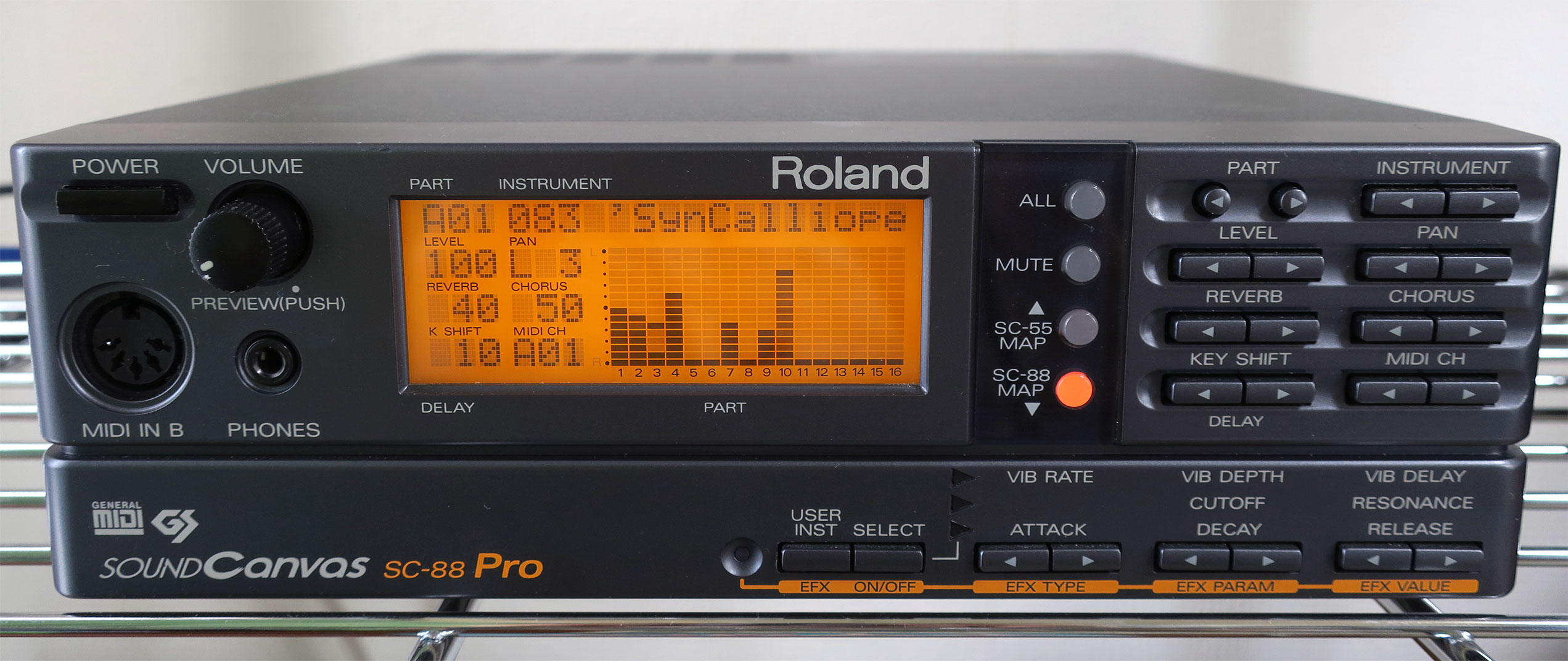
The essence of his sonic world lay in radical subtraction against the tide of technological excess, the micro-tuning of rhythmic “sway” (yore) against the cold digital grid, and above all the architectural design of ma—the intervals where no sound is placed at all. Starting from an examination of the remarkably modest gear setup Harakami used throughout his career (a Roland SC-88Pro sound module and the sequencing software EZ Vision), this article unpacks the philosophy of micro-timing and negative space at the heart of his acoustic aesthetic. Walking through the sonic architecture of four essential albums, we trace how he delivered “the sound that isn’t there” to the listener’s ear.
2. The Extreme Constraint of the Roland SC-88Pro — How a Universe Was Born from a “Toy Box”
2.1. The Emblem of 1990s Desktop Music and Hardware Minimalism
(Related reading: Tracing the Wellspring of Japanese Environmental and Ambient Music)
Both the greatest mystery and the greatest charm of Rei Harakami’s place in music history lie in the fact that across nearly his entire career, he relied on a single late-1990s consumer tone generator as his primary sound source: the Roland SC-88Pro (affectionately nicknamed the “Hachi-Hachi Pro” in Japan).
The SC-88Pro was a standard General MIDI multitimbral desktop music (DTM) module of its era—less a heavyweight professional synthesizer than a kind of all-in-one “toy box” designed for hobbyists programming MIDI arrangements at home. Loaded with hundreds of general-purpose preset sounds—pianos, strings, drum kits, woodwinds, and early synth patches—its capacity for deep sound design from scratch was severely limited compared to dedicated analog synthesizers or professional studio samplers.
Yet from this ordinary, off-the-shelf piece of consumer hardware, Harakami coaxed an unmistakably original, sensual sound that nobody else could replicate, like fine glass particles dancing in midair. As he remarked in later interviews, adding more gear only made him lose sight of what he wanted to do; having strict constraints was precisely what let him focus on how to play inside them. That stance stands as a powerful counter-thesis to modern production environments overflowing with limitless plugins and multi-gigabyte sample libraries. Rather than lamenting the limitations of his hardware, Harakami pressed right up against its walls and discovered a singular aesthetic seeping through the cracks. By drenching humble sine and square waves in the unit’s built-in chorus and delay effects and intentionally slowing the attack of each note, he forged the core of the “Harakami sound,” where metallic coolness and organic warmth coexist.
2.2. Sculpting Time Visually Through EZ Vision
To drive the SC-88Pro sound module, Harakami remained devoted to Opcode’s EZ Vision, a bare-bones MIDI sequencing program for the Macintosh. Development on the software had already been discontinued by the end of the 1990s, turning it into a vintage relic that grew harder to run with every operating system update. Even so, Harakami kept an old Macintosh frozen in time just so he could continue placing notes on the EZ Vision screen.
True to its name, EZ Vision displays MIDI note data with stark visual simplicity. Free of distracting parameter lanes or tangled automation curves, only the position, pitch, and duration of each note appear as simple dots across the screen. For Harakami, that sequencer window was less a musical score for lining up notes than a sculptor’s canvas for carving physical time. Beyond judging with his ears alone, he sensed an aesthetic balance in the visual arrangement of the dots on the monitor. Keeping the screen uncluttered and leaving breathing room between one dot and the next translated directly into the airy openness—the breathing spatiality—of his finished music. No matter how far recording technology advanced or how many infinite audio tracks modern DAWs offered, he loved the constraint of “a pointillist sketch of sound that fits on a single screen,” and continued writing entire universes inside it.
In particular, the coarse dot-grid display of EZ Vision’s MIDI editing window gave Harakami a paradoxical inspiration for liberating time from the grid itself. Precisely because the visible grid lines on the screen were relatively coarse, he deliberately nudged individual dots off the lines, breaking visual and geometric symmetry to slip a living breath into the timeline. That visual workflow served as an ideal platform for assembling his signature rhythmic sway—both intuitively and logically.
3. The Aesthetics of Micro-Timing (Yore) and Negative Space (Ma) — Organic Fluctuation Off the Grid
3.1. Human Warmth Born from 1/96th-Beat Offsets
Computer-programmed music is fundamentally built by snapping notes onto a mathematically exact grid of bars and beats. While music aligned perfectly to that grid achieves high resolution and cool precision, it easily strips away the physical sway and emotional nuance that human ears feel naturally.
What makes Rei Harakami’s music unmistakable is his deliberate, ultra-delicate displacement of notes against the grid—what Japanese listeners call yore (micro-timing sway or drag). He shifted individual drum hits, percussion taps, and bass notes forward or backward from the grid by a matter of milliseconds. Rather than applying a mechanical “randomize” function that scatters notes indiscriminately, he tuned every offset by ear according to his own physical sense of groove. One note speaks a fraction late; the next slips in a hair early. Those microscopic expansions and contractions of time breathe organic warmth into cold digital synthesizer tones, making them sound as if a player were sitting right in the room, breathing and plucking strings in real time. Our ears perceive that sway not as sloppy timing, but as musical expression and vocal phrasing. Harakami’s micro-timing proved that metronomic perfection is not the only virtue, turning the chill of a machine into the warmth of human skin.
Behind this micro-timing lay a specific technical specification of EZ Vision: its MIDI clock resolution of 96 PPQ (96 pulses per quarter note). Compared to modern sequencers that divide a quarter note into 480 or 960 ticks, 96 PPQ is an exceptionally coarse resolution. That means a single clock tick—1/96th of a quarter note—carries a distinct, perceptible width. Knowing that coarse single-tick step inside out, Harakami practiced “precision tuning in coarse increments,” nudging one note a single tick late and another a single tick early. Whereas standard DAW swing or shuffle functions delay off-beats uniformly by a fixed percentage, Harakami adjusted every note individually by hand—delaying the second hi-hat stroke while placing the third dead on the beat, or pushing a single syllable of a bassline slightly ahead. That manual placement at the micro-level refused mechanical repetition and gave the listener a palpable sense of gravitational pull across time.
3.2. Why Unplayed “Silence” Is the True Protagonist
With the rise of brickwall limiters and loudness maximizers, modern pop and electronic music evolved toward ever higher perceived loudness—eliminating silent gaps and packing every frequency band from top to bottom. Harakami’s music walks in the exact opposite direction. Listen closely to any of his tracks, and you notice vast stretches of time behind the melody and accompaniment where nothing is ringing at all.
That unplayed time is ma—negative space in the traditional Japanese aesthetic sense—and it was the single most important acoustic element Harakami designed into his compositions. The lingering decay after a tone vanishes, the tension and release before the next tone speaks: he poured as much care into removing notes as he did into placing them, if not more. The hardware ceiling of the SC-88Pro—a maximum polyphony of 64 voices—further reinforced this subtractive discipline. Because so few notes are sounding at once, the shimmer of each individual sine wave stands out in crisp relief, spreading three-dimensional ripples like a single drop of water falling onto a still pond. Where Brian Eno’s concept of “Ambient Music” aimed to recede into the background like furniture, Harakami’s ma was an active spatial design that drew the listener’s awareness inward to hear the stillness itself.
4. 4 Essential Rei Harakami Albums — How to Walk Through Each Landscape
Below we select four essential original albums from Rei Harakami’s catalog and examine their musical and acoustic architecture in detail. Each record stands as a milestone tracing how his aesthetic evolved and purified step by step.
4.1. unrest (1998) — The Territory of Raw Particles and Initial Impulse
Released in 1998 on the independent label Sublime Records, unrest is the landmark debut album that announced the singular talent of Rei Harakami to the world. Compared to the mellow, rounded warmth of his later work, this record retains gritty sampling noise, exposed sine waves, and a cool metallic edge. Precisely for that reason, it remains an essential work in which the structural skeleton of his music stands out in its purest form.
From the opening track “on,” the listener is pulled into Harakami’s signature warping of time. Chopped rhythmic figures bounce in irregular patterns while a quiet synthesizer pad slowly blankets the background. Every sonic particle is dry and distinct, creating the taut atmosphere of listening inside an anechoic chamber. Even at this early stage, working within the limits of the SC-88Pro, he had already developed his technique of pushing delay feedback to the brink so that separate notes connected seamlessly across space. The moments of total silence inserted throughout the tracks are not empty gaps on the tape; they are calculated pockets of darkness designed to reset the listener’s eardrums and maximize the luminosity of the next electronic tone. Though rough-hewn around the edges, an uncompromising commitment to subtraction is already etched clearly into this first territory.
On tracks such as “curved flow,” metallic drum-machine hi-hats and the unsettling sine waves characteristic of early Harakami blend in a delicate balance. The sonic image here is less rounded than on his later records, carrying a sharp, almost prickly edge, yet the melodic lines laid across that coolness already show the unmistakable warmth that would become his signature. Like a young artist driving limited hardware to its ceiling and sending raw electronic sparks into the dark, unrest captures the taut beauty of a first creative impulse.
4.2. opa*q (1999) — The Blossoming of Lyricism and the Stillness of “vapor”
Released the following year in 1999, his second album opa*q is the masterpiece that propelled Rei Harakami to the forefront of Japan’s electronic music scene. Here the metallic chill of his debut steps back, giving way to the unmistakable “Harakami groove”—music that weaves odd meters into a pulse that feels effortlessly natural in the body.
The summit of that style is his signature piece, “vapor.” True to its title, the track turns something weightless and intangible into sound while preserving a palpable sense of warmth and humidity. Soft, rounded electronic tones appear and vanish alternately from the left and right speakers. No matter how intricately their contrapuntal melodies intertwine, the mix never turns muddy—because the duration of each individual note is kept remarkably brief, leaving wide channels of open air between one tone and the next. The bass sinks quietly into the floor while the rhythm section steps along with an endearing, slightly wobbly sway like an antique clockwork toy. Listening to this piece, we are simultaneously hearing the notes and breathing the quiet room air in which they float. opa*q stands as a decisive milestone proving that electronic music could transform from a cold exercise on a grid into supple, deeply human music.
Furthermore, the interlocking short synthesizer sequences on tracks like “rho” work exactly like pointillism in visual art. To prevent overlapping notes from saturating the space, Harakami set the release times on his sound module extraordinarily short. As a result, each tone pops with the immediacy of a water droplet springing off a surface, opening up generous negative space before and after every attack. That pointillist acoustic placement dispels the claustrophobia common to desktop programming and conjures a breezy imaginary garden inside the listener’s mind.
4.3. red curb (2001) — Intricate Sequencing and the Perfection of Sway
Unveiled in 2001, Harakami’s third album red curb is a monumental achievement on which his sequencing craft and microscopic spatial construction reached an absolute peak. Here the placement of every electronic tone is controlled down to the finest detail, filling the entire album with the taut tension of a single stretched thread and the gentle catharsis that unravels it.
The layered acoustic hierarchy on the standout track “Rezo” is breathtaking. As finely diced percussion dots trace intricate counterpoint, the lead sine-wave synthesizer melody sings out with a contour that is at once softly blurred like a hazy moon and unmistakably clear. Through microscopic adjustments to delay timings and left-right stereo panning, Harakami succeeded in carving out extraordinary three-dimensional depth inside a two-channel stereo field: dry rhythms stepping crisply in the foreground, warm synth pads drifting far in the back, and the lead melody suspended in the middle distance. Because the spatial placement is so exact, listening on headphones creates the uncanny, comforting sensation of sitting alone at the center of a vast room. red curb represents the zenith of artisanal control over a constrained hardware rig, and one of the most beautiful answers minimalism has ever produced.
The acoustic triumph of the album is equally evident in its treatment of the low-frequency register. Whereas conventional club music pushes heavy sub-bass and kick drums to the front for physical impact, Harakami pared the low end down to a remarkably slender profile. Freed from low-end mud, the mid- and high-register sine waves and chorus modulations rise into the air as clearly as smoke ascending into an open sky. Released from the gravity of heavy bass, the music floats like a weightless airship, offering lasting insight for spatial sound design far beyond the borders of electronica.
4.4. lust (2005) — A Gentle, Deep Sea of Negative Space on His Final Masterwork
Released in 2005, Harakami’s fourth album lust ultimately became the final original studio album he completed during his lifetime. Standing as the crowning peak of his career and an enduring monument of Japanese electronica, the record elevates his aesthetics of subtraction and micro-timing beyond technical craft into something resembling a living natural ecosystem of sound.
From the opening track “long distance,” note density is pared back to the barest minimum. Over a warm, quietly repeating electric-piano-like chord backing, sparkling electronic arpeggios climb unhurriedly through the gaps and fade into stillness. Not a single superfluous note is present; every tone sits in its exact rightful place. Above all, on “owari no kisetsu” (a cover of Akiko Yano’s classic song), Harakami introduced his own singing voice in full for the first time—heavily pitch-processed into a gentle, genderless timbre. As the tender sine waves of the SC-88Pro melt into his digitally sculpted human voice, a deep, affectionate ocean of longing opens up beyond words. Closing with the aching melody of “joy” and its trailing resonances drawn high into the sky, lust leaves behind in the listener’s ears not the stimulus of electronic tones, but a profound, gentle silence filling the room after the music ends.
The sound editing heard across lust pushes the built-in delay and reverb algorithms of the SC-88Pro to their absolute outer limit. Setting delay feedback levels right on the razor’s edge where one note’s decay vanishes and the next attack begins, Harakami created a texture in which sound seems to soak directly into the air of the room. On “owari no kisetsu” in particular, the vocal treatment unites machine and human being into a single intimate instrument that whispers right beside the listener’s ear. Erasing every trace of cold technological detachment and sending warm lyrical blood coursing through the heart of a machine, this album is the ultimate sanctuary he reached.
5. A Listening Roadmap for First-Time Rei Harakami Listeners
Where should a newcomer take their first step along the trail Rei Harakami left behind? Because his records reveal entirely different expressions depending on the listener’s mood and setting, approaching them in stages is the most rewarding route. Here is a concrete four-step roadmap for first-time travelers.
Step 1: Enter Through lust (The Welcoming Gateway)
The ideal starting point is his fourth album, lust, where his melodic warmth and songcraft shine at their most refined. Tracks such as “long distance,” “joy,” and his cover of Akiko Yano’s “owari no kisetsu” gently dissolve any preconceptions about electronica being cold or cerebral, letting you experience his music immediately as deeply personal song.
Step 2: Experience the Signature Groove on opa*q (The Open Plain)
Once your ears are at home in the mellow space of lust, move on to his second album, opa*q. Feel the weightless groove of his signature track “vapor” and its endearing, slightly off-kilter micro-timing sway. You will quickly realize that his music is far more than passive relaxation music—it is danceable sonic pointillism built with extraordinary structural rigor.
Step 3: Sink into Three-Dimensional Sound on red curb (The Deep Interior)
From there, step into his third album, red curb, the most intricately chiseled crystal of his aesthetic. We strongly recommend listening to this record through headphones with your eyes closed in a quiet room. Tracing how each tone is positioned across left, right, front, and back—and how negative space is designed between them—reveals the pinnacle of three-dimensional depth in digital sound.
Step 4: Touch the Raw Particles of His Origins on unrest (The Headwaters)
Complete the roadmap with his debut album, unrest. Here you encounter the gritty, exposed electronic particles that preceded the polished warmth of his later catalog. Hearing the initial impulse from which his music sprang and how it was purified through years of wrestling with the SC-88Pro brings the entire arc of Rei Harakami’s sonic universe full circle.
6. The Blank Space Left Behind and the Resonance Passed On
On July 27, 2011, Rei Harakami passed away suddenly at the age of forty. The day he left, a vast blank space opened up in the Japanese music scene. Deprived of his physical touch and ear, the SC-88Pro and EZ Vision rig he had cherished for so many years returned to being quiet pieces of hardware that would never spin the same resonance again.
Yet the philosophy of subtraction and the aesthetics of negative space that he demonstrated across his career have never faded; in a contemporary world suffocating under information overload, their clarity and urgency only grow stronger. A new generation of producers and synthesists raised on his records continues to learn the richness of deliberately taking notes away from an infinite palette and to pursue the humanity that lives inside micro-timing slightly off the grid.
What Harakami left behind was not a technical manual for operating vintage hardware, but an auditory lesson in how to listen to the world. When we step inside the ma he designed, we are freed from everyday static and taught to love the stillness surrounding us. Long after the last note stops ringing, the reverberation of the beautiful negative space he showed us continues to echo quietly in the back of our ears. That same commitment to carving out negative space with deliberately chosen tools lives on in different forms across Ryuichi Sakamoto’s async, Toru Takemitsu and Japanese Environmental Music, and Harold Budd’s The Pavilion of Dreams.
7. Listening on Physical Media
To experience Rei Harakami’s singular sonic world even more deeply, seek out his original CD and vinyl editions, where the tactile sleeve artwork and mastering can be savored in your hands alongside the music.
8. Further Reading
Our musical journeys through silence and negative space continue in the guides below.
- Tracing the Wellspring of Japanese Environmental and Ambient Music
- Introduction to Brian Eno and Ambient Music
(Image credit: Wikimedia Commons)
9. Editorial Note
Whenever I listen to Rei Harakami’s music, his humble SC-88Pro tone module begins to feel like a magic box breathing out glittering stars. How deeply he thought inside the limits of a single tool, and how playfully he explored it—that posture itself is what gives his music its enduring human warmth. Precisely in an age of relentless information overload, lending our ears to the quiet negative space Harakami left behind washes the static gently from the mind.