Putting music into words may be a bit like erecting a makeshift lighthouse on an empty lot where no one is standing. On Open2ch, there is a small thread called the “Japanese Music Archive” (Hōgaku Hokanko). The names left behind there—Perfume, Shinsei Kamattechan, Fujifabric—are the very memories of places we once passed through that still cast a quiet light deep inside our chests today. In this article, we travel in words through the hidden masterpieces and classic songs discussed in that archive thread, awakening the beauty of the negative space that stretches out behind them. (Research date: July 11, 2026; Reference: Open2ch Japanese Music Archive Thread)
1. Cultural Background of the Open2ch “Japanese Music Archive” Thread
In a quiet corner of the internet set slightly apart from the clamor of the mainstream commercial music scene, there is a place where deeply earnest personal musical experiences are exchanged. Rather than merely tracing bestseller charts, the “Japanese Music Archive” thread on Open2ch has functioned as a virtual repository where residents bring together “truly unforgettable masterpieces that the wider world tends to overlook” and preserve them through dialogue. The words written there sometimes cut deeper than commercial music journalism and are intimately bound up with personal memory.
From the mid-2010s into the 2020s, the way people listen to music changed dramatically with the rise of subscription streaming services. While listeners gained instant access to vast musical libraries, opportunities to listen deeply to a single album and talk through its finest details with someone else have steadily dwindled. This thread stands as a quiet resistance against such fast consumption, and as a valuable document showing how an online community has protected “unsung masterpieces” and handed them down to the next generation.
2. In-Depth Guide to 5 Hidden Masterpieces and Classic Songs Worth Passing Down
Here we dissect in detail five essential works of Japanese musical heritage whose beauty and sonic innovation were repeatedly highlighted by the residents of the thread.
1. Perfume, “Kasuka na Kaori” | The Technopop of “Negative Space” Sketched by Yasutaka Nakata
Released in 2011 as the B-side to the single “Laser Beam” and later included on the album JPN, “Kasuka na Kaori” (“Faint Fragrance”) is a hidden masterpiece that holds the most acoustic and emotionally resonant negative space in Perfume’s entire discography. In sharp contrast to the aggressive, bass-heavy electro-house that preceded it, producer Yasutaka Nakata brought spacious electric piano chord work and the whispered nuances of the trio’s vocals to the forefront.
[Acoustic and Discographical Analysis]
The acoustic-piano-like synthesizer in the introduction is crafted with a soft keystroke attack and an exquisitely long reverb decay. The three members’ vocals are left free of heavy vocoder processing or aggressive pitch correction, deliberately preserving their breath and subtle natural waver. Although the bassline carries the rolling warmth of an analog-style synth bass, its high frequencies are trimmed back with a low-pass filter so as never to intrude upon the vocal range, gently driving the song forward from beneath. The aesthetic of an invisible, untouchable presence sung about in the lyrics—”a faint fragrance”—is expressed to perfection in the gaps between these sounds.
2. Fujifabric, “Wakamono no Subete” | The Eternal Lyricism of a “Japanese Summer” Left Behind by Masahiko Shimura
Fujifabric’s signature song “Wakamono no Subete” (“All of the Young People,” 2007) is a beloved national classic that needs no introduction, yet the residents of the thread debated it deeply through its “acoustic context within the album TEENAGER.” Painted by frontman Masahiko Shimura (vocals, guitar), who passed away far too young, its nostalgic scenery of the end of summer, a town at dusk, and the last fireworks rising into the sky is no mere exercise in sentimentalism, but the crystallization of an ensemble constructed with extraordinary precision.
[Acoustic and Discographical Analysis]
The interplay between the dry snare attack in the intro and the nostalgic organ-like synthesizer played by Daisuke Kanazawa conjures the taut air of twilight in an instant. Shimura’s slightly nasal, wistful vocal weaves contrapuntally around distorted guitar arpeggios before emotion bursts open all at once toward the chorus. The stereo placement of the drums is especially remarkable: the fine subdivisions of the hi-hat are mixed from the far right rear of the soundstage while the snare punches straight through the center. That unrepeatable fleeting moment at the close of summer is sealed forever inside the time capsule of this recording.
3. Shinsei Kamattechan, “Rock ‘n’ Roll wa Nariyamanai” | Pure Madness Captured in Home-Recorded Noise
When Shinsei Kamattechan made their indie debut in 2010 as a shockwave born directly from the internet, their signature track “Rock ‘n’ Roll wa Nariyamanai” (“Rock ‘n’ Roll Won’t Stop Ringing”) won fervent support in the archive thread for the lo-fi sonic texture of frontman Noko’s home recording and the overwhelmingly pure melodic beauty rising out of it.
[Acoustic and Discographical Analysis]
Listening to this track, the ear is first startled by digital clipping and distortion that seem to blanket the entire mix. Yet behind that wall of noise lies a meticulous layering of sound constructed by Noko: the pulse of a cheap rhythm machine, the roar of an overdriven electric guitar, and Noko’s own vocal screaming as if tearing his throat apart in front of his computer. Those lo-fi sonic materials intersect with an achingly beautiful pop melody line. The raw passion that overly polished studio engineering so often loses—and the “quiet scream” born inside the closed room of the internet—rings out forever on this record.
4. Sakanaction, “Native Dancer” | A Seamless Encounter Between Electro and Folk
Included on their 2009 album Shinshiro, “Native Dancer” is a historic classic in which Sakanaction achieved a complete fusion of acoustic Japanese pop melody and cool-headed four-on-the-floor dance beats. Ichiro Yamaguchi’s literary, introspective lyrics are set directly inside the crisp, cool architecture of club music.
[Acoustic and Discographical Analysis]
The minimalist piano riff and chopped glitch noises of the introduction call to mind the cold air of winter. The dynamism of the moment when the organic drum beat and rolling bassline lock together is mixed with striking high-fidelity clarity. A light touch of dub delay is applied to Yamaguchi’s vocal, beautifully tracing the way his words dissolve into the surrounding space. Residents of the thread praised the song’s “aesthetic of subtraction” as the highest peak of Japanese techno-folk.
5. Kinoko Teikoku, “Tokyo” | Urban Solitude Painted by a Wall of Roaring Shoegaze
Released in 2014 as Kinoko Teikoku’s major-label debut single and later included on the album Fake World Wonderland, “Tokyo” is a poignant, breathtaking masterpiece born during the band’s transition from their early raw shoegaze sound toward a more refined alternative rock. Chiaki Sato’s commanding vocal presence and a wall of roaring guitars that fills the entire space capture the cold solitude of the vast metropolis of Tokyo.
[Acoustic and Discographical Analysis]
The clean delay-guitar arpeggio in the intro foreshadows a cold Tokyo nightscape. When the drums and bass enter and multi-layered waves of feedback guitar roar rushing toward the chorus all at once, the catharsis is overwhelming. Behind that wall of noise, however, lies meticulous spatial engineering in panning and equalization, sculpted so that every syllable of Sato’s vocal reaches the ear with crystal clarity and zero muddiness. It is precisely this contrast between roaring distortion and a transparent singing voice that makes the song an enduring classic.
Our article on Sakanaction’s 834.194, which checks against release dates whether the period called their “silence” was truly silent at all, also grows out of the same line of thought as this thread.
3. The “Archive” as Grassroots Music Criticism by Thread Residents
The words written in the Open2ch “Japanese Music Archive” thread are at times more incisive than commercial music magazines, yet simultaneously filled with deep tenderness. Precisely because an anonymous bulletin board is free of commercial vested interests, its residents can bind their own personal memories directly to the music and talk purely out of love for the sound.
Replies such as “Hearing this song brings back the cold air of driving down a national highway late at night,” or “The wall of noise I witnessed at that live house still lingers like a ringing in my ears,” go beyond objective music-theory commentary to show vividly how a piece of music colored—and at times saved—an individual human life. These posts are not mere internet chatter; they represent a remarkably earnest form of grassroots music criticism in contemporary Japan.
4. A “First-Time Listening Route” Guide to These Hidden Masterpieces
To understand the hidden masterpieces introduced in this article even more deeply, here is a recommended listening route.
Start with Sakanaction’s “Native Dancer,” which pairs an electronic soundscape with immediately approachable pop songcraft. Next, turn to Shinsei Kamattechan’s “Rock ‘n’ Roll wa Nariyamanai,” where Noko’s extreme lo-fi home-recorded acoustics shine at the opposite pole from polished techno, letting you feel the contrast between diverse electronic textures and raw passion. From there, move on to Perfume’s “Kasuka na Kaori,” where Yasutaka Nakata pushed the aesthetic of subtraction to its limit, and then sink into the end-of-summer Japanese sentimentalism of Fujifabric’s “Wakamono no Subete.” Finally, sit before your speakers and bathe in the harmony between a roaring shoegaze wall of sound and an unforgettable voice on Kinoko Teikoku’s “Tokyo.” Following this route lets you experience in three dimensions the “aesthetics of negative space and solitude” that the Japanese Music Archive thread has protected and handed down.
5. Conclusion
The words gathered inside the small Open2ch thread known as the “Japanese Music Archive” continue to shine without fading today: the quiet technopop of Perfume’s “Kasuka na Kaori,” the eternal summer left behind by Fujifabric, the raw passion of Shinsei Kamattechan, the meeting point of electro and folk built by Sakanaction, and the roar and solitude unleashed by Kinoko Teikoku. All of them were discovered by nameless residents who loved music in a quiet corner of the internet and have been carefully preserved to this day. Tonight, pick up your favorite pair of headphones and lend your ear to the songs they kept safe. For choosing classic Japanese rock albums, see Classic Japanese Rock Albums Chosen with NanJ; for the Japanese environmental music side, see Introduction to Japanese Environmental Music; and for an entry point into City Pop, see Introduction to City Pop.
Further Reading
- Miles Davis Explained | The Modal Jazz Stillness Painted by Kind of Blue
- 3 Essential ECM Albums | “The Most Beautiful Sound Next to Silence” and the Pinnacle of Minimalism
Deep Dive: The “Anonymity” and “Sense of Era” Shared by Hidden Masterpieces of Japanese Music
What unites the hidden masterpieces frequently discussed in “Japanese Music Archive” bulletin-board threads is that they were created quietly, slightly removed from the noise of the mainstream, yet with unmistakable intensity. While the early-2000s Japanese rock scene was boiling over with the boom of youth punk and alternative rock, artists associated with post-rock, electronica, and the Onkyō (sound-space) movement were quietly building their own independent networks in the shadows.
Works such as Supercar’s Highvision and ANSWER, ROVO’s trance music, or Clammbon’s id dismantled the conventional rock-band format and boldly incorporated elements of electronics and dub. Far beyond their initial chart action at the time of release, these records served as crucial milestones that taught subsequent artists and deep music listeners the joy of listening closely to an album as a complete unit.
The Internet and the Evolution of “Crate Digging”
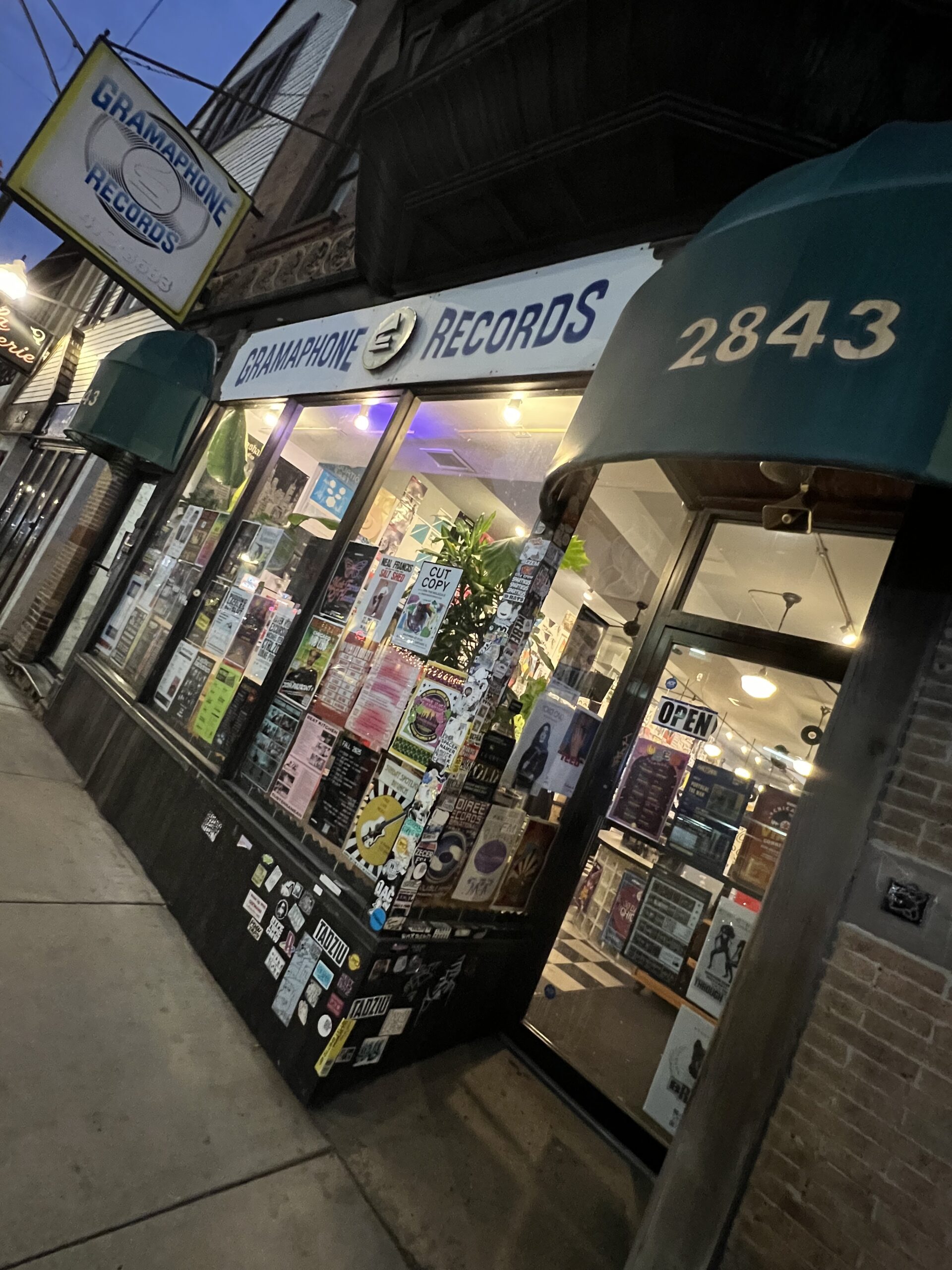
Information exchange on bulletin boards like these stood at the front line of “music digging” before subscription streaming services became universal. Relying on an album cover image someone had uploaded or a clumsy yet impassioned review post, listeners would make the rounds of CD shop listening stations or comb through secondhand record stores. Present in that process was a “human warmth of the other” that never exists in automated algorithmic recommendations.
Today’s listening environment is extraordinarily convenient, granting access to almost any classic album in seconds. Yet precisely for that reason, the context of “that album someone in this thread was recommending with almost abnormal passion” has paradoxically grown even more valuable. Alongside the resonance of the music itself, it is the accompanying “story of discovery” that keeps these songs from ever losing their color.
When you listen closely into the gradations of noise, the beauty of the exact moment a sound vanishes stands out in sharp relief. Take your time and savor the resonance of negative space.